
Bangkok National Museum
Step through the gate of the Bangkok National Museum into the early morning cool and you step back two thousand years. The vast palace complex — once the front palace of the Thai kings — now houses Southeast Asia’s largest national museum collection, a labyrinthine world of gilded Buddha images, royal funeral chariots weighing dozens of tons, ancient stone inscriptions, carved ivory, royal regalia, and traditional musical instruments. The museum sprawls across multiple pavilions and buildings accumulated over centuries, and even a full day here barely scratches the surface of what it holds. Yet the National Museum rewards patience: this is where the history of Thailand, and of all Southeast Asia, is written in objects.
History of the Bangkok National Museum

The site’s history begins long before the museum. This was the Wang Na (Front Palace) — the official residence of the Uparaja (heir apparent or viceroy) of the Thai kingdom, second in prestige only to the Grand Palace next door. The complex was built in 1782 alongside the new capital, and its buildings include some of the finest Rattanakosin-period architecture in Bangkok. When Rama V modernized the Thai state in the late 19th century, he decided to open the palace’s collection to the public — the museum was officially inaugurated in 1887, making it one of Asia’s oldest national museums.
The collection expanded dramatically through the 20th century as archaeological discoveries across Thailand were brought to Bangkok for conservation and display. The museum now encompasses over 200,000 objects spanning every period and culture that has inhabited the Thai peninsula, from Neolithic stone tools to the regalia of the Chakri dynasty. The Buddhaisawan Chapel within the compound, built in 1787, contains the Phra Phuttha Sihing Buddha image — one of Thailand’s most revered religious objects — and some of the finest mural paintings of the early Bangkok period.
What to See
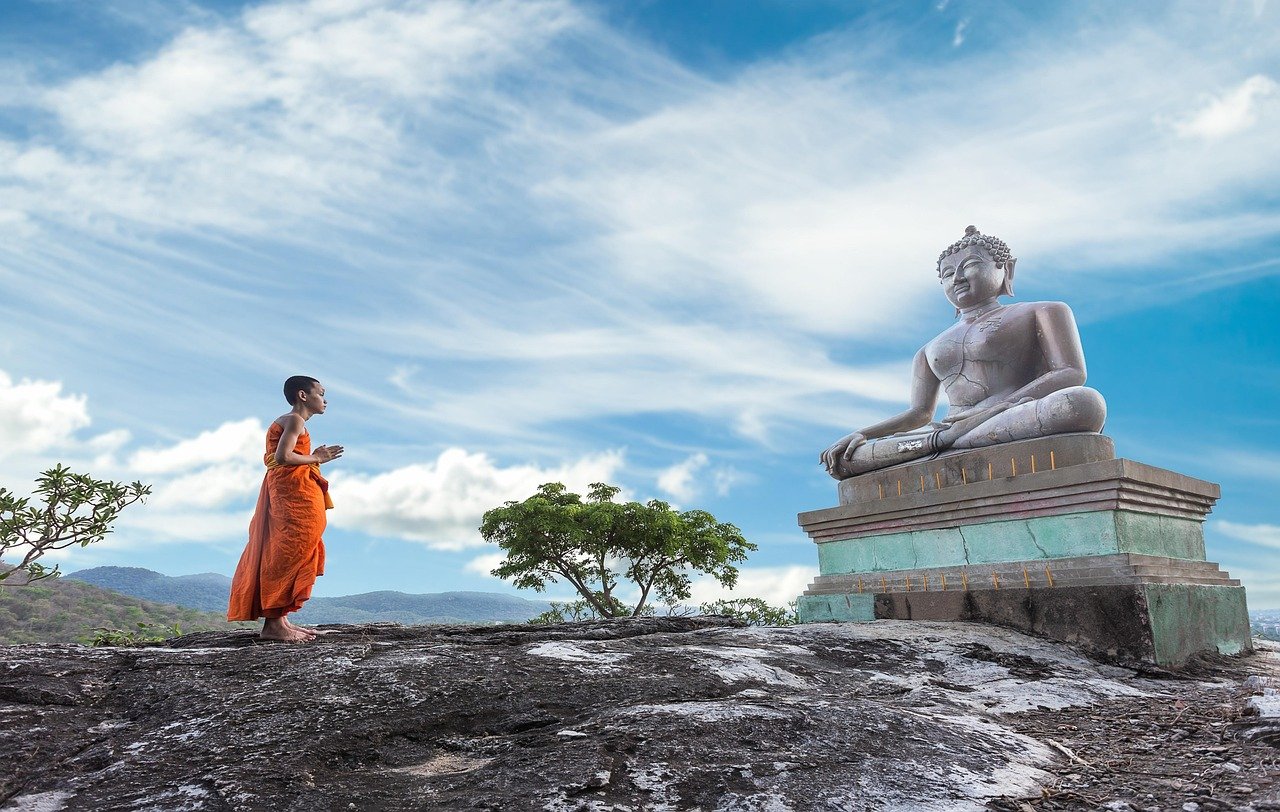
The Thai History Gallery provides the essential orientation — a chronological journey from prehistoric Ban Chiang culture (the famous orange-on-cream pottery that predates comparable Chinese ceramics) through the Dvaravati Buddhist kingdoms, the Khmer empire’s Thai outposts, the Sukhothai and Ayutthaya kingdoms, and into the Bangkok period. The prehistoric pottery, bronze casting, and early Buddhist stone sculpture rooms are particularly revelatory for understanding how deeply the history of this region precedes the modern Thai state.
The Royal Funeral Chariot Hall contains the massive ceremonial vehicles used to transport royal remains to the cremation ground at Sanam Luang — gilded structures 11 meters tall and weighing up to 40 tons, pulled by hundreds of soldiers in traditional dress during royal funeral ceremonies. The most recent chariot was used in the funeral of King Bhumibol Adulyadej in 2017 and can be seen here. The decorative arts galleries display Thai metalwork, lacquerware, mother-of-pearl inlay furniture, shadow puppets, and traditional textiles at the highest level of craftsmanship.
The Buddhaisawan Chapel
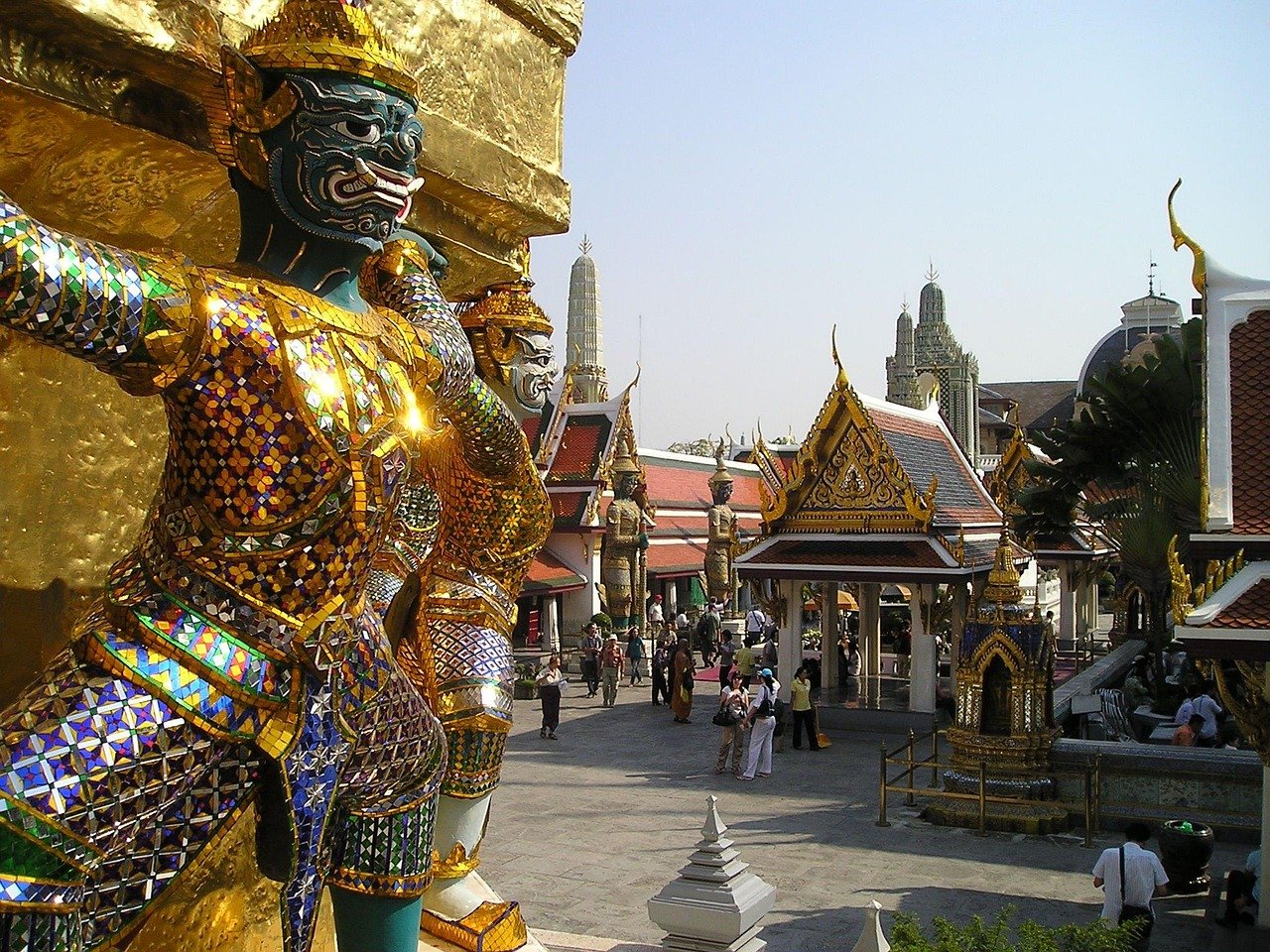
The Buddhaisawan Chapel (Phra That Buddhaisawan) is the museum’s most sacred and visually stunning space. Built in 1787 for Rama I’s older brother (the Viceroy), the chapel was designed to house the Phra Phuttha Sihing — a revered Buddha image of uncertain origin, claimed to date from Sri Lanka or northern Thailand in the 13th century. The image is brought out for the public to worship during Thai New Year (Songkran) in April, when it is paraded through the streets of Bangkok before thousands of worshippers.
The chapel walls are covered in extraordinarily detailed murals depicting scenes from the life of the Buddha and from the Jataka tales (stories of the Buddha’s previous lives). These paintings, executed in the late 18th and early 19th centuries, are among the finest surviving examples of traditional Thai Buddhist mural art — remarkable for their narrative detail, the quality of their gold leaf application, and their state of preservation. The chapel is a functioning place of worship, not just a museum exhibit, and visitors should behave with appropriate respect.
Practical Information
- Tickets: THB 200 for foreign visitors; THB 30 for Thai nationals; free for children under 15; free guided tours included (see below)
- Opening hours: Wednesday to Sunday 9:00am–4:00pm; last entry 3:30pm; closed Mondays, Tuesdays, and national holidays
- Best time to visit: Weekday mornings for fewest visitors; free English-language guided tours run Wednesdays and Thursdays at 9:30am — highly recommended for context
- Duration: 2 hours for a focused visit; 4–5 hours for a thorough exploration; a full day is not excessive for serious history enthusiasts
- Booking: No advance booking required; arrive at the gate and purchase tickets; dress code is strictly enforced — shoulders and knees must be covered; sarongs available to borrow at the entrance
Local Insights
What locals know that guidebooks don’t always tell you:
- The free guided tours on Wednesdays and Thursdays at 9:30am (English) are genuinely excellent and provide interpretive context that completely transforms what would otherwise be a bewildering collection of objects — don’t miss them.
- The museum has no café or food facility inside — eat a proper breakfast before arriving, or bring snacks, as a full exploration takes 3–5 hours with nowhere to refuel inside the compound.
- The museum grounds and gardens are themselves historically significant — the palace buildings, old trees, and quiet courtyards between pavilions deserve slow exploration between gallery visits.
- Combine the National Museum with nearby Wat Phra Kaew (Temple of the Emerald Buddha) and the Grand Palace — all are walkable from each other and together form the most concentrated cluster of Thai historical significance in the country.
- Arrive at 9am when the gates open — the museum empties out considerably after the guided tour groups finish their morning sessions, and the galleries become much more contemplative in the early afternoon.
Getting There
- Boat: Chao Phraya Express Boat to Tha Chang Pier (N9) or Tha Phra Athit Pier (N13) — short walk to the museum entrance
- Bus: Multiple bus routes along Na Phra That and Na Phra Lan roads; routes 2, 9, 12, 25, 44, 60, 65, 91, and 503 serve the area
- Taxi/tuk-tuk: Tell driver “Phipithaphan Haeng Chat” (National Museum) or “Na Phra That Road”; tuk-tuks are cheaper for short distances from nearby attractions
- On foot: 10-minute walk north from the Grand Palace; 15 minutes from Khao San Road (the backpacker area)
Frequently asked questions
Are free guided tours really free?
Yes — the National Museum Volunteers organization provides complimentary guided tours that are included in the museum’s general admission price. Tours run at 9:30am on Wednesdays and Thursdays in English (also French on both days; Japanese on Wednesdays; German on Thursdays). The volunteer guides are retired professionals and academics who bring deep knowledge and genuine enthusiasm to the collection. These tours are arguably the best free cultural experience in Bangkok — book your day around them.
What is the dress code for the Bangkok National Museum?
The dress code is strictly enforced: shoulders must be covered (no tank tops or sleeveless shirts), and legs must be covered to at least the knee (no shorts or short skirts). This applies in all areas including the museum buildings and especially the Buddhaisawan Chapel, which is a sacred religious site. Sarongs and cover-up garments are available to borrow free of charge at the main entrance for those who arrive inappropriately dressed.
How does the Bangkok National Museum compare to other Southeast Asian national museums?
The Bangkok National Museum holds the largest collection in Southeast Asia by number of objects and covers the widest geographical and chronological range, including significant Khmer, Mon-Dvaravati, Srivijayan, and Sukhothai artifacts alongside the primary Thai collection. The National Museum of Singapore and the National Museum of Cambodia have more modern facilities, but Bangkok’s depth of historical material — particularly the royal collection and the Ayutthaya-period objects — is unmatched in the region.
Can I take photographs inside the museum?
Photography is permitted in most areas of the museum, including the main galleries and the grounds. Photography inside the Buddhaisawan Chapel is restricted out of respect for the sacred space and its worshippers — follow any posted signs and staff guidance. Flash photography should be avoided near ancient textiles, paintings, and light-sensitive materials. The museum staff are generally helpful about photography guidelines if in doubt.
What nearby attractions can I combine with the museum visit?
The museum’s location in the historic Rattanakosin island district puts it within easy walking distance of the Grand Palace and Wat Phra Kaew (15 minutes), Wat Pho with its giant reclining Buddha (20 minutes south), and the Chao Phraya River ferry connection to Wat Arun on the opposite bank. The National Gallery of Thailand is immediately adjacent, and the Silpakorn University Art Gallery is across the road — making this entire precinct a full day of Thai art and history.