
Pak Khlong Talat Flower Market
Bangkok never sleeps, and nowhere is that more vividly true than at Pak Khlong Talat. In the hours between midnight and dawn, when the rest of the city finally slows, this ancient market near the Memorial Bridge erupts into a spectacle of colour and fragrance that has no parallel in Thailand. Truck after truck delivers mountains of freshly cut orchids, jasmine garlands, lotus buds, and marigold crowns from farms across the country, and the vendors who have worked this trade for generations transform the riverside loading docks into something that looks, in the predawn darkness, like an enormous floating garden. Come for the flowers, but stay for what they reveal — an unbroken thread of commerce, ritual, and beauty connecting Bangkok’s present to its deepest past.
History of Pak Khlong Talat Flower Market
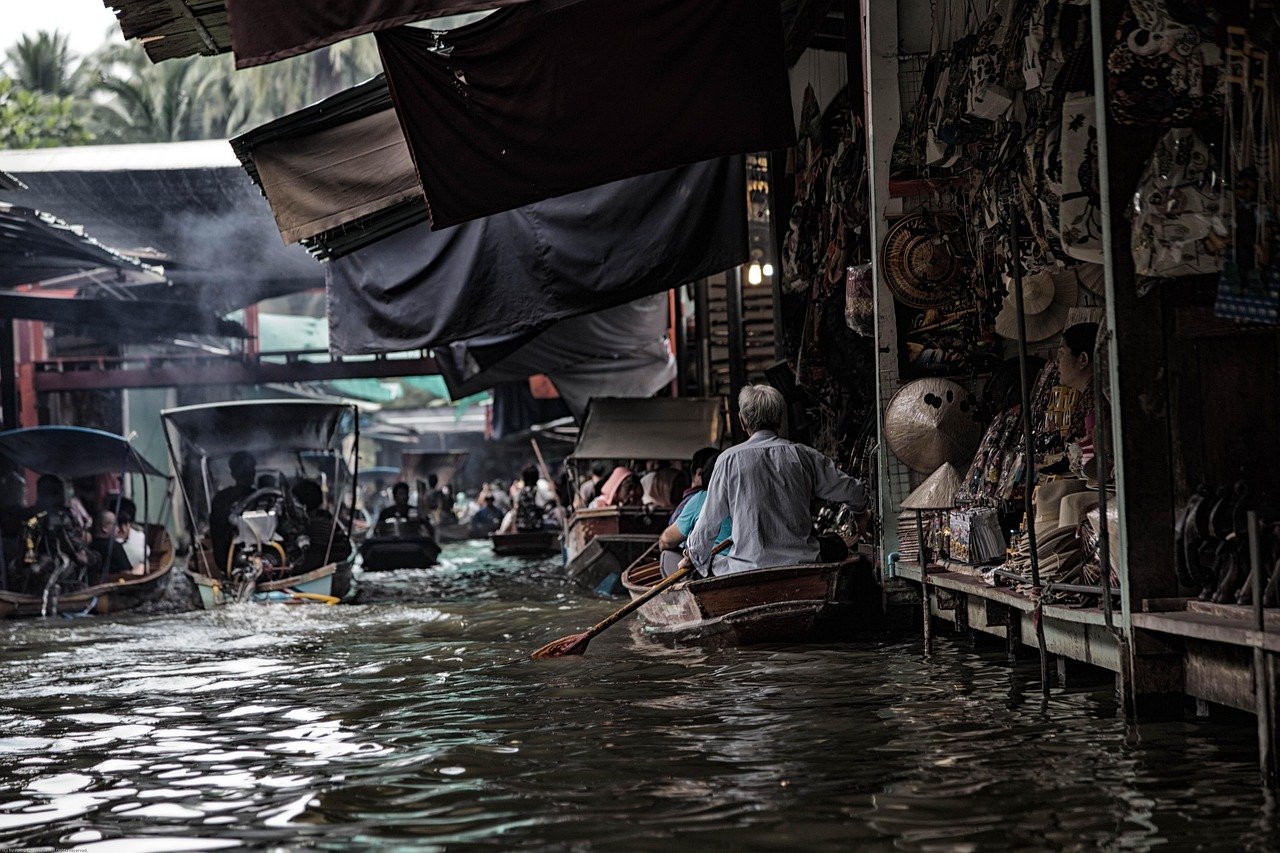
The site of Pak Khlong Talat has hosted commerce for more than two centuries. During the reign of Rama I (1782-1809), the area functioned as a floating market, with merchants conducting trade from boats moored along the khlong (canal) network that once served as Bangkok’s primary transport infrastructure. Through the nineteenth century the area evolved into a large fish market, supplying fresh catch to the royal palace and the growing population of the capital. The fish smell that permeated the surrounding neighbourhood eventually became a civic concern, and in the 1950s local authorities permitted flower and produce vendors to relocate into the area. The transition was gradual at first, then decisive — flowers simply drew more customers than fish, required less infrastructure, and generated none of the odour complaints. By the 1960s the transformation was essentially complete: Pak Khlong Talat had become Thailand’s largest wholesale flower market.
The market owes its current scale to Thailand’s deeply flower-integrated culture. Buddhism requires fresh flower offerings at temple shrines — lotus buds and jasmine garlands are presented daily at wats across the country, and larger ceremonial occasions demand enormous quantities. Royal ceremonies, state funerals, weddings, and the elaborate merit-making events that punctuate the Thai Buddhist calendar all pass through Pak Khlong Talat. The market also supplies hotels, restaurants, shopping malls, and the garland vendors who sell their woven jasmine strings at intersections and spirit houses across the Bangkok metropolitan area. Most flowers arrive from farms in Nakhon Pathom, Samut Sakhon, and Samut Songkhram provinces, with orchids and cool-climate blooms transported from Chiang Mai and Chiang Rai in refrigerated trucks.
What to See at Pak Khlong Talat Flower Market
The Pre-Dawn Arrival Rush
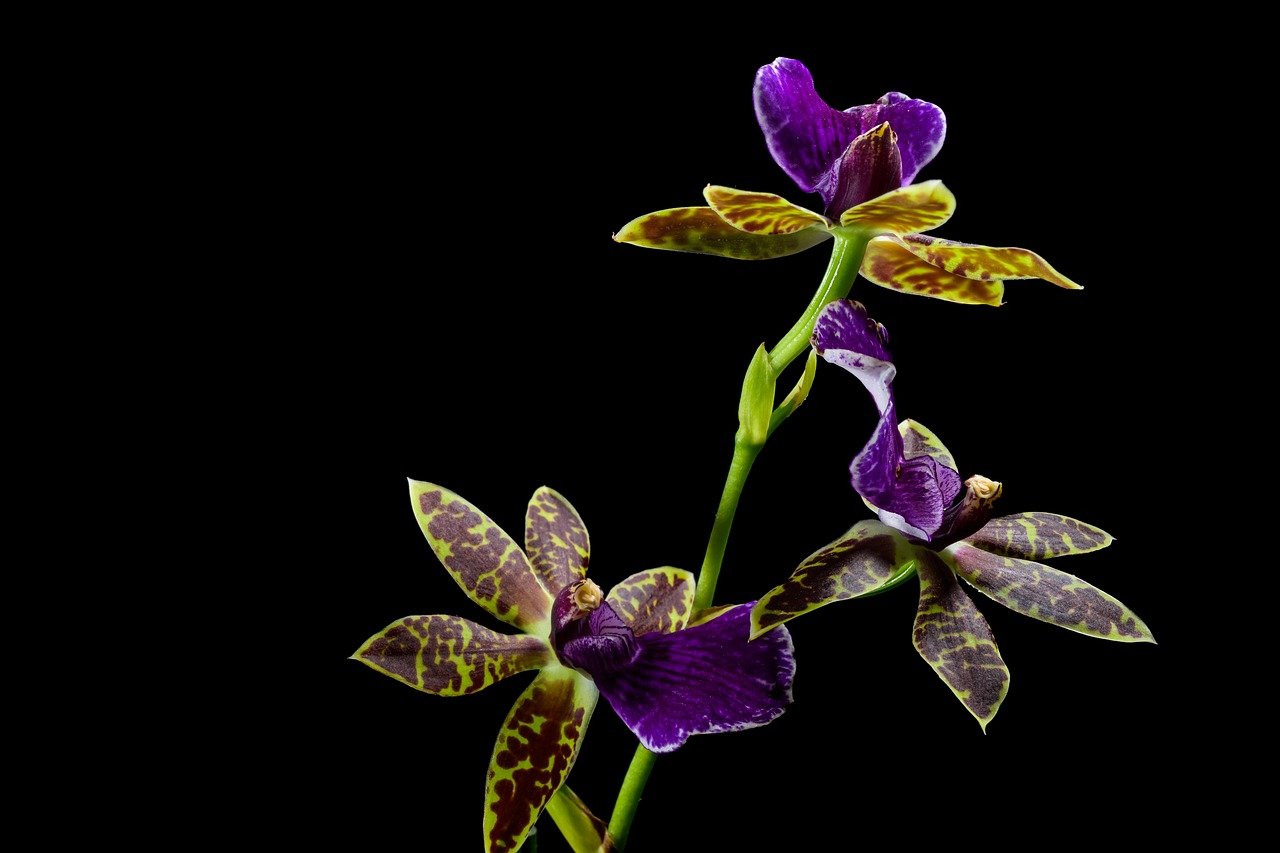
The defining experience at Pak Khlong Talat is arriving between 2:00 AM and 6:00 AM, when the wholesale market is in full swing. Fresh deliveries arrive continuously through the night, and the loading areas along Chak Phet Road and the canal-side lanes become a controlled chaos of trolleys, motorcycle carts, and negotiating voices. Wholesale buyers from florists across Bangkok arrive with order lists; independent vendors assess quality under bare bulbs; garland weavers work in clusters on the floor, threading jasmine through wire frames with a speed that seems impossible to a casual observer. The air at this hour carries a dense, sweet-sharp mixture of tropical blossoms, canal water, and diesel exhaust that is unmistakably, irreducibly Bangkok. Lotus buds are bundled in dozens, orchid stems sorted by colour and length, and entire pallets of rose heads change hands in minutes. For a visitor with a good camera and comfortable shoes, this pre-dawn window is one of the most photogenic and genuinely atmospheric experiences that Bangkok offers. The floors are wet and slippery from water used to keep flowers fresh, so sturdy footwear is essential.
The Orchid and Garland Stalls
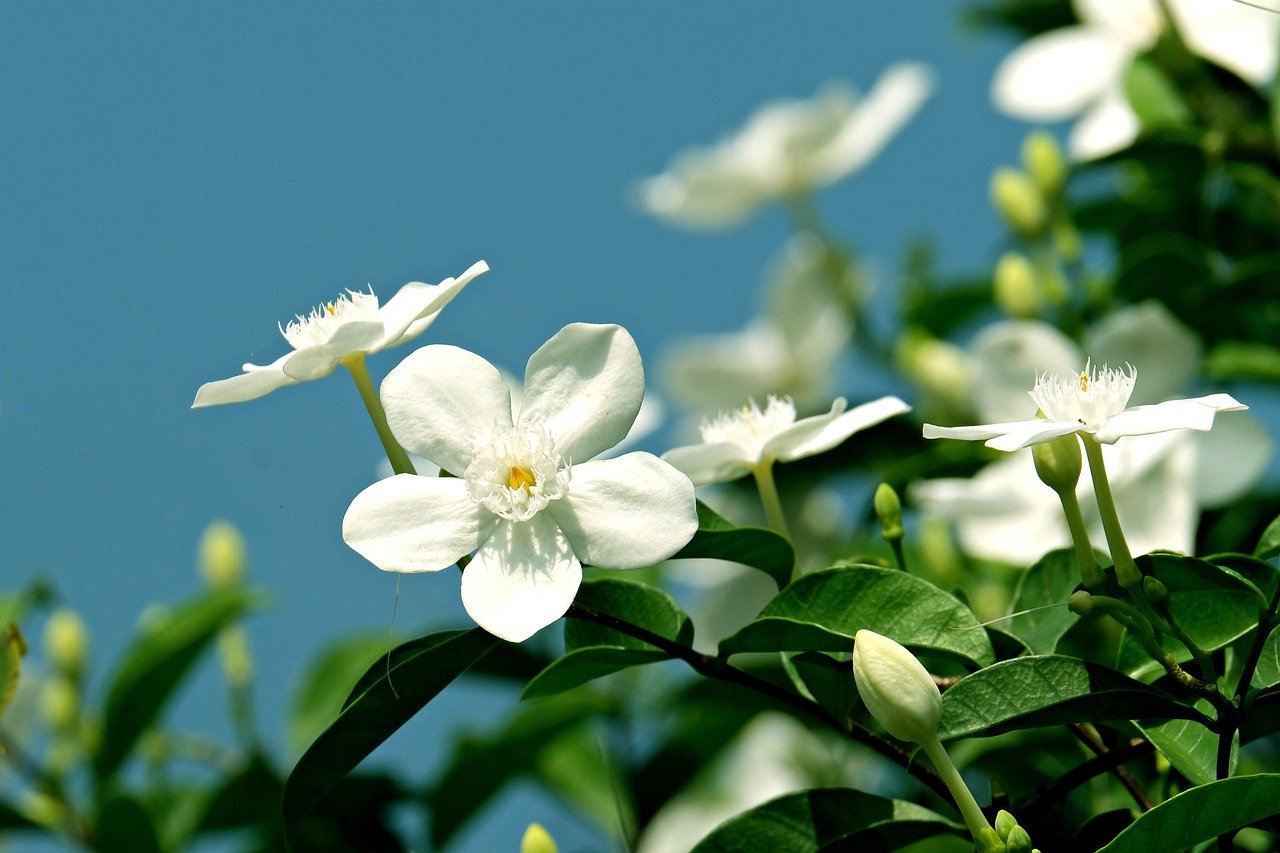
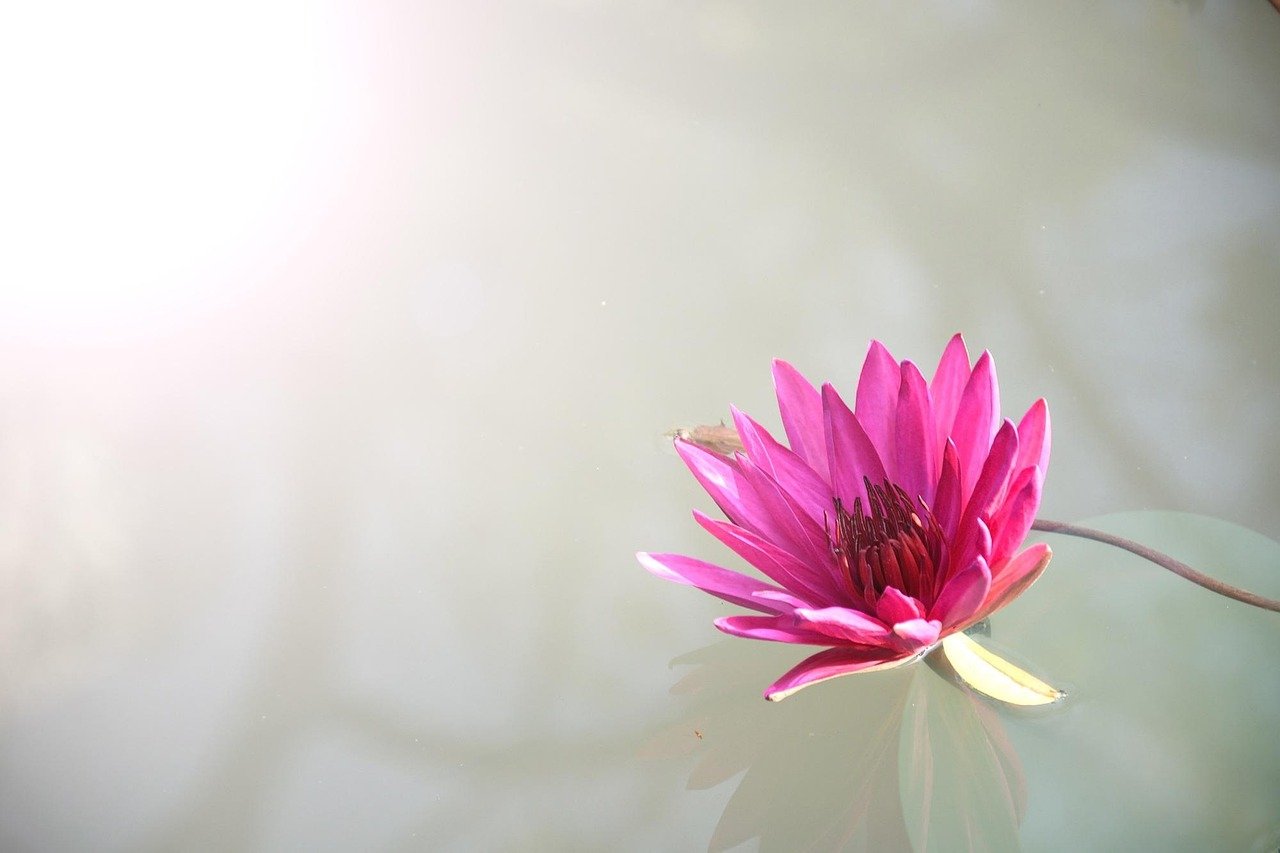
Pak Khlong Talat specialises in flowers that sit at the heart of Thai daily life, and the retail section of the market — open through all daylight hours — gives visitors the opportunity to browse and purchase at leisure. Thailand’s most iconic floral offering is the malai, the jasmine garland strung to honour teachers, parents, deities, and passengers in taxis and tuk-tuks across the country. The vendors who make malai at Pak Khlong Talat work with a hypnotic efficiency, producing perfectly uniform garlands in a matter of minutes. Thai orchids — particularly the Vanda and Dendrobium varieties grown in the country’s central plains — are available in a spectacular range of colours, from deep purple through coral pink to pure white, at prices that are genuinely extraordinary by international standards. Lotus buds are sold both for temple offerings and fresh flower arrangements; marigold crowns are woven for ceremonial use; and roses, carnations, and chrysanthemums fill the stalls catering to the hotel and restaurant trade. Small retail quantities are readily available — a generous bunch of orchids for a hotel room typically costs under 50 THB.
The Produce and Herb Sections
Beyond the flowers, Pak Khlong Talat extends into a substantial fresh produce and herb market that supplies restaurants, market vendors, and households across central Bangkok. Galangal roots, kaffir lime leaves, lemongrass bundles, bird’s eye chillies, and Thai basil are sold wholesale in quantities that make the scale of Bangkok’s daily cooking unmistakable. Seasonal tropical fruits — mangosteen, rambutan, durian, longkong — arrive in volume during their respective seasons, and the prices reflect the market’s wholesale function rather than tourist-area markup. For visitors interested in Thai cuisine, a walk through the produce section of Pak Khlong Talat is an education in the raw ingredients that appear transformed on restaurant plates across the city. The herb section in particular reveals the botanical complexity of Thai cooking, with unfamiliar leaves and roots rubbing shoulders with recognisable ginger and turmeric.
Local Insights
These insider tips from regular visitors and Bangkok residents will help you get the most from Pak Khlong Talat.
- Arrive between 3:00 AM and 5:00 AM for the authentic wholesale atmosphere. This is when the market is most densely populated, most fragrant, and most visually dramatic. The flower deliveries peak around 2:00 AM – 4:00 AM, and by 6:00 AM the wholesale rush subsides. If a 3:00 AM visit is impractical, the next best window is 6:00 AM – 8:00 AM when retail activity is high and the flowers are still at peak freshness.
- Wear closed shoes with non-slip soles. The market floors are consistently wet from the water used to keep flowers fresh, and the ground is uneven in the older covered sections. Flip-flops or open sandals are genuinely risky during the peak hours when trolleys and motorcycle carts are moving through narrow lanes at speed. Light, breathable clothing is recommended — the covered sections have no air conditioning and can feel warm even at 3:00 AM.
- Bring a small reusable bag for purchases. Retail flower purchases are wrapped simply in newspaper or light plastic; if you plan to carry orchid stems or a malai garland back to your hotel without crushing them, a structured bag makes this far more practical. The small cash-only economy of the market means bringing Thai baht in small denominations — most stalls cannot change large notes before dawn.
- Combine with the nearby Wat Pho or Grand Palace visit. Pak Khlong Talat is located just a few minutes’ walk from the Memorial Bridge and the Rattanakosin island heritage district. An early morning market visit naturally leads into a temple visit at Wat Pho (which opens at 8:00 AM), and the two experiences together cover two very different faces of Bangkok in a single morning before the daytime heat builds.
- Watch a garland weaver to understand the craft. The vendors who produce malai garlands at the market are among the most skilled artisans in Bangkok’s informal economy, typically working 12-hour shifts during which they produce hundreds of individual garlands by hand. Asking permission before photographing is courteous and almost always rewarded with a smile — and occasionally a demonstration of the precise threading technique that produces a perfectly uniform string.
Planning Your Visit
- Tickets: Pak Khlong Talat is a public market and there is no entrance fee. Individual flower and produce purchases are cash-only; prices are wholesale-oriented and very low by international standards. A bundle of 10 lotus buds costs approximately 20-30 THB; a dozen orchid stems run 40-60 THB; jasmine garlands are 10-20 THB each.
- Opening hours: The market operates 24 hours a day, 7 days a week, 365 days a year. The wholesale section peaks between 2:00 AM and 6:00 AM. The retail section is most active from 6:00 AM to 10:00 AM. A quieter but still operational market continues through midday and afternoon; activity picks up again in the early evening as orders are prepared for the following morning.
- Best time: Pre-dawn visits between 3:00 AM and 6:00 AM offer the most spectacular atmosphere and the freshest flowers. For a more comfortable daytime visit, 6:00 AM to 8:00 AM combines good flower selection with tolerable heat and light sufficient for photography.
- Duration: A casual visit takes 30-45 minutes. A thorough exploration of both the flower and produce sections, including time for photography and small purchases, typically runs 1 to 1.5 hours. If combining with the adjacent Pak Khlong covered produce market, allow up to 2 hours.
- Booking: No booking required. Simply arrive at the market, which is located along Chak Phet Road near the Memorial Bridge. The market is free to enter and all purchases are made directly with vendors.
Getting There
- By car: The market is located on Chak Phet Road, close to the Memorial Bridge (Saphan Phut) on the west side of Rattanakosin island. Traffic is generally light during the pre-dawn peak hours, and drop-off by taxi is straightforward. Limited motorcycle parking is available on adjacent streets.
- BTS Skytrain/MRT: MRT Sanam Chai station (Blue Line, Exit 4 or 5) is approximately 400 metres from the market entrance — around a 5-minute walk north along Chak Phet Road. This is the most practical public transport option for daytime visits. Note that MRT service does not begin until approximately 6:00 AM, making it unavailable for the pre-dawn wholesale hours.
- On foot: From Wat Pho, the market is approximately a 15-minute walk south along Maharat Road and then across to Chak Phet Road. From the Grand Palace complex, allow 20 minutes on foot. The Memorial Bridge is a useful landmark — the market clusters immediately north of the bridge approach on the east bank.
- Taxi/tuk-tuk: For pre-dawn visits when MRT is not running, a taxi from Khao San Road costs approximately 60-80 THB and takes 10-15 minutes. From Silom or Sathorn, budget 80-120 THB and 20-30 minutes. The Chao Phraya Express Boat stops at Memorial Bridge Pier (Saphan Phut), a 5-minute walk from the market — a scenic and traffic-free alternative for daytime visits.
Frequently asked questions
Is Pak Khlong Talat suitable for children?
The market is genuinely accessible for children who are comfortable with crowds and unusual hours, though the pre-dawn wholesale hours involve working trolleys, motorcycles, and narrow lanes that require careful adult supervision. The daytime retail section from 7:00 AM onwards is far more child-friendly — the colourful flowers, fragrant garlands, and exotic produce are naturally engaging for young visitors. The wet floors and occasional sharp equipment in the wholesale areas mean vigilance is required regardless of the hour. Children generally respond enthusiastically to the sensory experience, and buying a small bundle of lotus buds or a jasmine garland makes a memorable souvenir.
Can I buy flowers to take home from Pak Khlong Talat?
Retail purchases for personal use are available throughout the market and are very inexpensive by international standards. Orchid stems, jasmine garlands, and lotus buds are popular tourist purchases, though customs regulations in your home country will determine what flowers can cross international borders. Most orchid varieties are permitted into Europe, the US, and Australia if purchased from a retail vendor (not as cut commercial stock), but it is essential to check current regulations before attempting to travel internationally with plant material. Dried flower products and sachets sold in the market are generally less subject to restriction.
What makes Pak Khlong Talat different from other Bangkok markets?
Pak Khlong Talat is not a tourist market — it is a fully functioning wholesale and retail trade hub that has supplied Bangkok’s flower needs for decades. Unlike the floating markets of Damnoen Saduak or the weekend markets of Chatuchak, which are primarily tourist-oriented, Pak Khlong Talat operates primarily for local commerce: temple suppliers, hotel florists, garland weavers, and restaurant decorators. Tourists are welcome but not catered to in the sense of English-language signage, guided experiences, or tourist-price differentiation. This authenticity is precisely what makes it extraordinary — it is Bangkok working, not Bangkok performing.
Is the market open during Thai holidays and festivals?
Yes — Pak Khlong Talat operates every day of the year without exception. In fact, Thai public holidays and major festivals such as Makha Bucha, Visakha Bucha, Loy Krathong, and Songkran represent some of the market’s busiest trading periods, as demand for temple flower offerings increases dramatically. The pre-dawn arrival of trucks and the scale of wholesale activity expand noticeably in the days leading up to major Buddhist festivals. Visiting during these periods offers a particularly vivid sense of the market’s cultural significance to Bangkok’s religious life.