
Ayutthaya
The late afternoon light does something extraordinary at Ayutthaya — it turns the sandstone ruins golden, softens the jagged edges of broken chedis, and catches the moss-covered Buddha heads lodged in the roots of bodhi trees in a way that makes them seem to float. For 417 years, Ayutthaya was one of the world great cities, a trading metropolis that received embassies from China, Japan, Persia, and Europe, and whose temples and palaces were described by 17th-century visitors as surpassing anything in Asia. Today it is a landscape of ruins — extraordinary, haunting, and among the most atmospheric ancient sites in Southeast Asia.
History of Ayutthaya
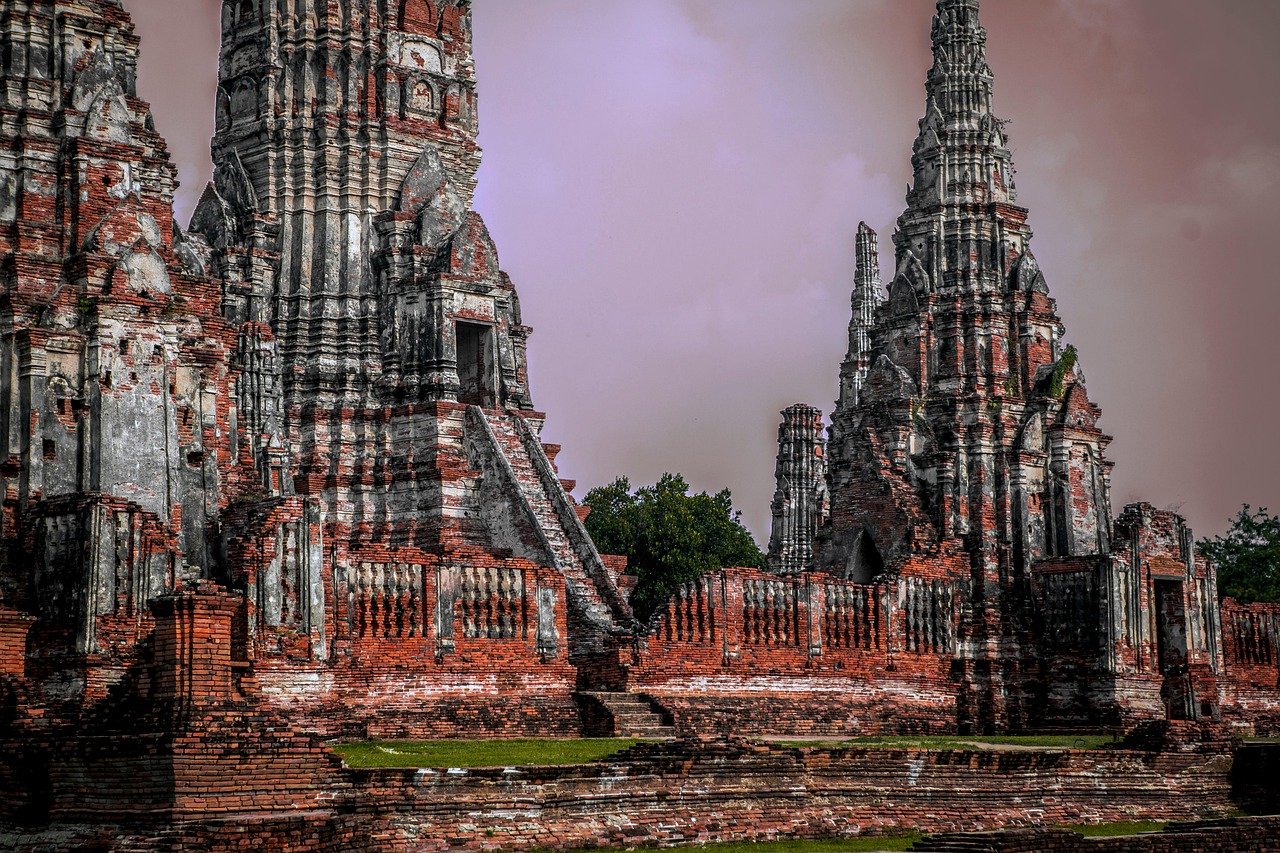
Ayutthaya was founded as the capital of the Kingdom of Ayutthaya in 1350 by King Ramathibodi I, on an island formed by the confluence of three rivers — the Chao Phraya, the Lopburi, and the Pasak. The island location provided natural defense and easy access to maritime trade. The city grew rapidly over the following centuries, eventually covering more than 10,000 temples and housing an estimated one million people at its peak — making it one of the largest cities in the world during the 17th century. European, Persian, Japanese, and Chinese merchant communities maintained separate trading quarters in the city, and ambassadors from Louis XIV visited the court of King Narai in 1685.
The destruction of Ayutthaya came in 1767 when Burmese forces, after a 15-month siege, sacked and burned the city. The scale of destruction was deliberate and comprehensive: temples were demolished or burned, the gold from Buddha images was stripped, and the population was carried into slavery or scattered. The Kingdom of Ayutthaya was effectively annihilated — a cultural catastrophe from which Siam rebuilt itself as a different entity centered on Bangkok. Ayutthaya was declared a UNESCO World Heritage Site in 1991, recognizing the exceptional value of the surviving ruins as evidence of one of Asia great pre-modern civilizations.
What to See
The Ayutthaya Historical Park encompasses the main island and several surrounding sites. The three most important temple complexes are Wat Phra Si Sanphet, Wat Phra Mahathat, and Wat Chaiwatthanaram. Wat Phra Si Sanphet was the royal temple of the Ayutthaya palace — its three distinctive bell-shaped chedis are the iconic image of the site, containing the ashes of three Ayutthaya kings. The adjacent Wang Luang (Royal Palace) site is largely empty foundations but gives a sense of the palace’s extraordinary scale.
Wat Phra Mahathat is most famous for the sandstone Buddha head entwined in the roots of a bodhi tree — an image that has become one of the most reproduced photographs of Thailand. The rootwork has naturally grown around the head over centuries, and visitors are requested to photograph it from ground level as a sign of respect for the Buddha image (kneeling so your head is not higher than the image). Wat Chaiwatthanaram, on the west bank of the Chao Phraya, is a Khmer-style temple complex built in 1630 that is most dramatically viewed at sunset from across the river.
The Buddha Images
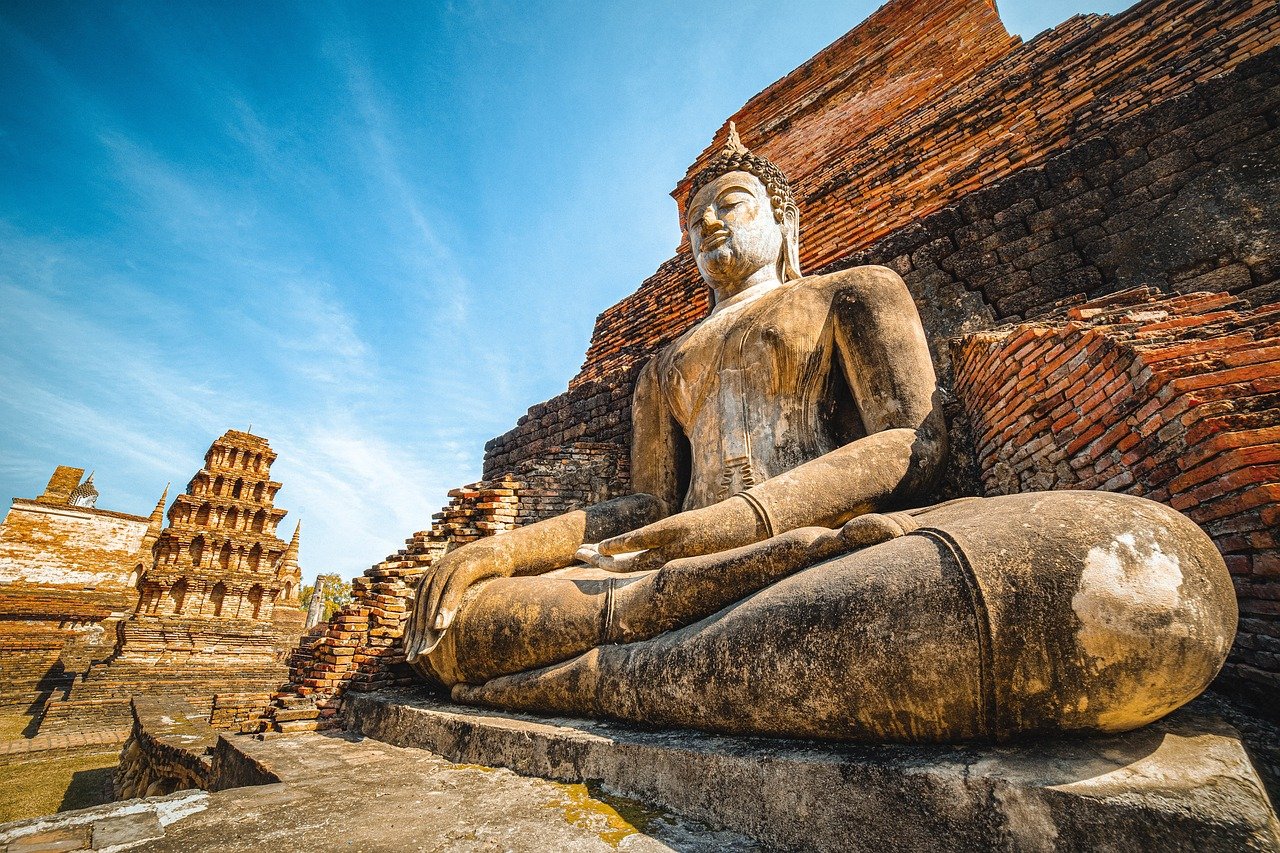
One of the most distinctive features of the Ayutthaya ruins is the large number of headless Buddha statues — a deliberate result of the 1767 Burmese sacking, during which heads were removed to extract the gold often placed inside hollow bronze images, and as a form of ritual desecration of the enemy culture. The sheer number of headless torsos throughout the site creates a powerful visual reminder of the destruction and a distinctive aesthetic quality unlike any other ancient site in the region.
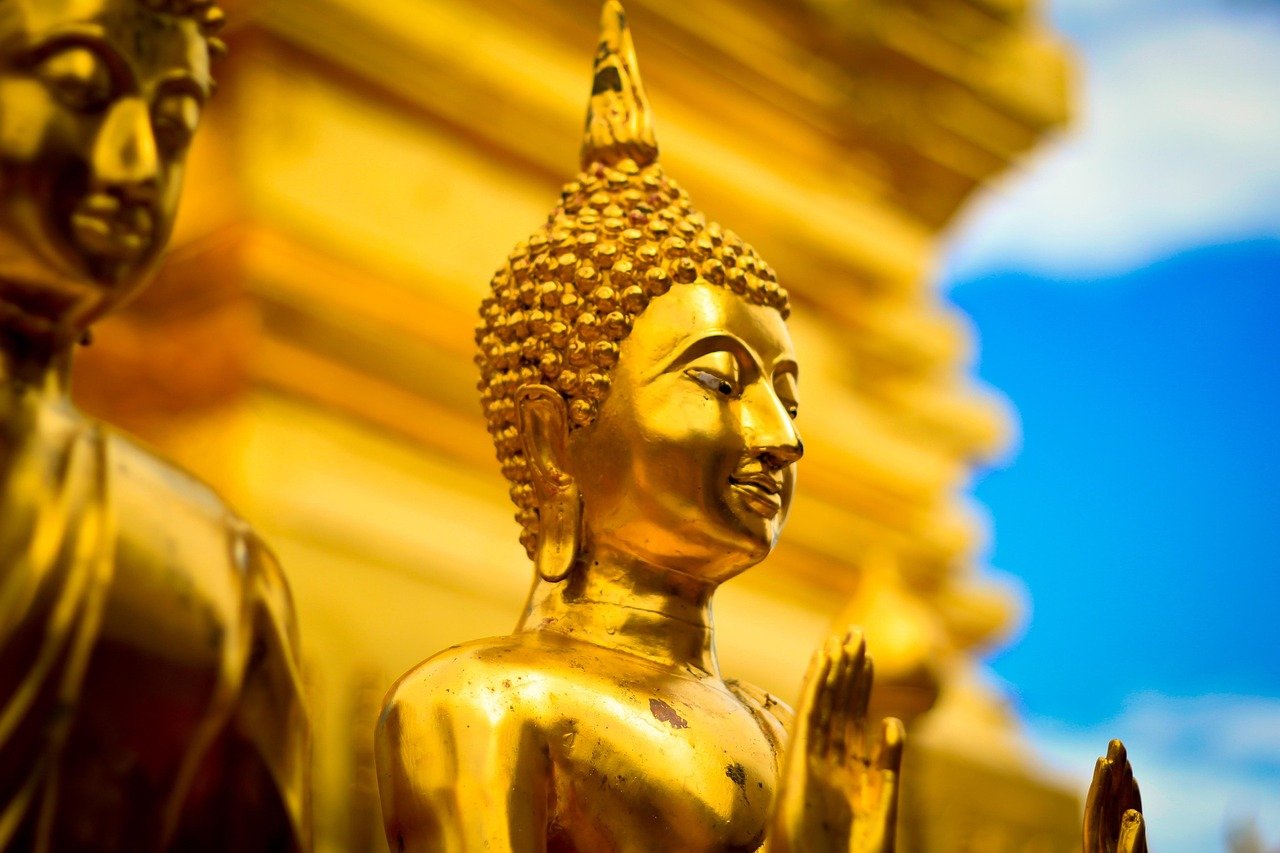
Where complete Buddha images survive, they often display the distinctive Ayutthaya style: elongated features, a flamelike ushnisha (topknot), and a slightly otherworldly serenity that differs from earlier Sukhothai images. The largest surviving collection of Ayutthaya-style Buddha images is in the Chao Sam Phraya National Museum in the city — well worth a visit for understanding what was lost in 1767. The museum also contains the famous gold artifacts recovered from the crypt beneath Wat Ratchaburana, including royal regalia and jewelry that somehow survived the 1767 sacking.
Practical Information
- Tickets: Individual temple entry 50 THB per temple. Day pass covering all major sites approximately 220 THB. Guided bicycle or tuk-tuk tours available from the city center.
- Opening hours: Most sites daily 08:00-18:00. Individual temples may have shorter hours — check locally.
- Best time to visit: November-February for cool, dry weather. Arrive early at popular sites (Wat Phra Mahathat, Wat Chaiwatthanaram) before tour groups arrive mid-morning.
- Duration: Full day for a comprehensive visit to the main island sites plus Wat Chaiwatthanaram. A half day covers the three most important temples.
- Booking: No advance booking required. Bicycles for rent (about 60 THB/day) are the most enjoyable way to explore the island at your own pace.
Local Insights
What locals know that guidebooks do not always tell you:
- A bicycle is by far the best way to explore Ayutthaya — the main island is flat, the distances between temples are manageable, and the bicycle lets you stop spontaneously at smaller ruins that tour buses and tuk-tuks bypass.
- Wat Chaiwatthanaram is best visited in the late afternoon rather than morning — the west-facing temple catches the sunset light magnificently from across the river, and the afternoon crowds are smaller than at midday.
- The Chao Sam Phraya National Museum in the city center is vastly undervisited compared to the temple ruins outside — the gold artifacts from Wat Ratchaburana are extraordinary and put the remaining ruins in context.
- Respectful dress is required at temple sites — shoulders and knees covered. Most rental shops near the train station sell inexpensive wrap-around sarongs if you arrive underprepared.
- Ayutthaya makes an excellent full-day trip from Bangkok (80 km), reached in 90 minutes by train from Hua Lamphong Station for about 15 THB — one of the great budget travel bargains in Asia.
Getting There
- Train: From Bangkok Hua Lamphong Station, trains run frequently to Ayutthaya — journey time about 90 minutes. Third-class fares from 15 THB; ordinary trains are fine for a day trip.
- Bus: From Bangkok Mo Chit Bus Terminal, buses depart frequently for Ayutthaya — journey time about 1.5-2 hours depending on traffic.
- By car/van: About 80 km north of Bangkok on Highway 1 — 90 minutes in good traffic, longer during rush hours. Parking available near the historical park.
- Organized tour: Many Bangkok operators offer guided day trips to Ayutthaya including transport, a guide, and sometimes a boat cruise back on the Chao Phraya.
Frequently asked questions
How far is Ayutthaya from Bangkok?
About 80 km north of Bangkok — approximately 90 minutes by train or car in normal traffic. It makes an excellent day trip from Bangkok and is also a logical stop on the route north to Chiang Mai.
Why are so many Buddha heads missing at Ayutthaya?
When Burmese forces sacked Ayutthaya in 1767, they deliberately decapitated Buddha statues as a form of desecration and to extract the gold sometimes placed inside hollow images. The headless torsos you see throughout the site are a direct legacy of this destruction — one of the most significant cultural catastrophes in Southeast Asian history.
Can I ride an elephant at Ayutthaya?
Elephant riding operations formerly operated near the historical park. Most responsible tourism recommendations now discourage elephant riding anywhere in Thailand due to animal welfare concerns. Ethical elephant sanctuaries (observation only) are available in the Chiang Mai region. Check current operator welfare standards before engaging any elephant activity.
What is the best temple to visit at Ayutthaya?
For the iconic image: Wat Phra Mahathat (Buddha head in tree roots). For architectural grandeur: Wat Phra Si Sanphet (three royal chedis). For atmosphere at sunset: Wat Chaiwatthanaram (Khmer-style, river views). Visiting all three covers the essential Ayutthaya experience.
Is Ayutthaya worth visiting as a day trip?
Yes — a day trip from Bangkok is fully sufficient for the main historical park. Those interested in the lesser-visited outer temples or a deeper cultural experience should consider an overnight stay, which also allows the unique experience of the ruins at dusk and dawn when day-trippers have left.