
Maeklong Railway Market
A whistle sounds, distant but urgent, and the vendors of Maeklong Railway Market execute a routine so practised it looks choreographed. Awnings fold back. Vegetable crates shuffle sideways. Umbrella poles lean at precisely calibrated angles. Then the train rolls through — slowly, barely clearing the stall frames on either side — and thirty seconds later the market reconstitutes itself exactly as it was, as though nothing happened. This has been happening eight times a day, every day, since 1905.
History of Maeklong Railway Market

The Maeklong Railway was built in the early 20th century to connect the provincial capital of Samut Songkhram — an important fishing and salt-producing area on the Gulf of Thailand — with Bangkok, replacing an older route via canal. When the railway was constructed, the market that had long operated along the roadside adjacent to the track simply refused to move. Instead, vendors adapted: they built their stalls directly over the tracks, installing retractable awnings and rolling their produce carts back just far enough to allow clearance when the train passed.
This accommodation between market and railway has continued for over a century, making Maeklong both Thailand’s most unusual market and one of the country’s most photographed scenes. The market itself is a genuinely functional local institution — not built for tourism — selling fresh fish (from the nearby gulf), vegetables, tropical fruit, dried goods, and cooked food to the residents of Samut Songkhram province. The tourism industry discovered it relatively recently, and while visitors now significantly outnumber locals on some trains, the market continues to serve its original community function every day of the year.
What to See and Do
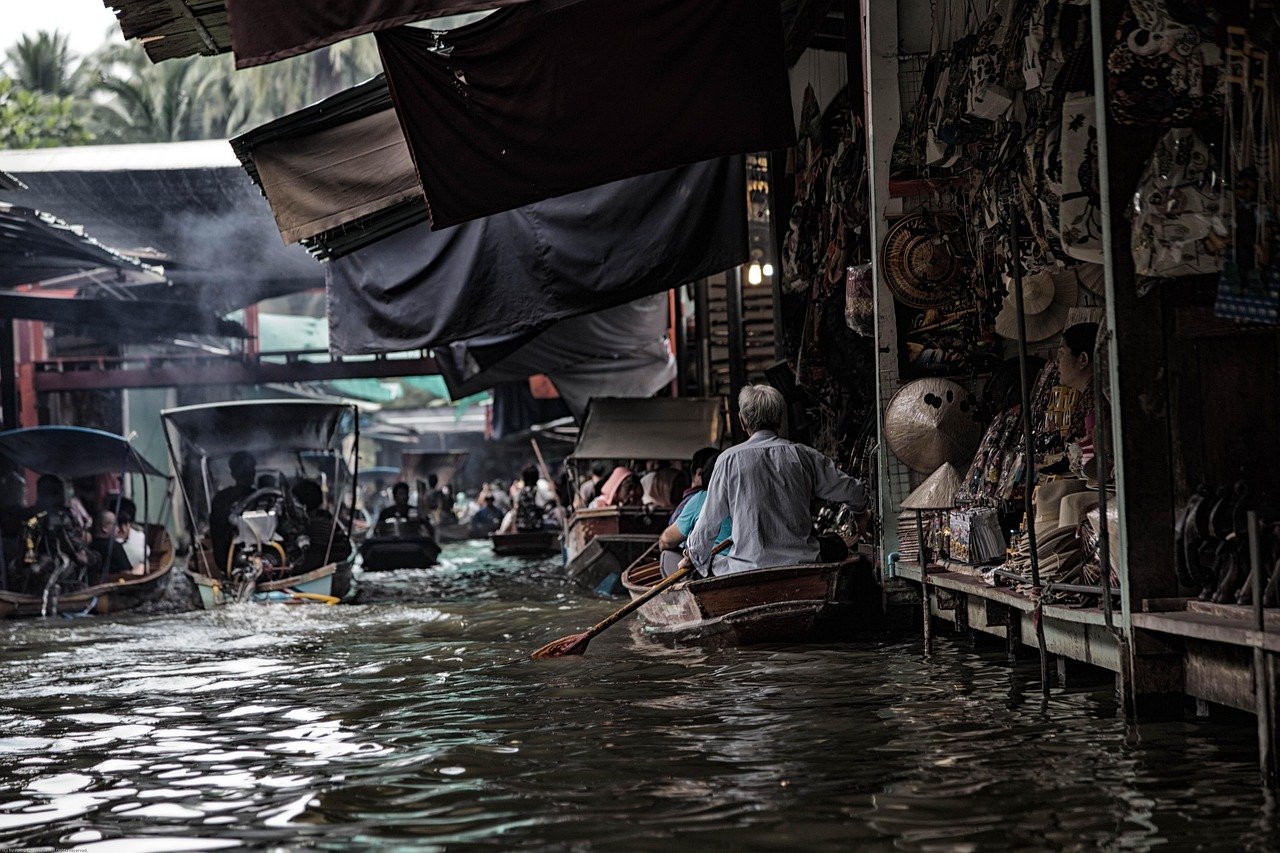
The primary event is, of course, the train. Trains arrive and depart from Maeklong station (the terminal point of the line) eight times per day. Arrivals: 08:30, 11:10, 14:30, 17:40. Departures: 06:20, 09:00, 11:30, 15:30. The 8:30 arrival is the most popular with tourists (the light is better and the crowds smaller than the 11:10 service), while the 14:30 arrival is often surprisingly uncrowded. Aim to arrive at the market 20–30 minutes before a scheduled train time to secure a good viewing position and explore the stalls.
Beyond the train spectacle, Maeklong is a working market worth exploring for its own produce and atmosphere. The fresh seafood section closest to the station is excellent — dried shrimp, salted fish, and fresh gulf catches at prices significantly lower than Bangkok markets. The fruit stalls sell mangosteen, rambutan, longan, and durian in season. Small cooked food vendors occupy the middle section, selling pad thai, grilled meats, and fresh-squeezed juices. The most scenic walk is directly along the tracks between trains, where the market stalls overhang the rails on both sides and vendors go about their business with complete composure.
The Train Spectacle
The train itself is a small diesel railcar, operating at walking pace through the market section. It does not stop — vendors and visitors alike clear the tracks as it approaches, and re-occupy them as soon as it passes. The clearance between the train’s body and the market stalls on either side is genuinely minimal — sometimes a matter of centimetres between train windows and fruit displays. Visitors who time their position well can photograph the train from directly between the stalls, with the locomotive filling the gap between vendor awnings on either side.
The ritual has a quality of unreality about it — the calm efficiency of the vendors, the leisurely pace of the train, the casual return to business seconds after the carriages clear. It would feel staged if it weren’t so obviously the product of a century of practical adaptation. The train operator and market management have an informal arrangement that has been maintained without drama since the railway opened, making Maeklong one of the most extraordinary examples of infrastructure and commerce coexisting in the world.
Practical Information
- Tickets: Market entry free; train from Bangkok approx. 100 THB one-way by van/bus + 10 THB train; organised day tours from Bangkok from approx. 800 THB
- Opening hours: Market open daily 06:00–17:00. Train schedule: arrivals at Maeklong 08:30, 11:10, 14:30, 17:40
- Best time to visit: 8:30am train arrival (best light, fewer crowds); avoid 11:10am which draws the largest tour groups. November–April for dry weather.
- Duration: 1.5–2 hrs including travel from Bangkok; 30 min at the market itself is sufficient for the train spectacle
- Booking: No booking required for independent travel; organised day tours can be booked through Bangkok agencies or hotels
Local Insights
What locals know that guidebooks don’t always tell you:
- For the best photography, stand midway along the market between the station and the bridge (not right at the station end) where the stalls are densest and the train travels most slowly through the most visually interesting section.
- Maeklong is commonly combined with the Amphawa Floating Market (20 minutes further by songthaew), which operates Friday–Sunday evenings. Both can be done in a single day trip from Bangkok.
- Most vendors cash only. There are no ATMs at the market — bring Thai baht.
- The train does not slow specifically for photograph opportunities — step clear of the tracks as soon as you hear the approaching whistle, well before you see the locomotive.
- Independent travel by van from Ekkamai bus terminal is cheaper than organised tours and gives you freedom to time your visit around specific train arrivals.
Getting There
- By van: Ekkamai Bus Terminal (BTS Ekkamai) → Maeklong Bus Terminal: 100 THB, approx. 90 min. Then 10 THB songthaew or short walk to market.
- By van + minibus: Victory Monument (BTS) → Samut Sakhon → Maeklong (train) is a scenic 3-legged journey popular with independent travellers
- Organised tour: Day tours from Bangkok hotels and Khao San Road include transport, often combined with Amphawa Floating Market
- Taxi/Uber: Direct from Bangkok approx. 500–700 THB one-way (60–90 min); convenient but more expensive
Frequently asked questions
Is the train dangerous for visitors?
Not if you follow basic instructions. Step back from the tracks when the whistle sounds. The train travels slowly and the driver is experienced with the market crossing. The main risk is being too focused on your camera while the train approaches — stay alert and step clear well in advance.
What time should I arrive to see the train?
Arrive 20–30 minutes before a scheduled train arrival. The 08:30 arrival is the sweet spot — good morning light, fewer crowds than the 11:10 service, and the market at its freshest.
Is it worth combining with Amphawa Floating Market?
Yes, if your visit overlaps with Amphawa’s operating days (Friday–Sunday evenings). The two markets are 20 minutes apart by local transport. Maeklong morning + Amphawa evening makes for an excellent day out of Bangkok.
Do vendors mind being photographed?
Generally no — vendors are accustomed to tourist photography. Some interaction and a small purchase from a stall you’re photographing is appreciated and costs very little.
Is there parking at Maeklong Market?
Limited parking is available near the market for those driving independently. Expect congestion on weekends. Public transport or organised tours are easier.