
Temple of the Dawn (Wat Arun)
Rising dramatically from the west bank of the Chao Phraya River, Wat Arun – the Temple of the Dawn – is one of Bangkok’s most iconic landmarks. Its central prang tower soars 67 metres into the sky, encrusted with millions of fragments of Chinese porcelain and coloured glass that shimmer and sparkle in every light. At sunrise the tower glows with golden pink light, and at sunset it reflects brilliantly in the river below. Few temples in Southeast Asia make such an immediate and powerful impression on first sight.
History of Wat Arun
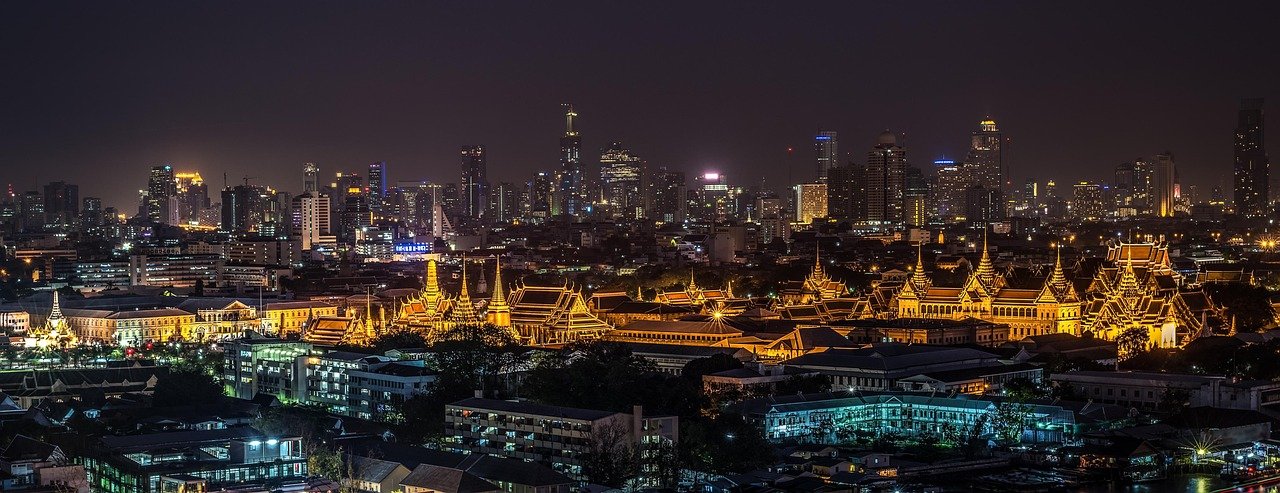
Wat Arun is one of Bangkok’s oldest temples and served as the royal temple during the Thonburi period when King Taksin made the city his capital in the 1760s. According to legend, Taksin arrived at the site at dawn after a victorious campaign, hence the name Temple of the Dawn. The temple briefly housed the sacred Emerald Buddha before it was moved across the river to Wat Phra Kaew during the reign of Rama I.
The iconic prang tower was greatly expanded during the reigns of Rama II and Rama III in the early 19th century. The Chinese porcelain decorations were added during this period, sourced partly from Chinese trading ships that used porcelain as ballast. The temple underwent extensive restorations in 2013-2017 that left its elaborate porcelain surface looking pristine once more.
What to See Inside Wat Arun
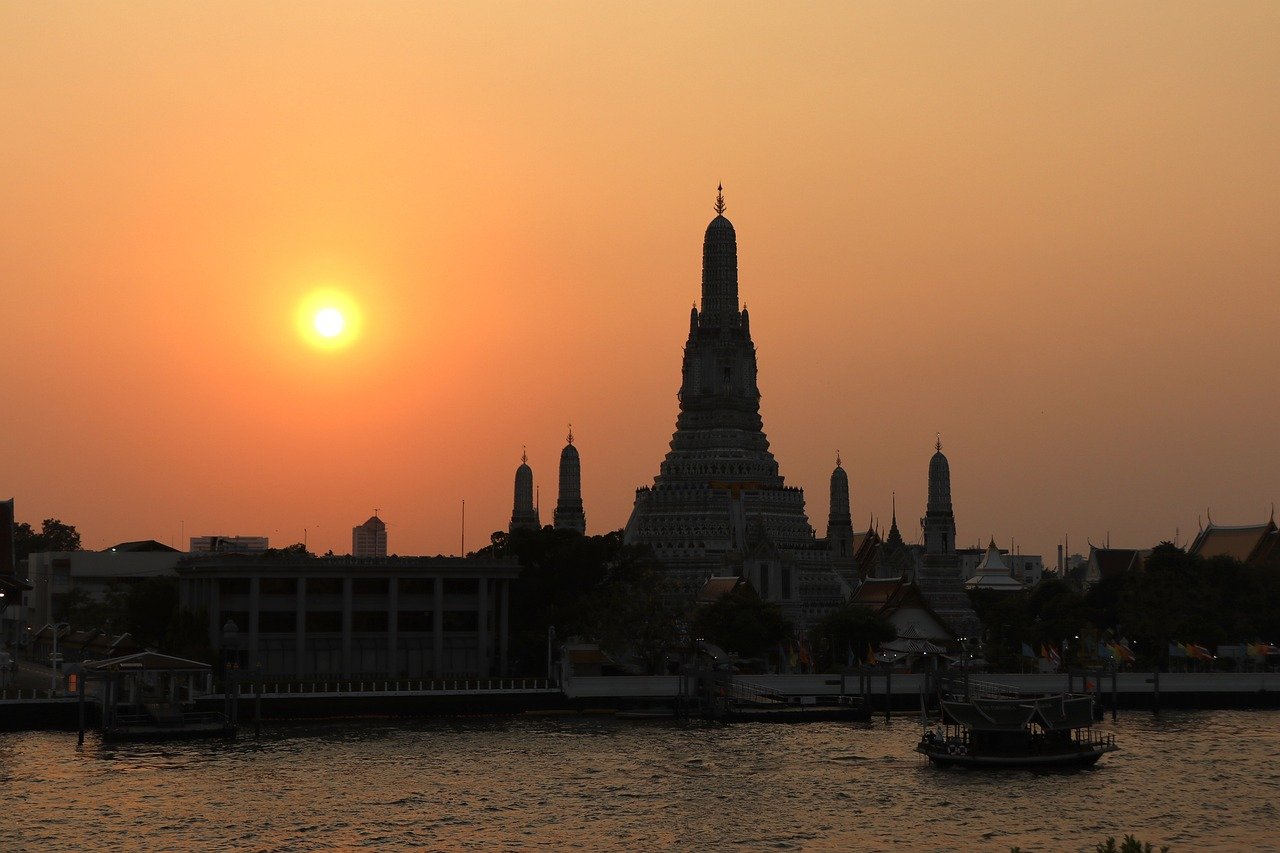
The central prang is flanked by four smaller satellite prangs and the entire complex sits within a riverside compound containing ordination halls, several viharns, and a boat landing. Visitors can climb the steep steps of the central prang to a terrace roughly halfway up for sweeping views across the Chao Phraya River to the Grand Palace on the opposite bank. The steps are genuinely steep and ropes assist the climb.
The porcelain decorations reward close inspection. Thousands of flower petals, mythological figures, and geometric patterns cover every surface of the prangs, each fragment hand-set by craftsmen. The base of the central prang is guarded by giants in demon and monkey warrior form, and inside the ordination hall stands a Buddha image said to have been designed by Rama II himself.
The Riverside Setting and Views
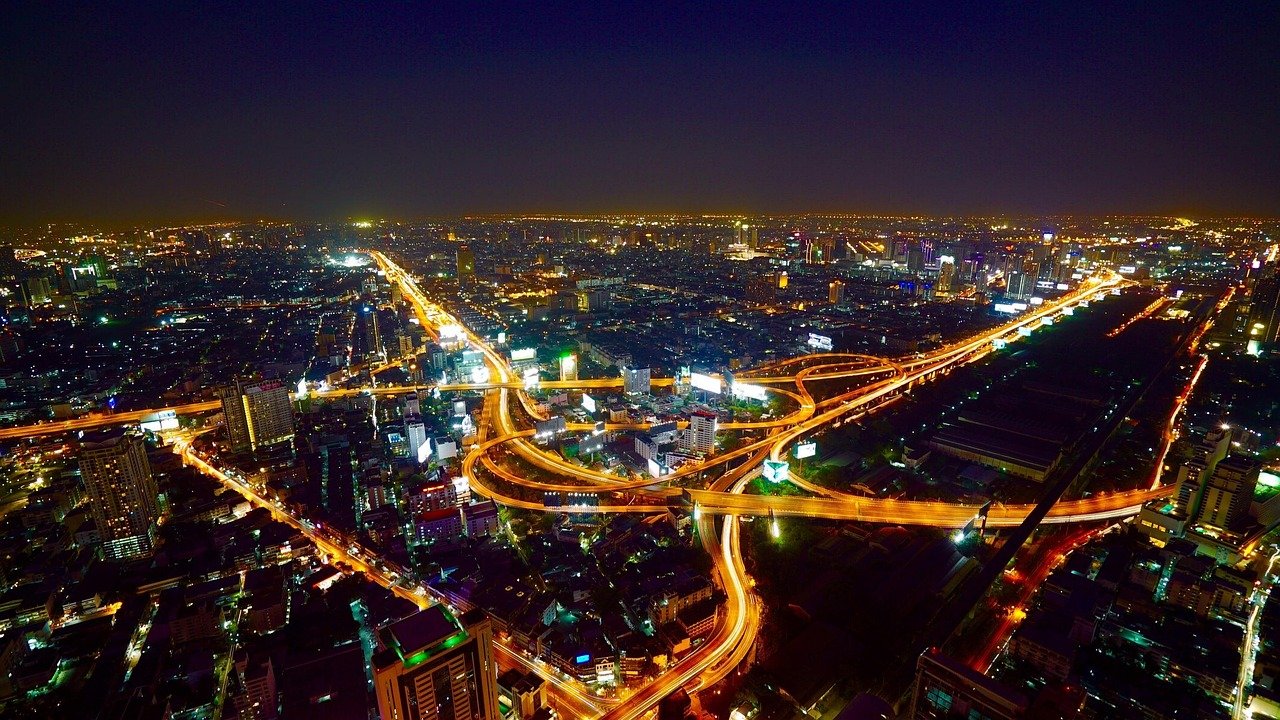
Wat Arun occupies an incomparably scenic position on a bend in the Chao Phraya River, and some of the best views are obtained from the opposite bank near Wat Pho. The nightly illumination turns the temple into a golden beacon on the river, and longtail boat tours and dinner cruises specifically route past Wat Arun to showcase it at its most dramatic.
The riverside promenade in front of the temple is ideal for photography at any time of day, but dawn and dusk offer the most magical conditions. The ferry from Tha Tien pier on the Rattanakosin Island side takes only a few minutes and costs just a few baht.
Practical Information
- Tickets: 100 Thai Baht (approximately USD 3) for foreign visitors
- Opening hours: Daily 8am-5:30pm; last entry 5pm
- Best time to visit: Early morning at opening for cooler temperatures; sunset from the opposite bank is spectacular
- Duration: 1-2 hours on site; allow extra time if you plan to climb the prang
- Booking: No advance booking required; tickets purchased at the entrance
Local Insights
What locals and seasoned Bangkok visitors always recommend:
- Take the cross-river ferry from Tha Tien Pier (N8) rather than a tourist boat – it costs a fraction of the price
- Dress modestly with shoulders and knees covered; sarongs are available to borrow at the entrance if needed
- Visit the opposite bank at sunset for the classic silhouette shot of Wat Arun against the golden sky
- The temple is far less crowded early morning on weekdays – arrive at 8am to have the prang steps nearly to yourself
- Combine with Wat Pho and the Grand Palace across the river for a full day of Bangkok temple exploration
Getting There
- Chao Phraya Express Boat: Alight at Tha Tien Pier (N8) then take the cross-river ferry to the temple
- BTS Skytrain: Take BTS to Saphan Taksin then connect to Chao Phraya Express Boat heading north
- Bus: Lines 57, 508, and others stop near the waterfront on the Rattanakosin Island side
- Taxi or Grab: Ask to go to Wat Arun; traffic can be heavy so allow extra time
Frequently asked questions
Can I climb the main prang at Wat Arun?
Yes, visitors can climb the steep stairs of the central prang to a terrace approximately halfway up for panoramic river views. The steps are very steep and ropes are provided – wear shoes with good grip and take your time.
What should I wear to visit Wat Arun?
Dress modestly with shoulders and knees covered, as is required at all Thai temples. Sarongs are available to borrow at the entrance gate if needed.
Is Wat Arun the same as Wat Pho or the Grand Palace?
No – these are three separate attractions. Wat Arun is on the west bank of the Chao Phraya River, while Wat Pho and the Grand Palace are on the east bank. All three can be visited in a single day.
What is the best time of day to photograph Wat Arun?
For photography of the temple itself, early morning offers the best soft light and fewest crowds. For the iconic silhouette shot, stand on the opposite bank near Tha Tien Pier at sunset.
Is there an entrance fee for Wat Arun?
Yes – the entrance fee for foreign visitors is 100 Thai Baht (approximately USD 3). Thai nationals enter free. The cross-river ferry from Tha Tien Pier costs a few additional baht each way.