
Kakadu National Park
The floodplains spread out in every direction, dotted with thousands of magpie geese filling the sky with a sound like paper being torn at enormous scale. A saltwater crocodile lies motionless on a mudbank, indistinguishable from a log until it isn't. The horizon is rimmed with monsoon forest, and above it all a rock escarpment glows ochre-red in the late afternoon light. Kakadu National Park is one of the largest national parks in the world and one of Australia's most significant places — a living landscape that has been continuously inhabited by Aboriginal people for at least 65,000 years.
History of Kakadu National Park
Kakadu is not simply a nature reserve — it is a cultural landscape of the highest significance, where the relationship between the Bininj/Mungguy Aboriginal people and their country stretches back tens of thousands of years in an unbroken continuity that is without parallel anywhere in the world. The rock art sites of Kakadu include some of the oldest art ever created by human beings — some galleries contain images estimated to be between 20,000 and 65,000 years old, depicting animals now extinct and ceremonial knowledge passed across uncountable generations.
The park was progressively gazetted in stages between 1979 and 1991 and is jointly managed by the traditional owners — the Bininj in the north and Mungguy in the south — and Parks Australia. This co-management arrangement is one of the first of its kind in Australia and has become a model for indigenous land rights recognition. In 1981 Kakadu was listed as a UNESCO World Heritage Site — one of only a handful of places on Earth to hold dual World Heritage status for both natural and cultural values simultaneously.
The park's history includes a more contested chapter: uranium mining at the Ranger Mine, located within the park boundary, operated from 1981 until 2012. The mine has been decommissioned and rehabilitation of the site is ongoing — a reminder of the competing pressures that have shaped the park's management over decades.
What to See
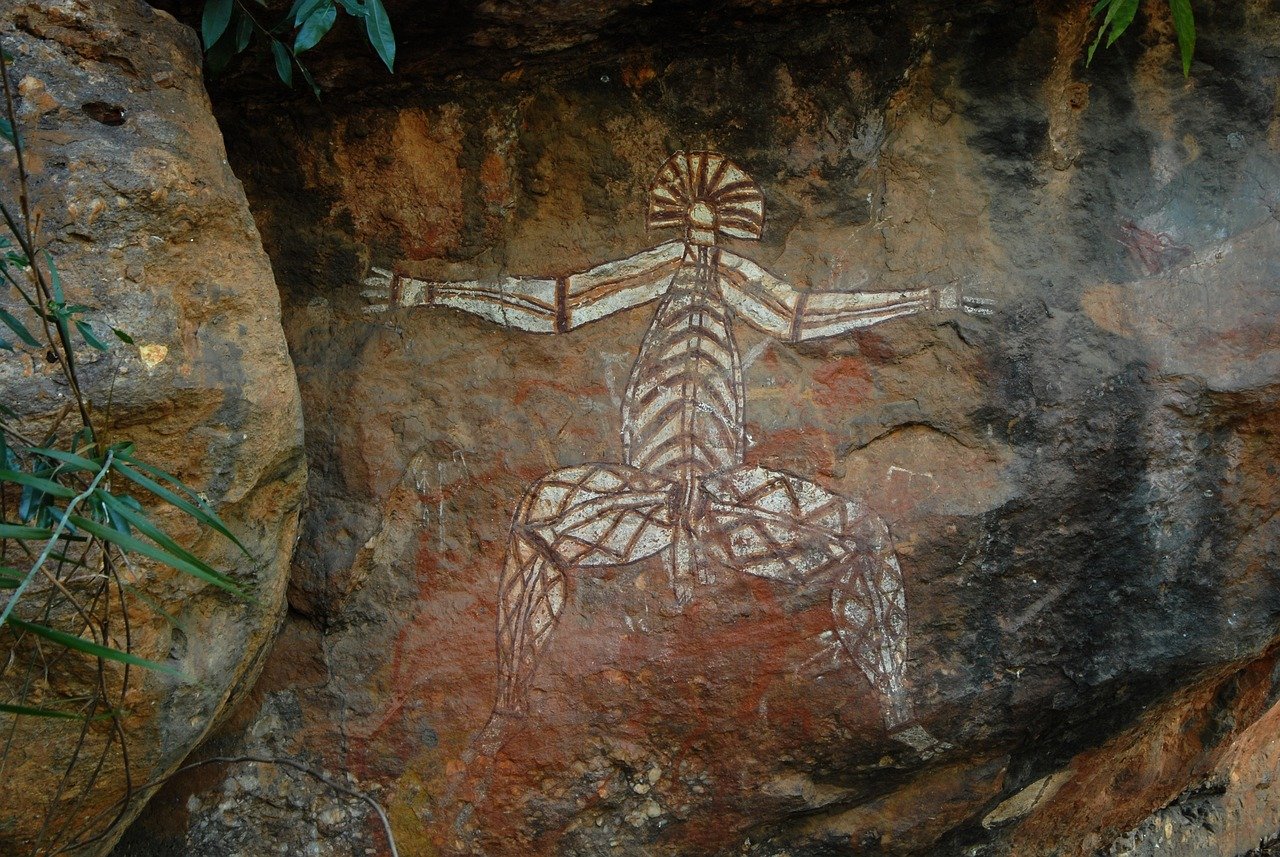
Kakadu's attractions divide into several distinct categories. The rock art galleries at Ubirr and Nourlangie are the most accessible and famous — Ubirr's main gallery contains X-ray style paintings of fish, kangaroos, and ancestral figures in striking ochre and white, while Nourlangie's Anbangbang Gallery includes large paintings of Namarrgon, the Lightning Man. Both sites have interpretive boards and guided tour options that significantly deepen the experience.
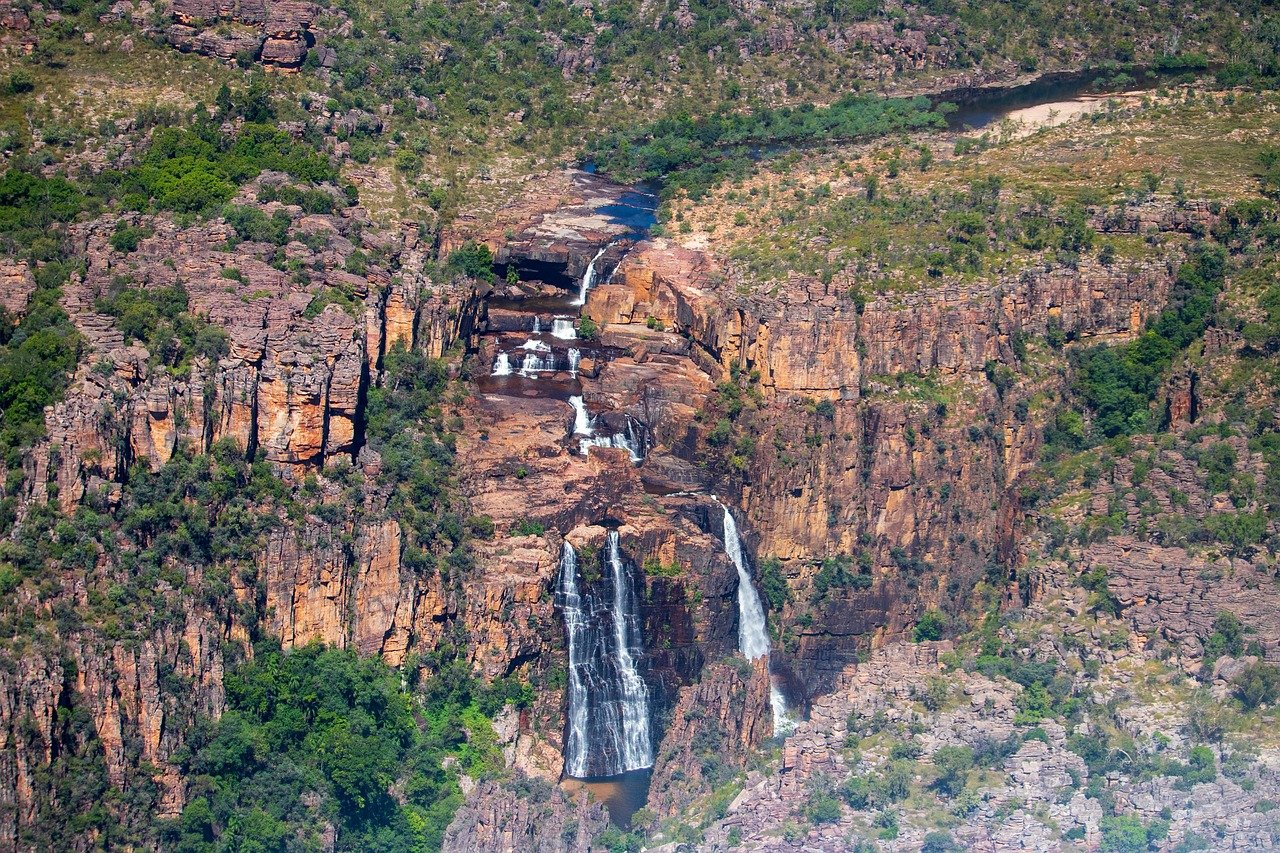
The wetlands of the South Alligator River system are among the most biodiverse in Australia. The Yellow Water Billabong cruise — available at dawn and late afternoon — glides through paperbark forest and floodplain channels teeming with birds and crocodiles. The spectacular waterfalls at Jim Jim Falls and Twin Falls (accessible only by 4WD and on foot) are among the most dramatic in the Top End, though they require planning and the roads are impassable in the wet season. The Cahills Crossing, where the tidal East Alligator River meets the floodplain, is a prime saltwater crocodile viewing spot.
Wildlife and Ecology
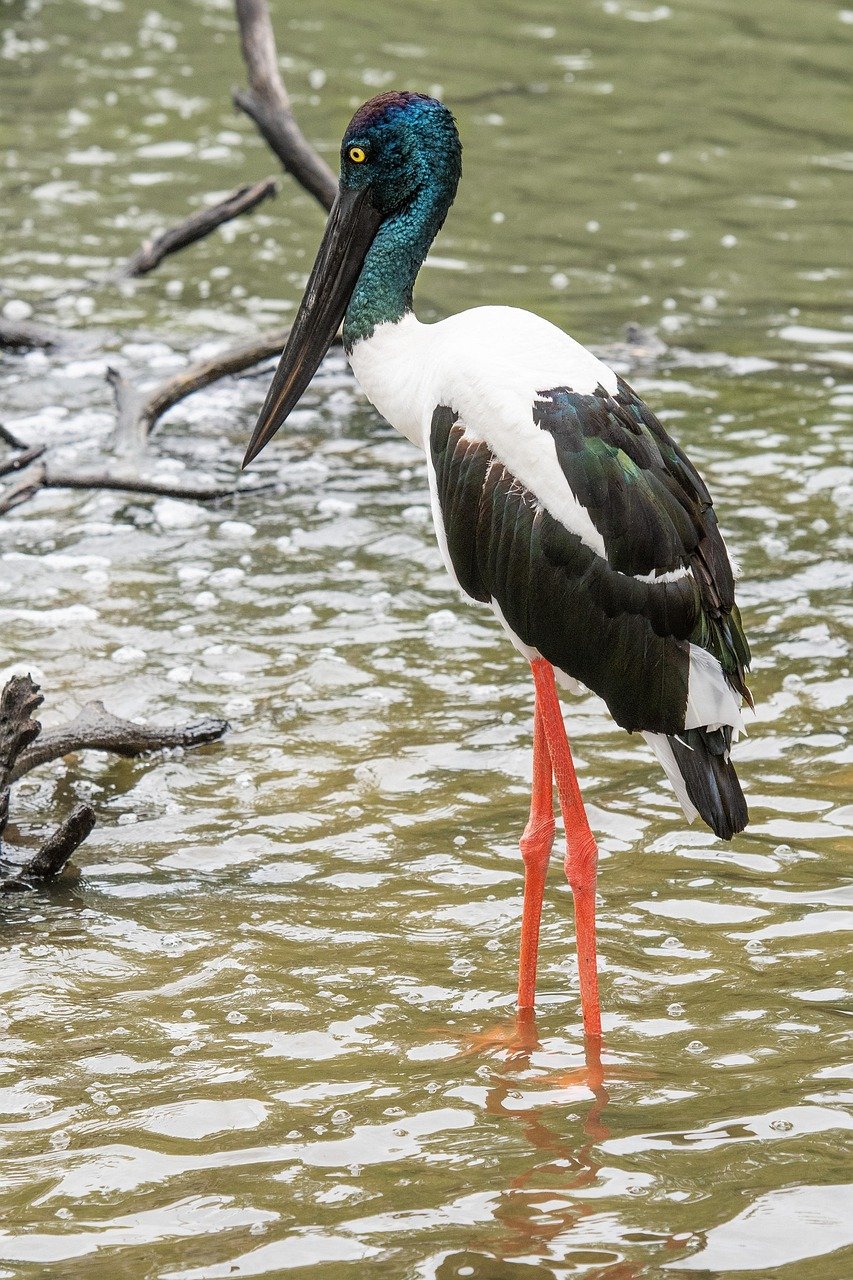
Kakadu supports an extraordinary diversity of wildlife across its six distinct ecosystems — from tidal flats and floodplains through paperbark swamps and lowland rainforest to the stone country of the escarpment. The park contains about one-third of all bird species recorded in Australia, making it one of the continent's premier birding destinations. Magpie geese, jabiru storks, brolgas, and sea eagles are among the most spectacular species found here in huge numbers.
The reptile diversity is equally impressive. Saltwater crocodiles (the world's largest living reptile) are abundant in all waterways and must be treated with extreme caution. Freshwater crocodiles — smaller and generally non-aggressive to humans — are found in upper river systems. Among the 117 species of reptile and 77 species of freshwater fish, the park harbours numerous species found nowhere else on Earth. Feral animals — buffalo, pigs, horses, and cats — remain a significant management challenge despite decades of control efforts.
Practical Information
- Tickets: Park entry pass required: adults AUD 40 per person (valid 14 days). Purchase online at parksaustralia.gov.au or at park entry stations.
- Opening hours: The park is open 24 hours. Bowali Visitor Centre: daily 8:00–17:00. Yellow Water cruise bookings: Gagudju Dreaming, daily multiple departures.
- Best time to visit: May–October (dry season) for road access, wildlife concentration around shrinking waterholes, and accessible waterfalls. Wet season (November–April) has dramatic storms and green landscapes but many roads close.
- Duration: 2–4 days to experience the park's highlights; longer for serious birdwatching or 4WD exploration.
- Booking: Yellow Water cruises book out in peak season; reserve ahead. 4WD tracks to Jim Jim and Twin Falls require a permit and experienced driving.
Local Insights
What locals know that guidebooks do not always tell you:
- The dawn Yellow Water cruise is significantly better than the afternoon one for birding — the light is extraordinary and the birds are at their most active. Bring a warm layer as it can be surprisingly cool on the water before sunrise.
- Ubirr is at its most dramatic at sunset when the rock glows red and the floodplains turn golden below the lookout — plan to be at the top of the escarpment walk about 30 minutes before sunset.
- Do not swim anywhere in Kakadu unless a specific spot is signed as safe — saltwater crocodiles are present in all major waterways and attacks have occurred even in seemingly shallow or fast-moving water.
- The Injalak Arts centre just across the East Alligator River in Gunbalanya (accessible May–October) is one of the best places in Australia to buy genuine Aboriginal art directly from artists at fair prices.
- Rangers at Bowali Visitor Centre have up-to-date road conditions — always check before heading to Jim Jim or Twin Falls, as 4WD tracks can close with little notice after rain.
Getting There
- By car from Darwin: Kakadu is 250–300 km east of Darwin via the Arnhem Highway. Allow 3 hours to reach the main park areas.
- Organised tour: Multiple operators run day tours and multi-day camping tours from Darwin. Day tours cover Ubirr or Nourlangie and Yellow Water; multi-day tours access Jim Jim and Twin Falls.
- By air: Darwin International Airport (DRW) is the gateway. No flights directly into the park.
- 4WD essential: A standard 2WD car can reach Ubirr, Nourlangie, and Yellow Water. Jim Jim Falls and Twin Falls require a high-clearance 4WD and driving experience on rocky, creek-crossing tracks.
Frequently asked questions
Is Kakadu open year-round?
The park is open year-round, but access to key sites changes dramatically by season. In the wet season (November–April), many roads close due to flooding, including access to Jim Jim and Twin Falls. The dry season (May–October) offers the best conditions for most visitors.
Are saltwater crocodiles dangerous in Kakadu?
Yes — saltwater crocodiles are one of the world's most dangerous predators and are present throughout Kakadu's waterways. Never swim, wade, or stand near the water's edge at any waterway unless a site is explicitly signed as safe.
Is Kakadu suitable for children?
Yes — children respond strongly to the rock art, wildlife, and landscape. The floodplain boardwalks are suitable for families. Ensure children understand the importance of staying away from water edges due to crocodile risk.
Do I need to book the Yellow Water cruise in advance?
Yes — especially the dawn cruise, which books out weeks ahead in peak dry season. Book directly through Gagudju Dreaming (the Yellow Water cruise operator) or through your accommodation.
What other attractions are near Kakadu?
Litchfield National Park (90 minutes south of Darwin) has swimming holes that are crocodile-safe and spectacular termite mounds. The town of Jabiru is the main service centre inside Kakadu with accommodation, fuel, and a supermarket.