
Katoomba
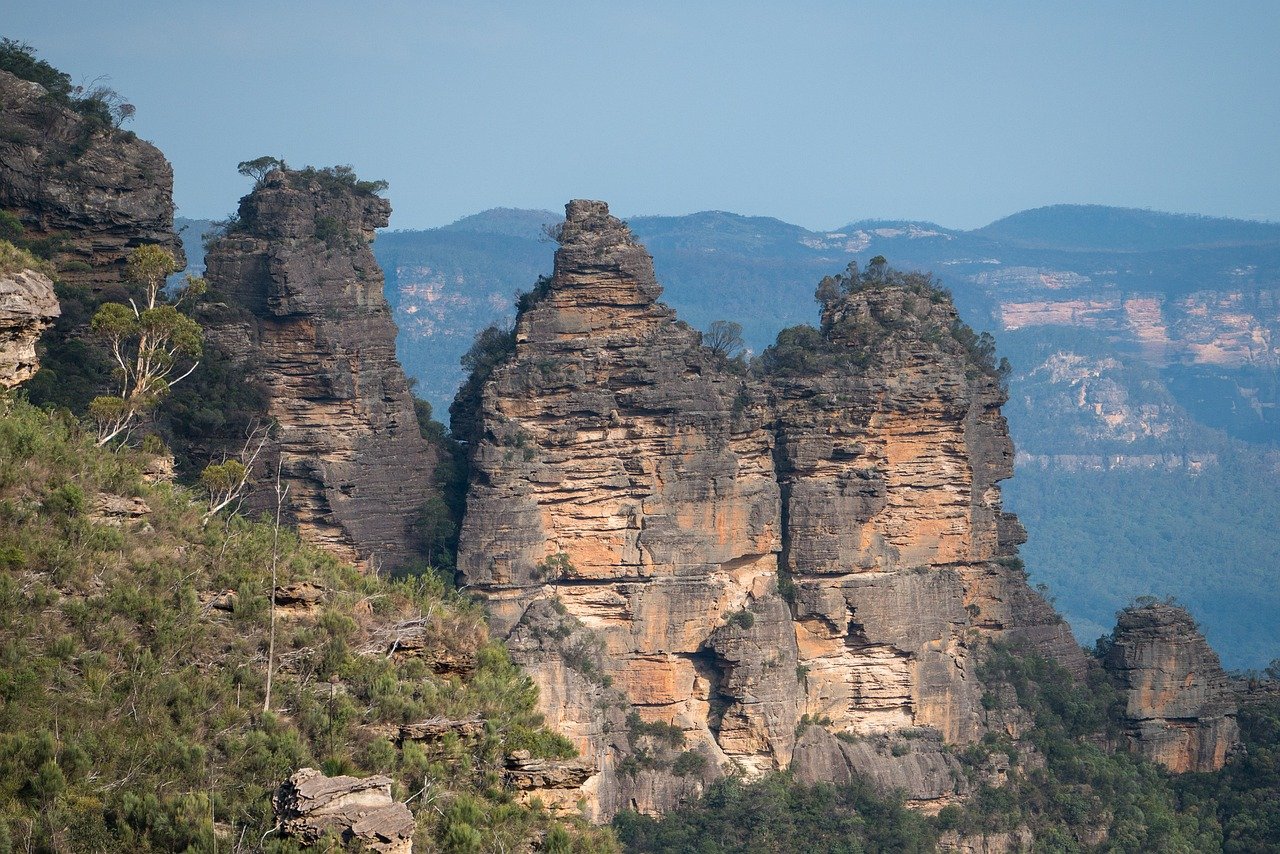
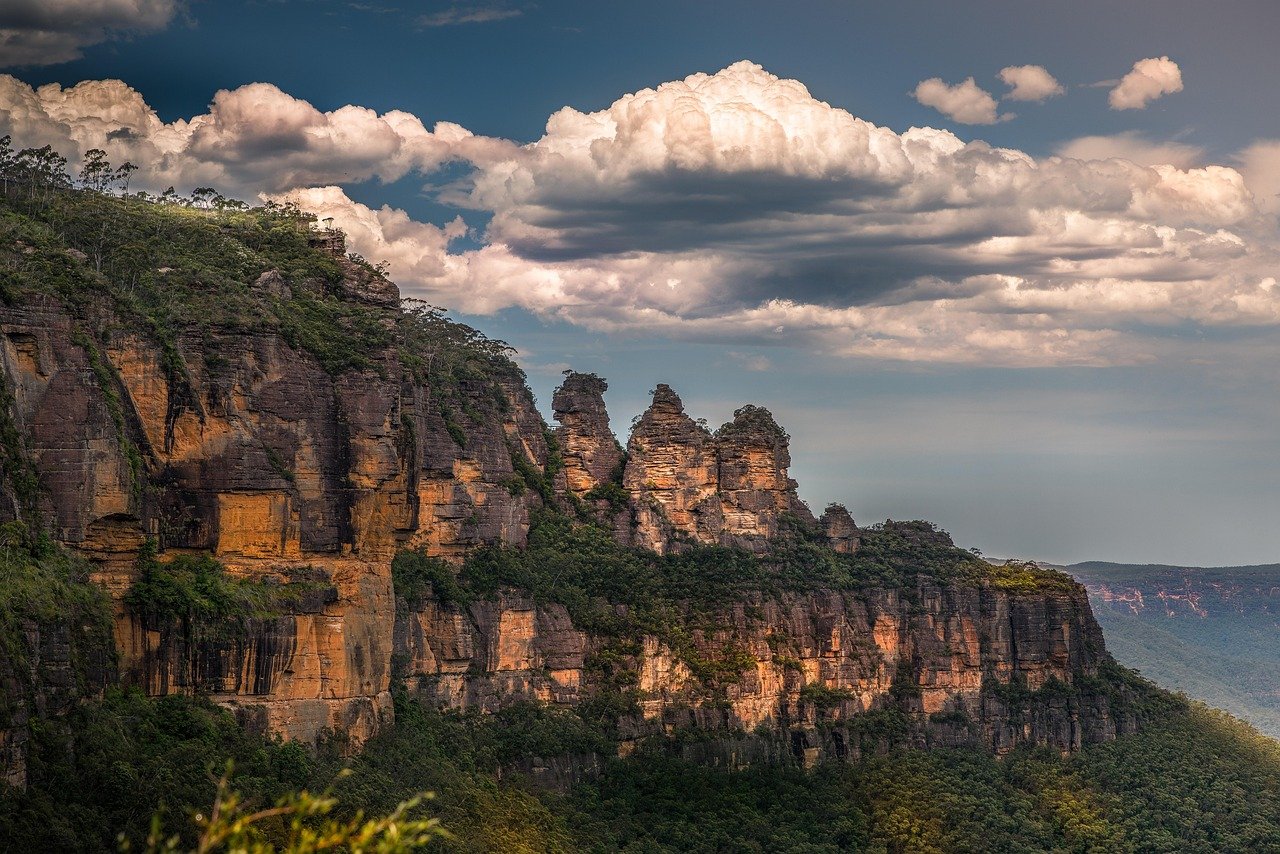
The mist rolls in off the Jamison Valley in the early morning, swallowing the lower slopes of the Three Sisters until only their crowns emerge above a sea of white cloud. Then the sun burns through, and the full 47-kilometer panorama of the Blue Mountains unfolds below — endless ridges of eucalyptus forest, deep sandstone canyons, waterfalls threading through cliff faces, and the ancient rock towers of Meehni, Wimlah, and Gunnedoo standing sentinel above it all. Katoomba is the gateway to this UNESCO World Heritage landscape, a town with personality and history perched on the edge of one of Australia’s most spectacular natural environments.
History of Katoomba and the Blue Mountains
The Gundungurra and Darug peoples have inhabited these mountains for over 22,000 years, developing a sophisticated relationship with one of Australia’s most rugged landscapes. European explorers famously struggled to cross the Blue Mountains for the first 25 years of the Sydney colony — the dense sandstone plateau and its sheer cliffs defeated every attempt until 1813, when Blaxland, Wentworth, and Lawson discovered a route by following the ridgelines rather than the valleys. This crossing opened up the fertile western plains and transformed the colony’s economic prospects.
The town of Katoomba grew rapidly after coal was discovered in the 1870s, and the opening of the railway in 1867 brought the mountains within easy reach of Sydney. By the 1880s, wealthy Sydneysiders were building guesthouses and grand hotels in Katoomba, Leura, and Blackheath, and the Blue Mountains were firmly established as the premier resort destination for New South Wales. The iconic Scenic Railway — originally built to haul coal and shale from the valley below — was converted to carry tourists in the 1920s and remains one of the steepest passenger railways in the world. The Greater Blue Mountains Area was inscribed on the UNESCO World Heritage List in 2000.
What to See
Echo Point Lookout, two kilometers from Katoomba’s main street, is where most visitors begin — a large viewing platform offering the famous Three Sisters panorama, free to access and open 24 hours. The Three Sisters — Meehni (922m), Wimlah (918m), and Gunnedoo (906m) — are sandstone formations shaped by millions of years of erosion in the Jamison Valley. An Aboriginal Dreamtime story tells of three sisters from the Katoomba tribe who were turned to stone by a witch doctor for protection, with the magic never reversed. The lookout’s Giant Stairway descends 900+ steps to the valley floor for those who want to get among the formations.
The Scenic World complex, a short drive from Echo Point, operates the Scenic Railway (at a 52-degree incline, one of the world’s steepest passenger railways), the Scenic Skyway (a glass-floored cable car crossing the valley at 270 meters), the Scenic Cableway, and a 2.4km boardwalk through ancient rainforest. Wentworth Falls, 10km east of Katoomba, has a spectacular tiered waterfall descending into the valley, accessible via an easy walking track with multiple lookout points. The Leura Cascades trail south of Leura town offers beautiful creek-side walking with multiple swimming holes.
The Scenic Railway Experience
The Scenic Railway at Katoomba holds a remarkable piece of history. Originally constructed in the 1880s to haul coal and oil shale from mines in the Jamison Valley to the surface, the railway used the same incline it does today — just with ore skips instead of tourist carriages. When the mines closed, entrepreneurial operators converted the infrastructure for passenger use, and the Scenic Railway opened to the public in 1945. The current carriages have glass roofs and recline backward to maximize the dramatic view of the cliff face as you descend at up to 52 degrees into the valley.
At the bottom, the ancient Carboniferous rainforest offers a complete contrast to the open mountaintop views above. This forest has changed little in millions of years — enormous tree ferns, coachwood trees, and climbing vines create a cathedral-like canopy. The boardwalk winds through the forest, with former mine shafts and coal-loading infrastructure still visible along the route, linking the natural and industrial history of the site. The return journey by Scenic Cableway or Scenic Railway completes one of the Blue Mountains’ most memorable experiences.
Practical Information
- Tickets: Echo Point and Three Sisters lookout — free, open 24 hours; Scenic World (Railway, Cableway, Skyway, Walkway) — adult day pass approx. AUD 49–55; individual rides available
- Opening hours: Scenic World daily 9am–5pm; Echo Point Visitor Centre daily 9am–5pm (closed Christmas Day); trails accessible dawn to dusk
- Best time to visit: Autumn (March–May) for cool clear weather; winter (June–August) for dramatic mist and occasional frost; spring (September–November) for wildflowers; avoid school holiday weekends for smaller crowds
- Duration: Half day for Echo Point and one attraction; full day to include Scenic World, walking tracks, and Wentworth Falls; 1–2 nights for comprehensive exploration
- Booking: Scenic World tickets can be purchased online or on arrival; book accommodation months ahead for peak periods (Christmas, Easter, school holidays)
Local Insights
What locals know that guidebooks don’t always tell you:
- Arrive at Echo Point at sunrise for the most dramatic Three Sisters photography — the first light turns the sandstone formations deep orange, and you’ll likely have the lookout largely to yourself before the tour buses arrive around 9am.
- The Prince Henry Cliff Walk connects Echo Point to Scenic World along the cliff edge (5km, 1.5 hours one-way) — one of the most spectacular cliff-edge walks in Australia and far less crowded than the lookout itself.
- The “blue” haze over the mountains that gives them their name comes from microscopic droplets of eucalyptus oil released by the trees — it scatters blue light and creates the characteristic misty colour, most visible in the morning before the air heats up.
- Leura, 3km east of Katoomba, has better cafes, galleries, and restaurants than the main Katoomba street — it’s a 5-minute drive or a short train ride away and well worth combining with your visit.
- The National Pass walking track, accessed via Wentworth Falls, is considered by many to be the finest walk in the Blue Mountains — it hugs the cliff face with extraordinary views and passes behind waterfalls. Allow 4–5 hours return.
Getting There
- Train: Sydney Trains Blue Mountains Line from Central Station to Katoomba — approx. 2 hours; runs hourly, more frequently in peak periods; excellent value
- By car: M4 Motorway west from Sydney then Great Western Highway; approximately 90 minutes depending on Sydney traffic; parking available at Echo Point (paid)
- Organized tours: Numerous day tours from Sydney include Blue Mountains stops; Blue Mountains Explorer Bus in Katoomba provides hop-on-hop-off service between the main attractions
- On foot: Katoomba train station is about 2.5km from Echo Point — walkable in 30 minutes, or take the local bus (Route 686)
Frequently asked questions
Is the Three Sisters lookout free to visit?
Yes — Echo Point Lookout and the Three Sisters viewing area are completely free and open 24 hours a day, 365 days a year. The Visitor Centre at Echo Point (with facilities, information, and a cafe) has standard opening hours. The Giant Stairway descent into the valley is also free but is a strenuous hike requiring reasonable fitness. Scenic World attractions (Railway, Cableway, Skyway) have separate admission charges.
Can I walk to the Three Sisters?
You can walk to the base of the first sister, connected to the Echo Point platform via the Giant Stairway (900+ steps, steep — allow 30–45 minutes descent). The other two sisters are not accessible on foot. The formation itself is a protected geological feature, so climbing on the rocks is prohibited and potentially dangerous. The best views of all three sisters are from the Echo Point lookout platforms.
How far is Katoomba from Sydney?
Katoomba is approximately 110km west of Sydney — about 90 minutes by car via the M4 Motorway, or 2 hours by train from Sydney Central Station. It is easily visited as a day trip from Sydney and is one of the most popular day excursions from the city. Accommodation in the mountains is also excellent if you want to stay overnight and experience the sunrise lighting.
What wildlife can I see in the Blue Mountains?
The Greater Blue Mountains area supports rich biodiversity. Common sightings include eastern grey kangaroos and wallabies (particularly at dawn and dusk), echidnas on bush trails, lyrebirds (known for their extraordinary mimicry of other birds’ calls) in the valley rainforest, cockatoos, rosellas, and kookaburras. Wombat sightings occur at dusk on quieter roads. The valleys also harbour threatened species including the regent honeyeater and the swift parrot.
Is Scenic World worth the price?
For most visitors, yes. The day pass allows unlimited rides on all four attractions — Railway, Cableway, Skyway, and the boardwalk. The Scenic Railway in particular is unique (genuinely one of the world’s steepest inclines) and provides access to the ancient valley rainforest that cannot be reached easily on foot. The Skyway’s glass floor over the Jamison Valley is spectacular. If budget is tight, prioritize the Railway plus boardwalk as the most distinctive experience.