
Bondi Beach
Even on a midwinter Tuesday, when the summer crowds are long gone and a southerly wind chops the grey-green water into peaks, Bondi Beach holds its power. The kilometre-long arc of sand curves between sandstone headlands, waves set up in perfect long-period lines from the open Tasman, and the paved promenade above the beach fills with joggers, pram-pushers, and people simply staring at the ocean as though it owes them something. Bondi is Sydney’s most iconic address — and unlike most icons, it genuinely earns the status every single day.
History of Bondi Beach
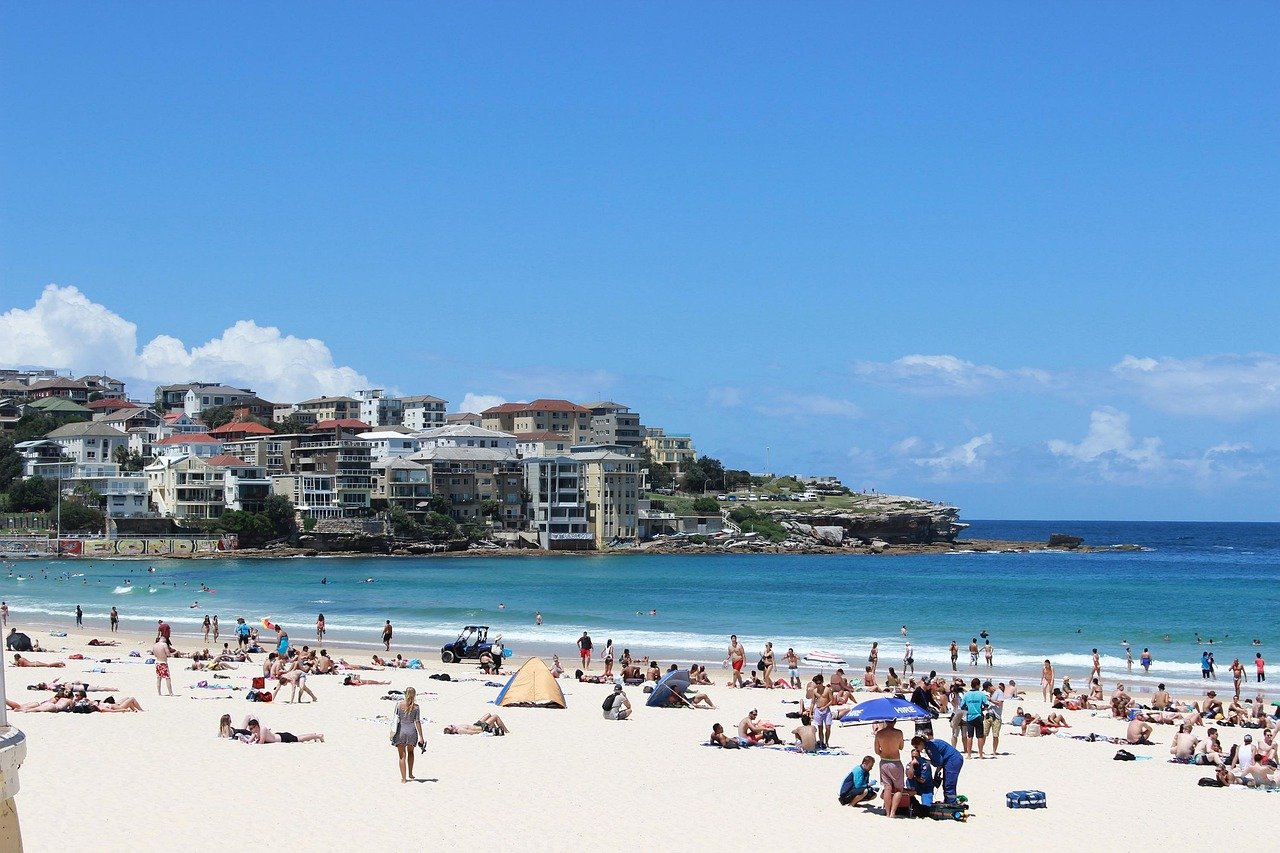
The name Bondi comes from the Gadigal word boondi, meaning “water breaking over rocks” — a description that remains accurate whenever a large swell rolls in. The Gadigal and Birrabirragal peoples knew these shores for tens of thousands of years before Europeans arrived. European settlement of the beachfront began in the 1840s, though swimming in the ocean was technically illegal in New South Wales until 1903 — the colonial authorities considered public ocean bathing indecent. When a ban on daytime bathing was finally lifted that year after a local journalist famously challenged it in public, the floodgates opened and Bondi rapidly became Sydney’s beach playground.
The Bondi Icebergs Club was founded in 1929 with an unusual membership rule: to become a member, you had to swim in the ocean pool at Bondi every Sunday for five years, including throughout the winter months. The club still operates by the same rule and the pool — perched at the southern end of the beach with waves crashing directly into it — is one of Sydney’s most photographed landmarks. The area’s demographics have shifted dramatically since the early 20th century: what was once primarily a working-class beach suburb has become one of Sydney’s most coveted and expensive addresses, though the beach itself remains as democratic as a beach can be.
What to See and Do
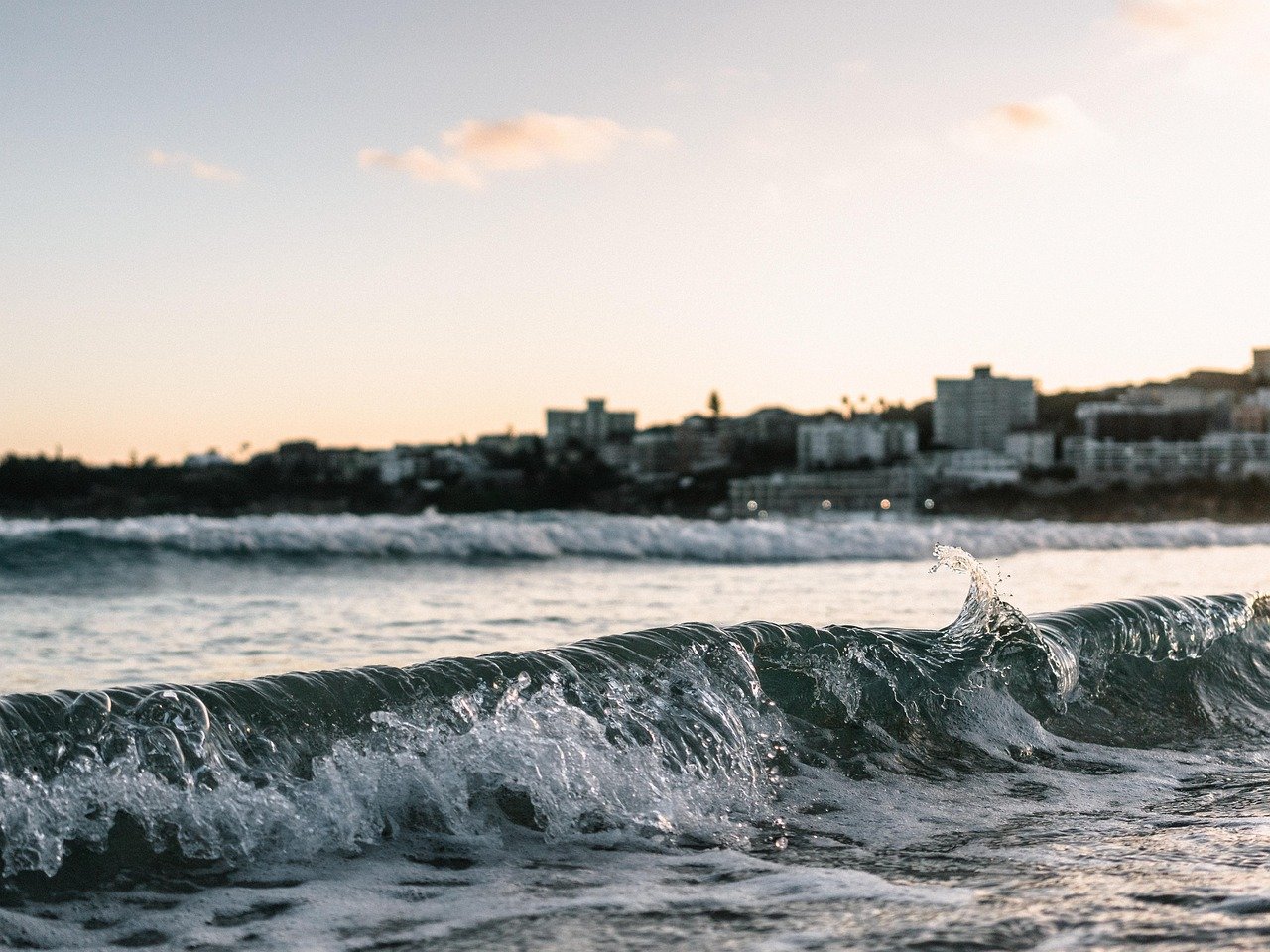
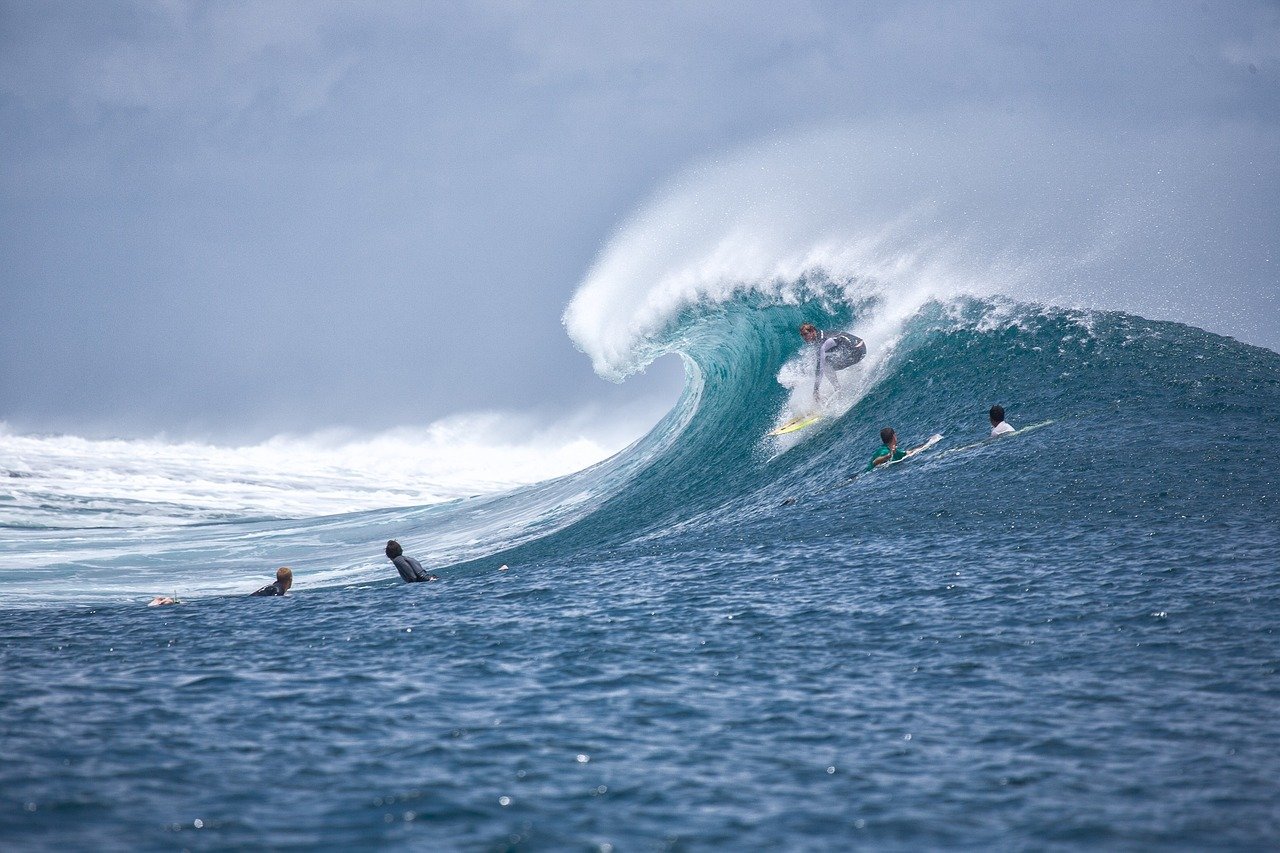
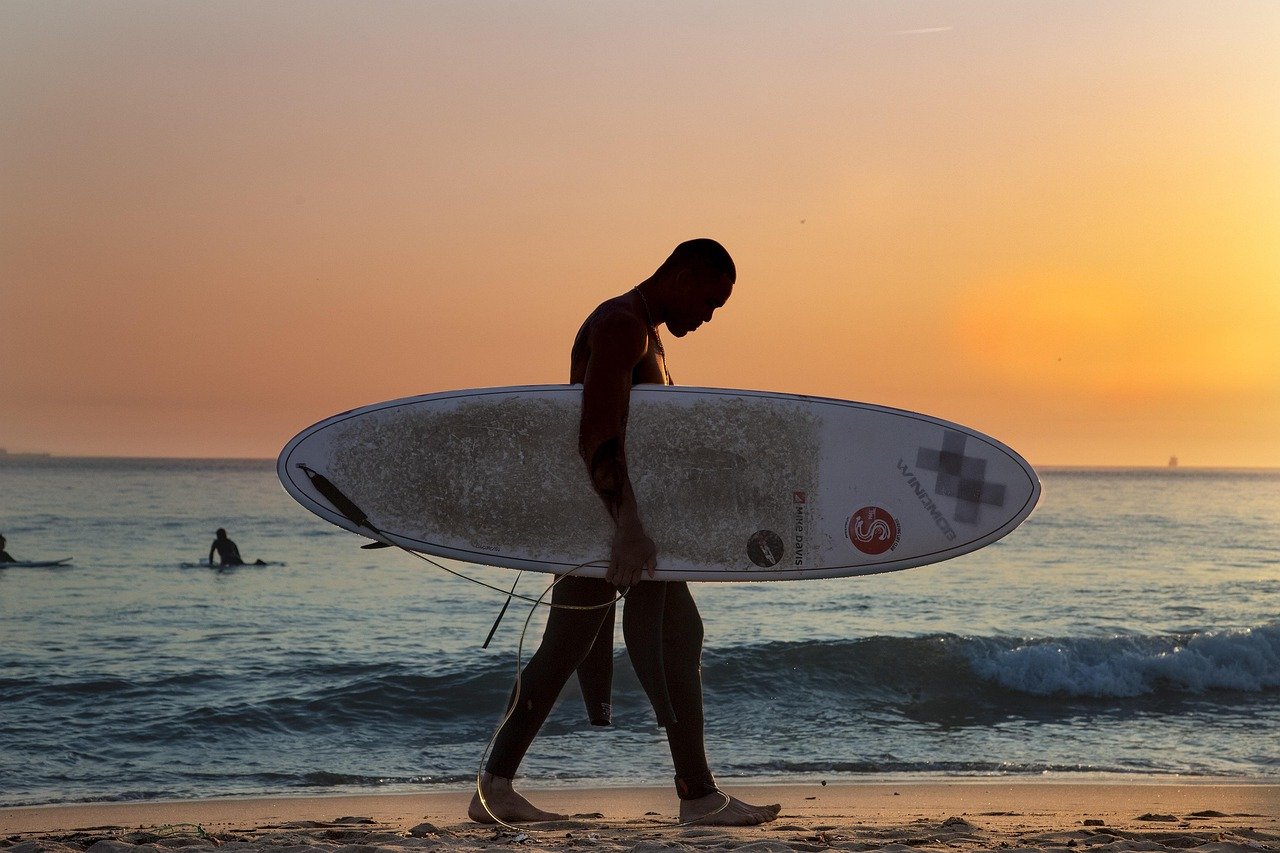
The beach itself is the obvious centrepiece — swimming (between the red and yellow flags where lifeguards patrol), surfing, bodysurfing, and simply lying on sand that is startlingly fine and surprisingly clean given the volume of visitors it receives. The surf at Bondi ranges from gentle rolling waves on the northern end to more powerful shore breaks in the south — surfboard hire and lessons are available from several shops on Campbell Parade.
The Bondi to Coogee Coastal Walk is one of Sydney’s essential experiences: a six-kilometre cliff-top path running south from Bondi through Tamarama, Bronte, Clovelly, and Gordon’s Bay before finishing at Coogee Beach. The walk takes two to three hours at a relaxed pace, passing Aboriginal rock engravings, tidal pools, cliff-edge sculptures during the annual Sculptures by the Sea exhibition (October-November), and some of Sydney’s most expensive and architecturally interesting residential development. The Bronte Baths and the Clovelly ocean pool offer swimming in protected rock pools along the way.
The Icebergs Pool and Clifftop Scene
The Bondi Icebergs pool at the southern headland is simultaneously a working members’ ocean pool and Sydney’s most photographed non-harbour attraction. On big swell days, waves crash directly over the pool wall, flooding the lanes with seawater and sending swimmers scrambling. Day entry for non-members costs around AUD 9, and the experience of swimming laps with the Pacific Ocean surging beside you — sometimes into you — is extraordinary. The Icebergs Restaurant and Bar upstairs is one of Sydney’s most sought-after tables for lunch, with floor-to-ceiling windows over the pool and ocean.
Campbell Parade, the strip of cafes, restaurants, and shops running the length of the beach, has improved dramatically in recent years. The era of mediocre tourist fare is largely over — good cafes, brunch spots, and restaurants now line the street, and the weekly Bondi Farmers’ Market (Saturday mornings in the primary school car park off Campbell Parade) is one of Sydney’s best, drawing producers from across NSW. The Saturday surf market on the north end of the beach runs through summer and offers a decent selection of second-hand boards, surf gear, and vintage swimwear.
Practical Information
- Tickets: Free beach access; Icebergs pool approx. AUD 9 adult, AUD 5 child; surf lessons from AUD 50
- Opening hours: Beach open 24 hrs; lifeguard patrols approx. 08:00–18:00 daily (extended hours in summer)
- Best time to visit: November–March for swimming weather; May–August for smaller crowds and excellent surfing; avoid Dec 26 (Boxing Day) — the beach is at its most crowded
- Duration: 2–4 hrs for beach visit; half to full day with coastal walk
- Booking: No booking for beach; Icebergs Restaurant advance reservation essential
Local Insights
What locals know that guidebooks don’t always tell you:
- Parking at Bondi on weekends between October and April is essentially impossible. Take the 333 or 380 bus from Bondi Junction train station — it drops you directly at the beach.
- The northern end of the beach has calmer water and is better for families. The southern end closer to the Icebergs is more powerful and preferred by experienced swimmers and surfers.
- Always swim between the red and yellow flags. Bondi Beach has strong, shifty rips — the Bondi lifeguards (among the world’s most experienced) rescue hundreds of swimmers per year, even on seemingly calm days.
- Saturday morning at the Bondi Farmers’ Market (in the Bondi Public School car park, two blocks back from the beach) starts around 9am. Get there by 9:30 for the best produce before the crowds thin the selection.
- The walk south to Tamarama takes only 15 minutes and the beach there (nicknamed “Glamarama” by locals) is dramatically less crowded despite being just one headland away.
Getting There
- Train + bus: Train to Bondi Junction (Eastern Suburbs Line), then bus 380 or 333 direct to the beach (10 min)
- Bus from city: 380 from Circular Quay via Oxford Street (45–55 min); 333 express from city (35 min)
- Car: Via Old South Head Road or Bondi Road; metered parking on Campbell Parade and surrounding streets (scarce on weekends)
- Taxi/Rideshare: Drop off on Campbell Parade opposite the beach; surge pricing common on summer weekends
Frequently asked questions
Is Bondi Beach safe for swimming?
Yes, when you swim between the red and yellow flags during lifeguard patrol hours. Outside those flags or outside patrol hours, the rips are powerful and the beach becomes genuinely dangerous. Never swim alone, especially at night or in rough conditions.
Can I surf at Bondi if I’m a beginner?
Yes. Several surf schools operate on the beach (Go Ride a Wave and Let’s Go Surfing are the best established), offering beginner group lessons from AUD 50–75. The northern section of the beach has the most suitable waves for beginners.
What is the Sculptures by the Sea exhibition?
An annual outdoor sculpture exhibition running along the Bondi to Tamarama clifftops for two to three weeks each October-November. Over 100 works by Australian and international artists are displayed on the cliff path. It’s free to attend and extraordinarily popular — arrive early or on a weekday to avoid crowds.
Is the Bondi Icebergs pool open to the public?
Yes. Non-members can pay day entry (approx. AUD 9 adult) to swim in the ocean pool. The pool is closed Thursday mornings for maintenance and cleaning.
Are there good restaurants near Bondi Beach?
Yes. The restaurant scene has improved significantly. Top options include Icebergs Dining Room (fine dining, book ahead), North Bondi Fish (relaxed seafood), and the numerous cafes along Hall Street one block back from the main strip, which are generally higher quality than those directly on Campbell Parade.