
Rottnest Island 💎 Hidden Gem
A quokka wanders across the path, pauses, looks directly at you with an expression that can only be described as absolute contentment, then trundles off toward the nearest bush. You have just experienced the most charming wildlife encounter in Australia, and possibly on Earth. Rottnest Island — Wadjemup in the Noongar language — sits 19 kilometers off the coast of Perth, Western Australia, and it is home to the world’s only wild population of quokkas. But the island is far more than its furry mascots: it offers 63 beaches of Caribbean-quality turquoise water, a history spanning over 6,000 years, outstanding snorkeling over coral, and a car-free lifestyle that makes every visit feel like a return to something simpler and better.
History of Rottnest Island
To the Whadjuk Noongar people, Wadjemup is a spiritual paradise — a place where spirits journey before the afterlife. The island was connected to the mainland until approximately 7,000 years ago, when rising sea levels following the last ice age separated it from the continent. Noongar oral traditions preserve memories of walking to Wadjemup when it was still part of the mainland, one of the most ancient geographical memories held in any oral tradition. The island was regularly visited by Noongar people for fishing and ceremony long before European contact.
Dutch explorer Willem de Vlamingh arrived in 1696 and named the island “Rattennest” (Rat’s Nest) after the quokkas he saw, mistaking them for large rats. European settlement brought dark chapters: from 1838, Rottnest was used as a colonial prison for Aboriginal men and boys from Western Australia and elsewhere, becoming one of Australia’s most tragic sites of incarceration. Over 3,700 Aboriginal men and boys were held here, with at least 369 known deaths. In recent decades this history has been formally acknowledged, and the island’s Wadjemup name has been officially recognized alongside “Rottnest.” Today, the Wadjemup Aboriginal Cultural Centre on the island presents this history with respect and depth.
What to See
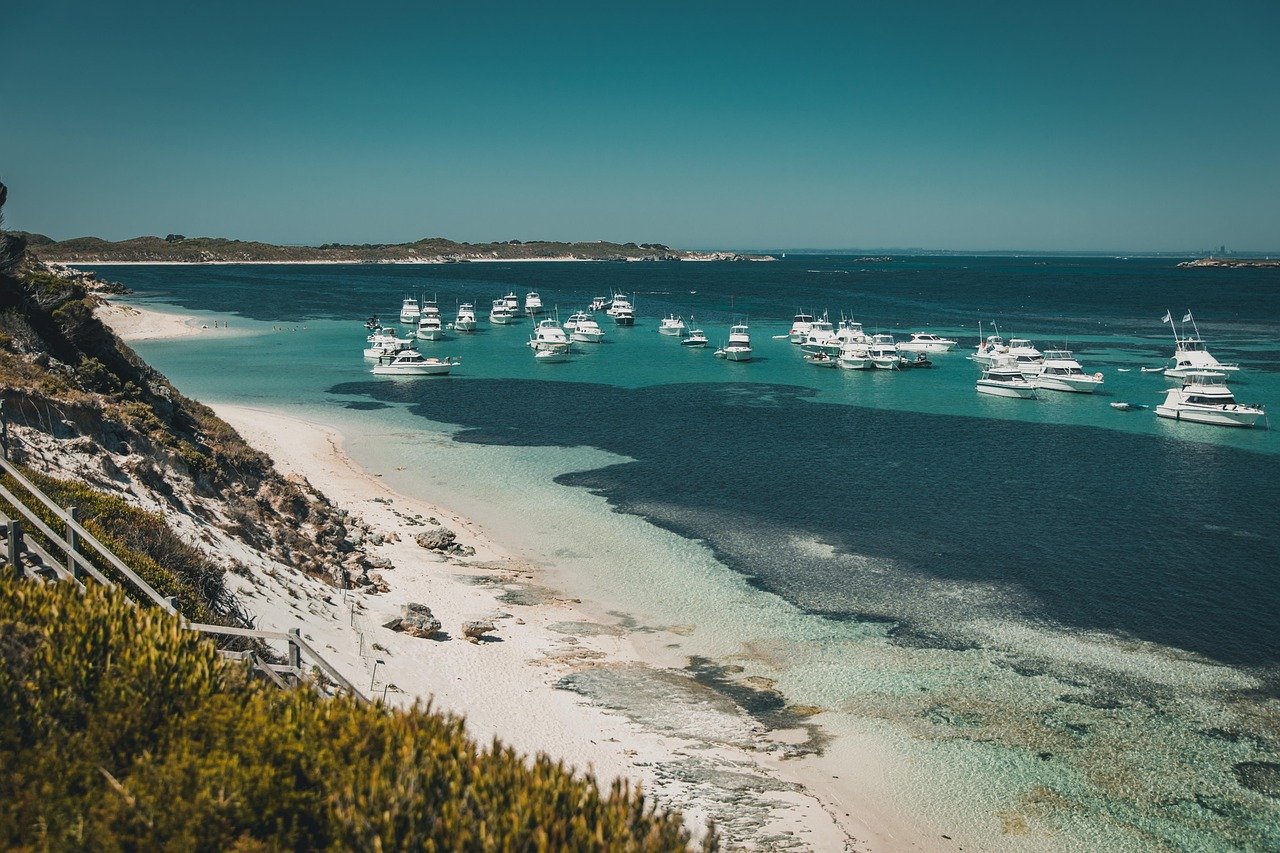
The island is entirely car-free, making cycling the primary mode of transport — and one of its great joys. A 26-kilometer sealed road loops around the island, passing all major beaches, bays, and lookouts. The Basin, a sheltered reef-enclosed pool near the main settlement of Thomson Bay, is perfect for snorkeling and swimming. Little Salmon Bay and Parker Point have designated underwater snorkel trails with interpretive panels identifying the coral and fish species, including colorful reef fish, octopus, and occasionally eagle rays. The West End — the island’s most remote point — has raw, windswept beauty and an important seabird nesting colony.
The Wadjemup Lighthouse, built in 1849, is one of Western Australia’s oldest lighthouses and can be visited by guided tour. The island’s salt lakes — which appear pink during summer when algae bloom — are a striking visual contrast to the surrounding blue sea and white sand. Above ground, the island’s low scrub and limestone outcrops provide habitat for quokkas, bobtail lizards, tiger snakes, and a remarkable variety of seabirds. The Rottnest Museum in Thomson Bay covers the full sweep of the island’s natural and human history.
Quokka Encounters
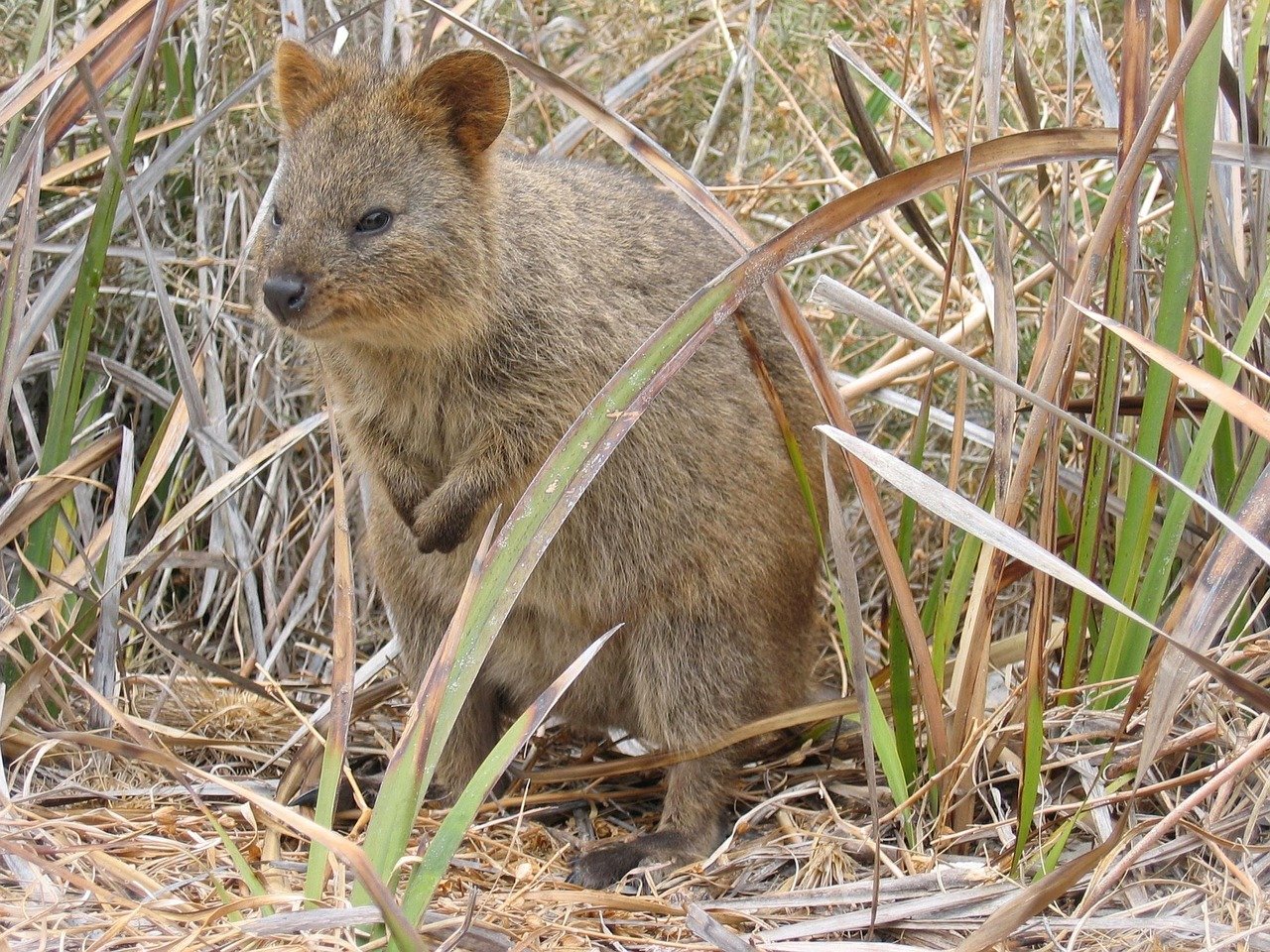
Approximately 10,000 quokkas live on Rottnest Island, making sightings almost guaranteed throughout the day. These small marsupials (about the size of a domestic cat) are nocturnal in much of their range, but on Rottnest they are highly active throughout the day due to the island’s relatively cool temperatures and abundant food. They are also unusually comfortable with humans, a result of having no natural predators on the island — they may approach within arm’s reach without fear.
The “quokka selfie” has become a global phenomenon, with celebrities and millions of ordinary visitors capturing smiling photos with these photogenic animals. However, strict rules protect quokka welfare: do not feed quokkas (human food can be fatal to them), do not attempt to touch or pick them up, and maintain a respectful distance. Quokkas approach on their own terms — the best photographs come from sitting quietly, at their level, and letting them investigate on their schedule. Kicking, touching, or attempting to restrain a quokka is illegal and carries significant penalties under Australian wildlife law.
Practical Information
- Tickets: Ferry return from Fremantle approx. AUD 64 adult (Rottnest Express); from Perth approx. AUD 95–115; from Hillarys Boat Harbour approx. AUD 75–85; admission landing fee included in ferry ticket price
- Opening hours: Island open daily year-round; ferries run daily from multiple mainland departure points
- Best time to visit: September–November (spring) for mild weather, fewer crowds, and excellent snorkeling visibility; December–February for warmest water and beach season; summer is busiest — book ferries well ahead
- Duration: Full day minimum; overnight stays allow you to experience the island at sunrise and sunset when quokkas are most active
- Booking: Book ferry tickets online well in advance for peak season (December–January); bike hire available on arrival at Thomson Bay settlement
Local Insights
What locals know that guidebooks don’t always tell you:
- The afternoon ferry from Fremantle is almost always more affordable and less crowded than the morning departure — arrive on the cheaper ferry, explore until late afternoon, and return on a later service.
- Hiring a bike on arrival is far cheaper than bringing or renting one from Perth; the on-island hire shops have good quality bikes and the island road is fully paved and essentially flat.
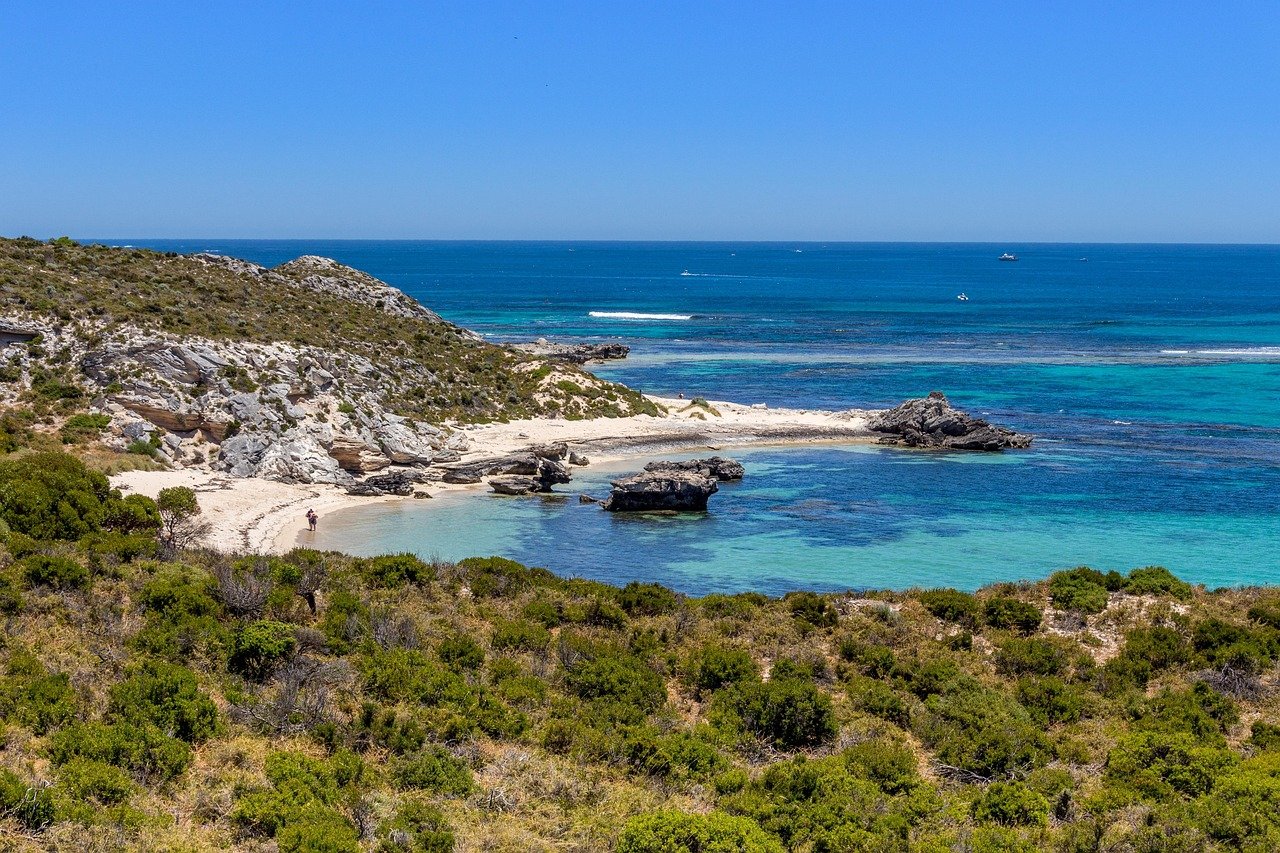
- The Basin is beautiful but very popular — for a more secluded swimming experience, cycle to Little Armstrong Bay, Salmon Bay, or any of the western bays, which often have fewer visitors even on busy days.
- The salt lakes turn vivid pink in January and February when halobacteria bloom — it’s a striking natural phenomenon that looks almost unreal and makes for spectacular photos.
- Camping and self-contained accommodation on the island allows you to experience dawn and dusk — the light on the limestone cliffs at these times is exceptional, and quokka activity is highest in the cooler parts of the day.
Getting There
- Ferry from Fremantle: Rottnest Express — 30 min crossing; multiple daily departures; adult return approx. AUD 64
- Ferry from Perth (Barrack Street Jetty): Rottnest Express — approx. 90 min crossing via Fremantle; adult return approx. AUD 95–115
- Ferry from Hillarys Boat Harbour: 45 min crossing; adult return approx. AUD 75–85
- By air: Charter flights and scenic helicopter transfers available for special occasions; depart from Perth Airport area
Frequently asked questions
Can I bring my car to Rottnest Island?
No — Rottnest Island is entirely car-free for day visitors. Privately owned vehicles are not permitted on the island. Getting around is by bicycle (highly recommended and available for hire), the island bus (connecting major points on a set schedule), walking, or organized tour. This car-free status is central to the island’s appeal and conservation management, and it creates an unusually peaceful atmosphere even during busy periods.
Is it safe to swim at Rottnest Island?
Yes — Rottnest’s beaches are among Western Australia’s safest. The protected bays with reef barriers limit wave action, and the island has no shark attack history at its most popular swimming spots. Some beaches are patrolled by lifesavers during peak season. Standard ocean swimming precautions apply — check conditions, swim between flags where lifesavers are present, and supervise children. The snorkel trails at Little Salmon Bay and Parker Point are sheltered and suitable for all abilities.
Are there restaurants on Rottnest Island?
Yes — Thomson Bay settlement has several dining options including the Rottnest Hotel (which has been welcoming visitors since 1858), the Dome Café, and various takeaway options near the ferry terminal. Quality is generally good but prices are higher than mainland equivalents due to supply logistics. Many day visitors bring their own food for a picnic, which is entirely practical given the island’s excellent picnic facilities.
What is the best age to visit Rottnest with children?
Any age works well. Younger children (2–8) are enchanted by quokkas and the Basin’s protected swimming area. Older children enjoy the freedom of cycling, snorkeling, and exploring independently. The island’s manageable scale means even families with young children can see its highlights without exhausting themselves. The car-free environment is particularly appealing for families — there is no traffic danger, which allows older children more independence.
What is the significance of the name Wadjemup?
Wadjemup is the Noongar name for the island and translates as “place across the water where the spirits are.” The island holds profound spiritual significance for the Whadjuk Noongar people, who understand it as a place where spirits of the deceased journey before their final passage. The Wadjemup Aboriginal Cultural Centre on the island presents the deep cultural history and the tragic colonial-era prison history, which saw over 3,700 Aboriginal men and boys incarcerated here. Both names — Wadjemup and Rottnest — are now officially recognized.