
Sydney Opera House
Perched on the tip of Bennelong Point with Sydney Harbour spreading in all directions, the Sydney Opera House is that rarest of things: a building that actually lives up to its reputation. Jørn Utzon’s extraordinary white shell roofs — which look different from every angle and in every light — have made it the most recognisable building in the Southern Hemisphere and the defining image of an entire continent. But the Opera House is far more than a postcard backdrop: it is a living, breathing performing arts centre that stages more than 1,800 performances a year, and a place where the harbour air, the architecture, and the energy of the city converge in a way that is genuinely difficult to put into words.
Design and Construction History
The story of the Sydney Opera House begins with a design competition in 1956, when the New South Wales government sought an architect for a new performing arts centre on Bennelong Point — a narrow peninsula that had once been an early colonial fort. Danish architect Jørn Utzon submitted a design so daring that it almost wasn’t shortlisted: four judges had already dismissed it when Finnish-American architect Eero Saarinen arrived late, rescued Utzon’s entry from the rejection pile, and championed it to victory. The design — a series of interlocking shell-shaped concrete vaults — had never been built before and, at the time of submission, Utzon had not yet worked out exactly how to build it.
Construction began in 1959 under considerable political pressure and technical uncertainty. The shells, originally envisaged as parabolic curves, proved structurally impossible to build economically. The breakthrough came in 1961 when Utzon’s team discovered that all the shells could be derived from a single sphere — a geometrically elegant solution that transformed what had seemed like an engineering impossibility into a buildable reality. The roof tiles, 1,056,006 chevron-shaped ceramic pieces glazed in matte and gloss white, were manufactured in Sweden and fitted by hand. They are self-cleaning: the matte tiles trap atmospheric dust that the Sydney rain then washes away, keeping the shells perpetually white.
Utzon resigned in 1966 after a political dispute with the incoming government over funding and design control, and he never returned to see the building he had conceived. The interiors were completed by Australian architects in a style Utzon considered incompatible with his vision — a tension that persists in architectural debate to this day. Queen Elizabeth II opened the building on 20 October 1973 before a crowd of 250,000. It was inscribed as a UNESCO World Heritage Site in 2007, just 34 years after opening — extraordinarily fast for a 20th-century building.
What to See
The Shells
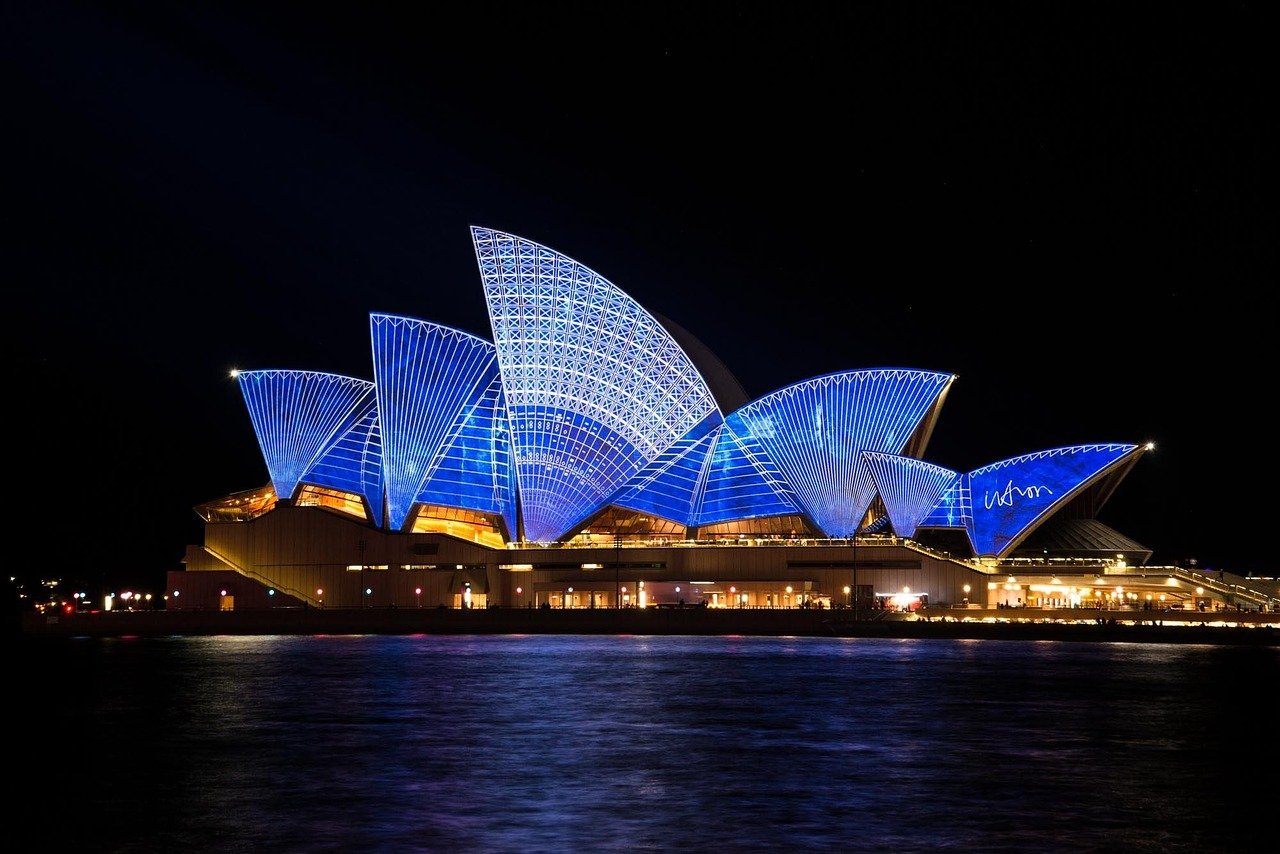
The exterior architecture is a destination in its own right. Walk the full perimeter of the building — this takes about 20 minutes at a slow pace — and pay attention to how the shells shift in appearance: from the Circular Quay approach they read as sails, from the ferry terminal they resemble stacked flowers, from the harbour itself they look like billowing fabric. The podium steps on the harbour side are one of Sydney’s great social spaces, perpetually populated with people eating lunch, sketching, or simply sitting with the harbour behind them. At night, the shells glow amber under floodlights and their reflection shimmers across the water — an image that repays lingering over.
Interior Concert Halls
The building contains five main performance venues: the Concert Hall (the largest, seating 2,679), the Joan Sutherland Theatre (the opera and ballet house), the Drama Theatre, the Playhouse, and the intimate Studio. The Concert Hall is the crown jewel, its interior clad in brushbox timber panels and featuring the Grand Organ — the world’s largest mechanical tracker-action organ, with 10,154 pipes. Attending a performance is the fullest way to experience the building; even a short lunchtime concert or a family-friendly show in the Studio gives access to interiors that guided tours can only partially replicate. The Sydney Symphony Orchestra and Opera Australia are the resident companies, and the program ranges from classical and contemporary music to theatre, comedy, and film screenings.
Guided Tours and Forecourt
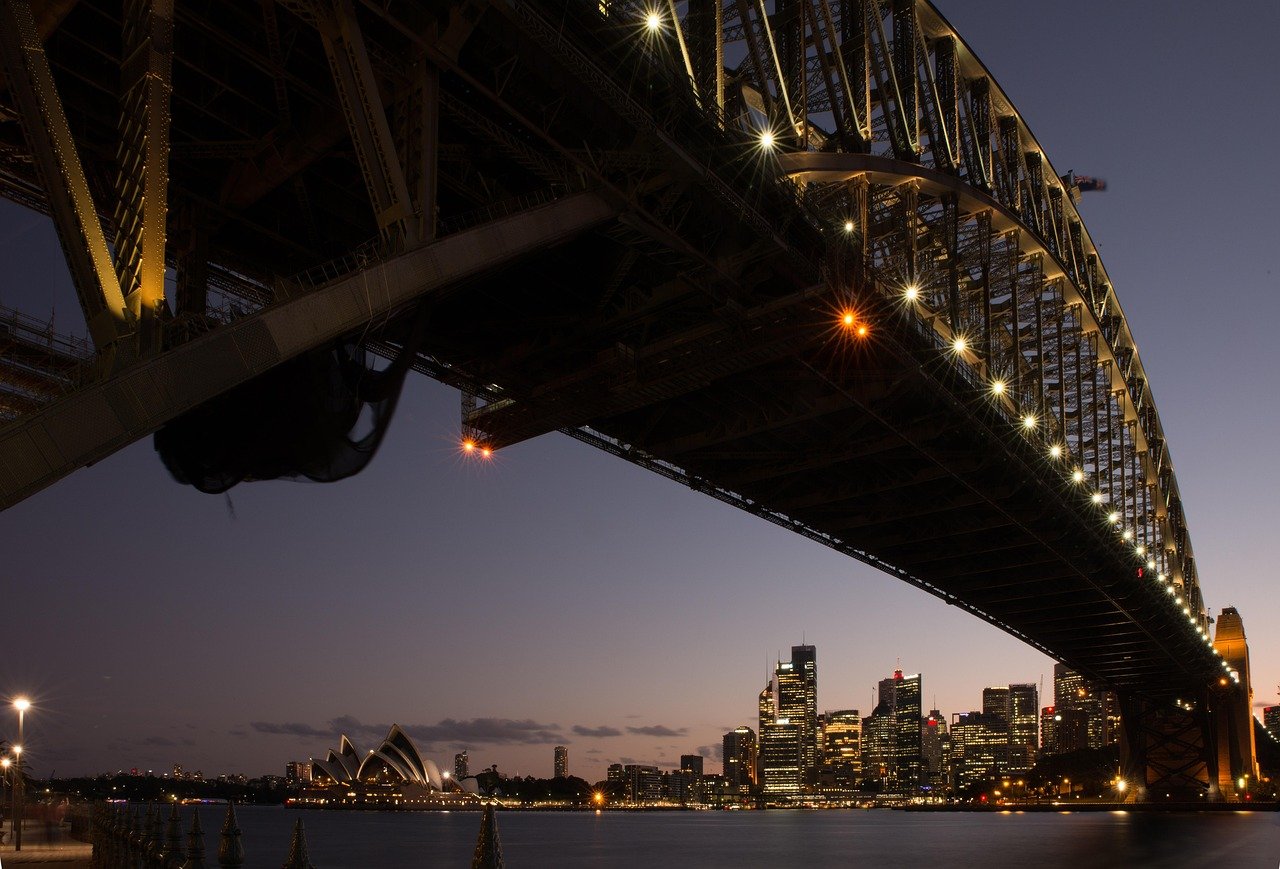
Guided tours run daily and offer the best way to explore the building’s back-of-house spaces, architectural details, and the areas not accessible to general visitors. The standard 1-hour tour visits multiple venues and explains Utzon’s design philosophy; the 2-hour Backstage Tour goes further, including stage areas, dressing rooms, and the Green Room. The forecourt and the surrounding Harbour promenade require no ticket at all: the broad granite esplanade between the Opera House and Circular Quay gives the classic framing shot of the shells with the Harbour Bridge arching behind. This walkway is lined with Aboriginal art installations and kiosks selling Sydney snacks — a leisurely hour here, at sunset in particular, delivers one of the world’s great urban experiences entirely for free.
Local Insights
What residents and regular visitors know that first-timers often miss:
- Walk around to the harbour side steps — the most Instagrammed view is from the front (Circular Quay approach), but the harbour-side steps at sunset, with the bridge behind you, are even more beautiful and much less crowded.
- Check the free outdoor events program — the forecourt hosts free concerts, film screenings, and cultural events throughout the year, especially during the Vivid Sydney light festival in May–June when the shells are projection-mapped with extraordinary art.
- Book a performance, not just a tour — even the cheapest ticket to a Saturday matinee lets you sit in the Concert Hall or Joan Sutherland Theatre in a way no tour replicates.
- The Opera Bar on the lower concourse is one of Sydney’s finest spots for a drink — on the water’s edge directly below the shells, with the bridge and the harbour as the backdrop.
- Arrive by ferry from Manly or Darling Harbour if possible — the approach to the Opera House by water, watching the shells emerge as you cross the harbour, is a genuinely memorable arrival.
Planning Your Visit
Key information for planning your Opera House experience:
- Getting there: 5-minute walk from Circular Quay train station and ferry terminal. Ferries dock at Circular Quay wharves directly opposite. Limited paid parking nearby — public transport strongly recommended.
- Tickets: Forecourt and exterior: free. Guided Tour (1 hour): adults ~A$45, children ~A$25. Backstage Tour (2 hours): ~A$175 adults. Performance tickets vary widely — from ~A$30 for smaller shows to A$200+ for major productions.
- Hours: Exterior and forecourt: always open. Guided tours daily, typically 9:00–17:00 with tours departing every 30 minutes. Box office: Monday–Saturday 9:00–20:30, Sunday 9:00–17:00.
- Time needed: Exterior walk and forecourt: 30–45 minutes. With a guided tour: 1.5–2 hours. With a performance: 3–4 hours including pre-show dining.
Frequently asked questions
Do you need a ticket to visit Sydney Opera House?
No ticket is required to visit the exterior, walk the forecourt, or enjoy the harbour promenade. The shells, the podium steps, the Opera Bar, and the surrounding grounds are freely accessible at all times. A ticket is required for guided tours (from ~A$45) and for attending performances. If you simply want the experience of being at and around the building, it costs nothing.
What guided tours are available?
The standard Opera House Tour runs daily for approximately one hour and visits multiple performance venues, explaining the building’s architecture and history. The Backstage Tour runs at 7:00 AM on selected mornings and lasts two hours, including dressing rooms, the stage, and the Green Room. Specialist tours including an Accessibility Tour and a First Nations Cultural Tour are also available. All tours depart from the main box office foyer and should be booked in advance online.
When was the Sydney Opera House built?
Construction began in 1959 and the building was officially opened by Queen Elizabeth II on 20 October 1973 — a total construction period of approximately 14 years. The project was plagued by political controversy, budget overruns (the final cost was A$102 million, compared to the original estimate of A$7 million), and the resignation of architect Jørn Utzon in 1966. Despite this troubled history, the building is now universally considered one of the masterworks of 20th-century architecture and was inscribed on the UNESCO World Heritage List in 2007.
What is the best time of day to visit?
Early morning (before 9:00) is the best time to photograph and experience the exterior without crowds — the light from the east is also ideal at this time, catching the shells at their most luminous. Sunset is spectacular from the harbour-side steps with the bridge catching the warm light. For atmosphere, arriving as an evening performance begins — with the building lit up, the ferries crossing the harbour, and the Opera Bar filling with pre-theatre diners — delivers the full Sydney Opera House experience at its most theatrical.