
Panathenaic Stadium
Stand on the running track of the Panathenaic Stadium in Athens and you understand immediately why the Greeks reinvented sport as religion: the white marble gleams in the Attic light, fifty thousand empty seats rise in a horseshoe above you, and the city of Athens stretches in every direction beyond the pine trees of the upper tiers. This is the stadium that hosted the first modern Olympic Games in 1896, built entirely of Pentelic marble — the same luminous stone used for the Parthenon — and it remains the only major stadium in the world constructed from a single type of natural stone. To run even a few metres on its track is to feel the weight of two and a half millennia pressing pleasantly on your shoulders.
History of the Panathenaic Stadium
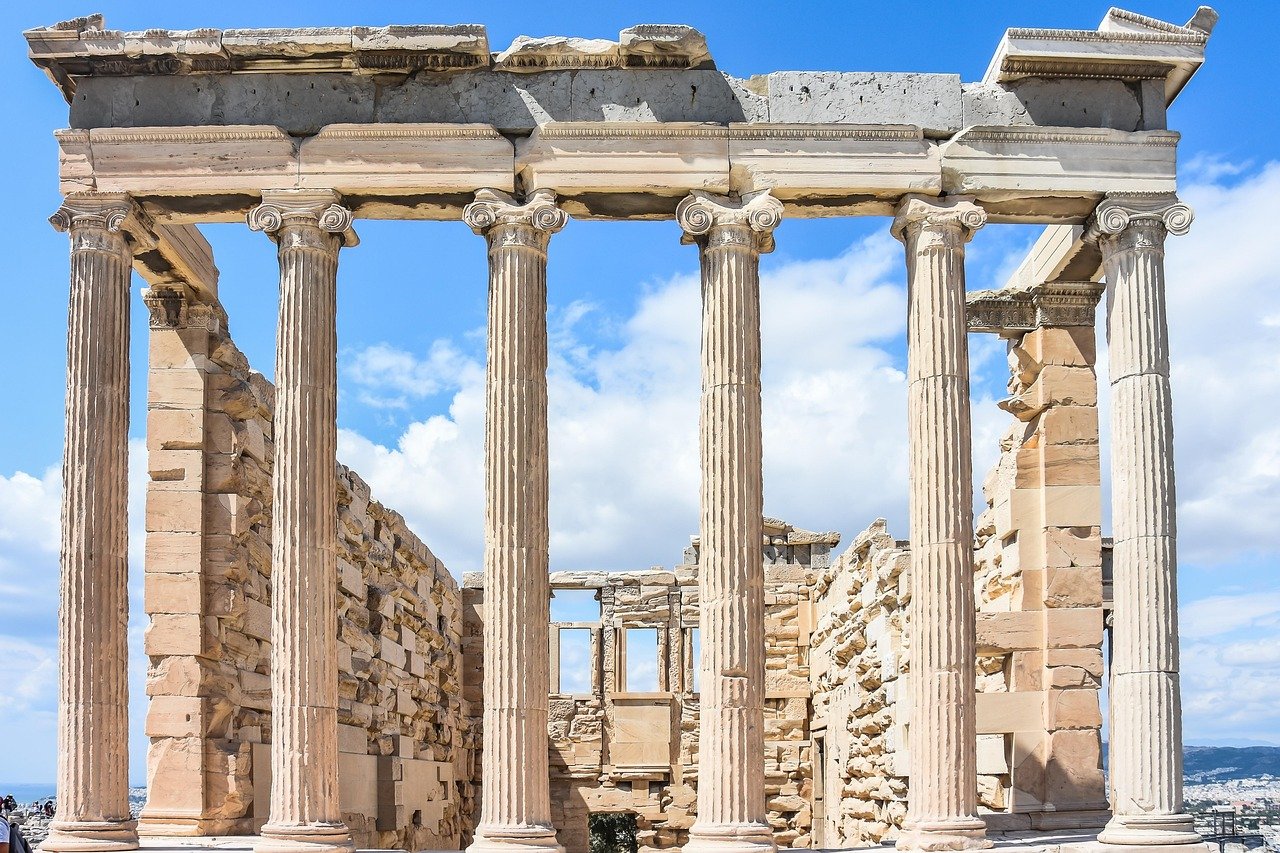
The stadium’s origins lie in the fourth century BC, when Lycurgus of Athens constructed the first permanent running track in a natural valley between two hills to host the Panathenaic Games — athletic competitions held every four years in honour of the goddess Athena. The natural bowl of the landscape was augmented with earth embankments, providing seating for tens of thousands of spectators. Around 140 AD the Roman emperor Hadrian — a great admirer of Greek culture — commissioned renovations, and his successor Herodes Atticus funded a complete reconstruction in white Pentelic marble around 144 AD, giving the stadium the appearance it preserves today.
After the fall of Rome and the Christianisation of the empire, the pagan games ceased and the stadium fell into disuse. Over the following centuries the marble was quarried and carried away for use in other buildings — a common fate for ancient monuments throughout the Mediterranean. By the nineteenth century, when Greece won independence from the Ottoman Empire, the Panathenaic Stadium had been reduced to a rubble-filled hollow with only fragments of its original marble visible. The rediscovery of its potential came in 1869, when Greek archaeologist and enthusiast Evangelis Zappas proposed it as the venue for revived Olympic-style games. A partial excavation was carried out, but it was the 1895 restoration funded by Greek benefactor Georgios Averoff — at a personal cost of approximately one million drachmas — that returned the stadium to its full glory, completely rebuilt in marble from the original quarry.
What to See
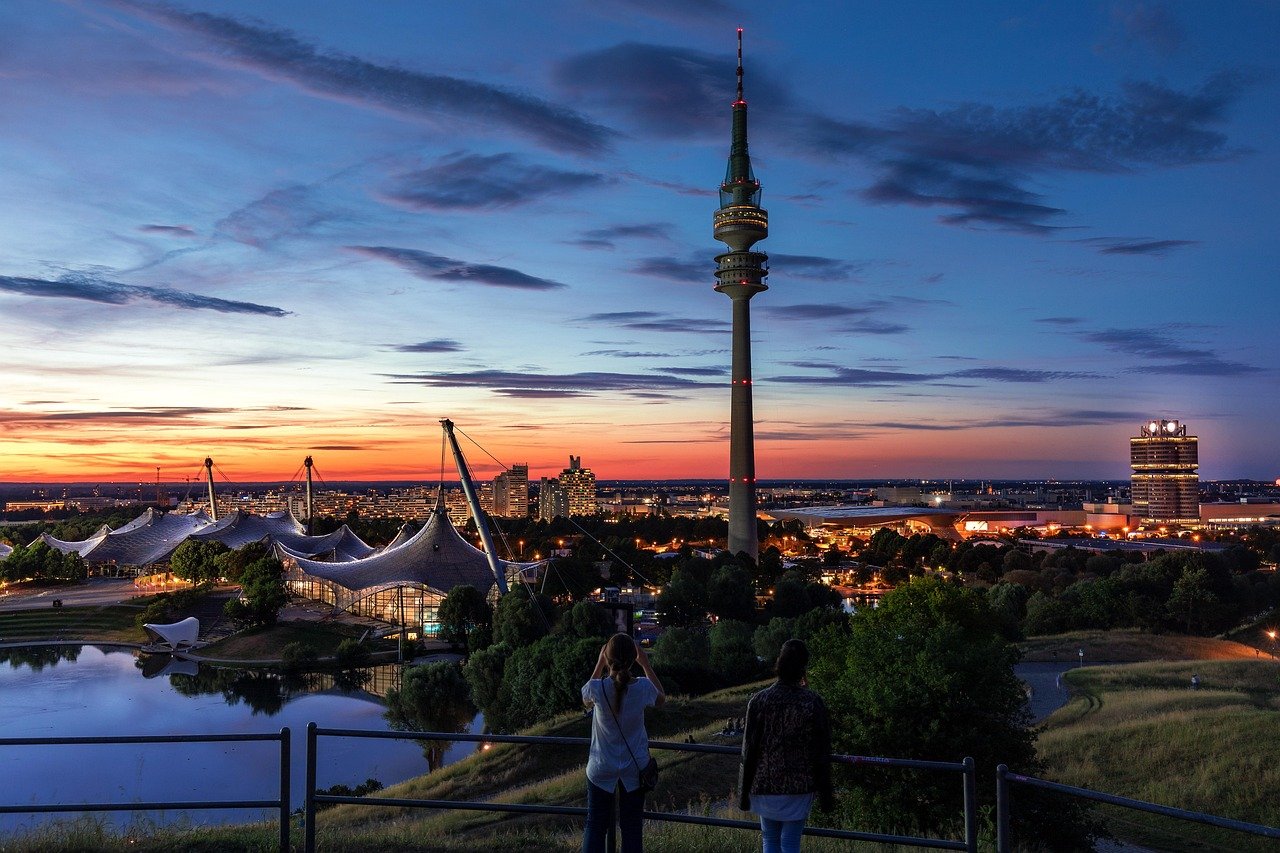
A visit to the Panathenaic Stadium — also known by its popular name Kallimarmaro, meaning “beautifully marbled” — includes access to the track itself. Visitors are invited to walk or jog the 204-metre running track, which was lengthened from the ancient 192-metre stade to accommodate nineteenth-century athletic specifications. The finish line of the 1896 Olympic marathon is marked, and a small but excellent on-site museum chronicles the history of both the ancient Panathenaic Games and the modern Olympic movement. Among the museum’s highlights are the torch relay exhibits and the original 1896 Olympic diploma.
The stadium’s architecture is worth studying in detail. The horseshoe shape — characteristic of ancient Greek stadia, as opposed to the full oval of Roman amphitheatres — channels the crowd noise in a remarkable way; stand at the far end of the track and clap, and the echo returns from the marble tiers as a rolling wave of sound. The royal box at the centre of the lower tier, where King George I of Greece watched the 1896 games, is identifiable by its ornate marble detailing. At the track level, a tunnel at the far end leads under the seating to the archaeological area behind, where fragments of the ancient stadium can be examined.
The 1896 Olympics and Modern Legacy
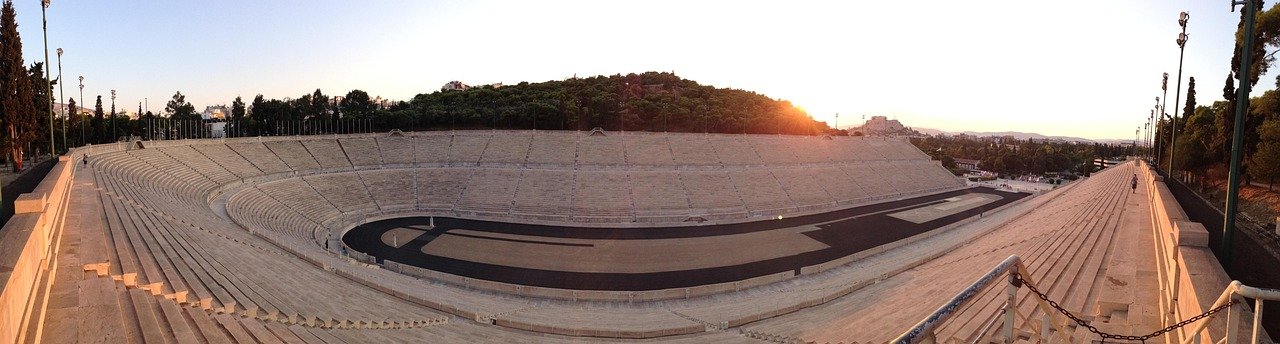
The stadium’s role in the first modern Olympics is its defining claim to historical importance. When Pierre de Coubertin revived the Olympic Games in 1896, Athens was the natural choice of venue, and the newly restored Panathenaic Stadium was the centrepiece of the games. On 6 April 1896, 80,000 spectators — the largest crowd ever to witness a sporting event to that date — filled the marble tiers to watch the opening ceremony. The American athlete James Connolly won the first event, the triple jump, becoming the first Olympic champion in 1,503 years. The stadium subsequently hosted the closing ceremony and the marathon, won by Greek water carrier Spyridon Louis in a time of 2:58:50, a victory that caused scenes of national ecstasy and is still celebrated in Greek sporting culture.
The stadium’s story did not end in 1896. It hosted the 1906 Intercalated Games — a now-largely-forgotten intermediate Olympics — and played a ceremonial role in the 2004 Athens Olympics, serving as the finish line for the marathon and the venue for the archery competition. The Olympic flame arrives at the stadium each time Greece hosts the torch relay hand-off ceremony, making the Panathenaic a living participant in the ongoing Olympic tradition rather than merely a historical monument. This continuity of purpose — from Lycurgus’s track in the fourth century BC to the present day — is what makes the Panathenaic Stadium truly unique among the world’s ancient sites.
Practical Information
- Tickets: Adults €10; reduced rate €5 for children, students, and seniors; free for children under 5
- Opening hours: Daily 8:00 am–7:00 pm (March–October); daily 8:00 am–5:00 pm (November–February)
- Best time to visit: Early morning for soft light and empty stands; spring (April–May) and autumn (September–October) for pleasant temperatures
- Duration: 1–1.5 hours including the museum
- Booking: Tickets available at the gate; no advance booking required but advisable during peak season
Local Insights
What locals know that guidebooks don’t always tell you:
- Visit in the first hour after opening (8 am) to have the track almost entirely to yourself — the experience of jogging a lap of an ancient Olympic stadium in near-solitude is extraordinary and worth the early alarm.
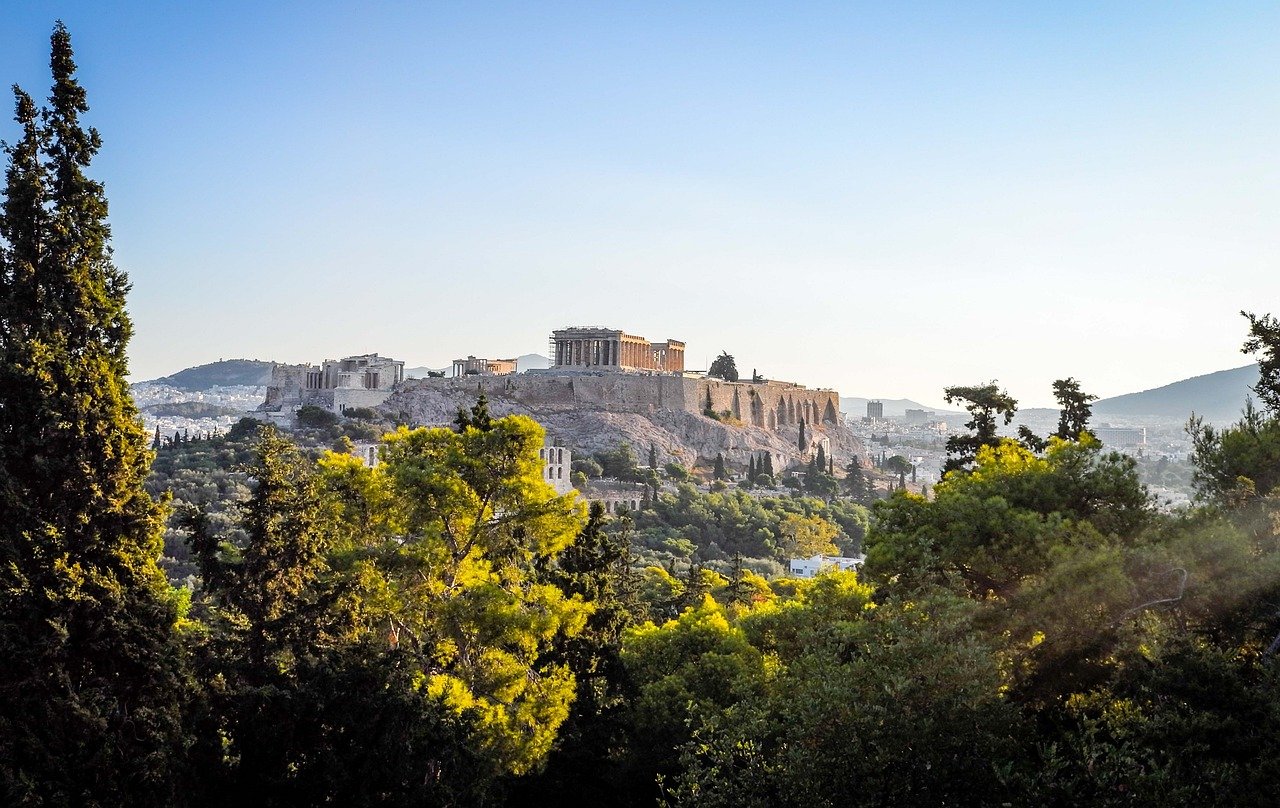
- The stadium is positioned at the base of Lykavittos Hill; combining a visit with a climb up the hill (or the funicular) gives you a panoramic view of Athens with the Acropolis in the distance.
- The neighbourhood of Pangrati, immediately east of the stadium, is one of Athens’s most authentic residential areas — its tavernas and coffee houses are frequented by locals rather than tourists and offer some of the best-value food in central Athens.
- Athens Marathon runners cross the stadium finish line in the same place as Spyridon Louis in 1896; if you visit on Athens Classic Marathon weekend (November), you may witness this living connection to the 1896 games.
- The audio guide included with the ticket provides a detailed commentary in multiple languages and significantly enriches the experience; plug in your headphones before entering the track.
Getting There
- Metro: Line 3 to Evangelismos station, then 10–15 minute walk south through the National Garden
- Bus: Routes 550 and 235 stop near the stadium on Leoforos Vasileos Konstantinou
- On foot: 20 minutes from Syntagma Square; 15 minutes from the Temple of Olympian Zeus
- Taxi/Rideshare: Ask for “Kallimarmaro” — every Athens driver knows the name; drop-off is on the main avenue in front of the entrance
Frequently asked questions
Can I actually run on the Panathenaic Stadium track?
Yes — running and walking on the track are explicitly encouraged. The stadium staff invite visitors to try the 204-metre straight. You cannot sprint at full speed as other visitors may be present, but a jog or brisk walk along the track is very much part of the standard visit experience.
Is the Panathenaic Stadium included in the Athens Acropolis multi-site ticket?
No. The stadium has its own separate ticket and is not included in the combined Acropolis ticket that covers the Parthenon, Erechtheion, and associated sites. It is priced independently at €10 for adults.
Is photography allowed inside the stadium?
Yes, photography and video for personal use are fully permitted throughout the stadium, including on the track. Drone flying requires a separate permit and advance application to the Greek Ministry of Culture.
Is the stadium accessible for wheelchair users?
The main entrance and track level are accessible. Most of the seating tiers involve steep marble steps that are not wheelchair accessible. The stadium management can provide assistance; contact them in advance if you have specific mobility requirements.
What else is near the Panathenaic Stadium?
The Temple of Olympian Zeus is a 10-minute walk west. The National Garden is directly adjacent. The Benaki Museum and Byzantine and Christian Museum are both within 15 minutes on foot, making the stadium part of a very rich cultural circuit in the Kolonaki and Mets neighbourhoods.