
Giza Pyramids 💎 Hidden Gem
Stand at the edge of the Giza Plateau as the morning sun crests the desert horizon and the shadows of three colossal stone mountains stretch toward you across the sand. These are the Pyramids of Giza ? and no photograph, no documentary, no description has ever done justice to the sheer physical presence of structures that have dominated Egypt’s skyline for forty-five centuries. More than mere tombs, the Giza complex is a testament to human ambition on a scale so vast it still defies easy comprehension. From the moment you pass through the plateau gate and the full panorama opens before you, history stops being abstract and becomes something you can touch with your own hands.
History of the Giza Pyramids
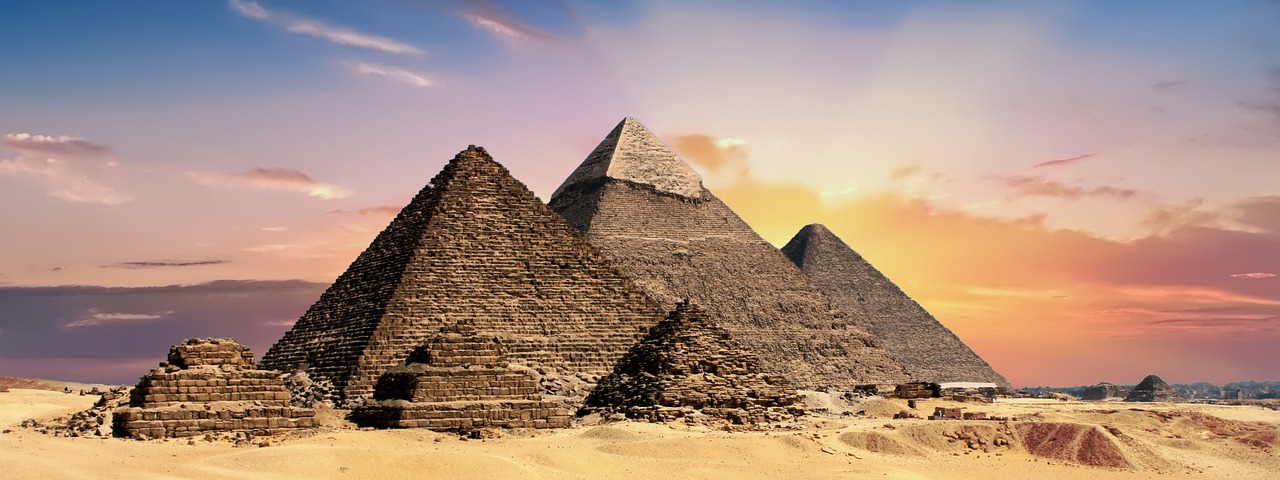
The three great pyramids were constructed during Egypt’s Old Kingdom, specifically during the Fourth Dynasty of pharaohs, between roughly 2589 and 2503 BCE. The construction sequence followed a clear family line. Khufu ? known to the Greeks as Cheops ? built first and largest, completing his Great Pyramid around 2560 BCE. His son Khafre erected the second pyramid perhaps two decades later, choosing a slightly higher position on the plateau so that his monument would appear as imposing as his father’s despite being somewhat shorter. Khafre’s son Menkaure completed the trio with the smallest of the three, though still a structure that would dwarf most modern buildings. Each pyramid formed the centerpiece of a larger funerary complex: a valley temple at the plateau’s edge, a causeway climbing toward the desert, and a mortuary temple at the pyramid’s base where priests would conduct rituals for the dead pharaoh for generations.
The complex also encompasses the Great Sphinx ? the world’s largest monolithic sculpture ? along with the smaller queens’ pyramids, mastaba tombs of nobles and officials, and subsidiary pyramid fields to the south. Workers’ villages excavated near the site have overturned the old myth of slave labor: the builders were paid, fed, and even received medical care, organized into rotating crews with names like “Friends of Khufu.” An estimated 20,000 to 30,000 workers labored at any given time, with hundreds of thousands more involved in the supply chain stretching across Egypt. For the ancient Egyptians, this was not exploitation ? it was a sacred national project, an act of cosmic engineering that would secure their pharaoh’s immortality and, by extension, the stability of the world itself.
What to See at the Giza Pyramids
The Great Pyramid of Khufu
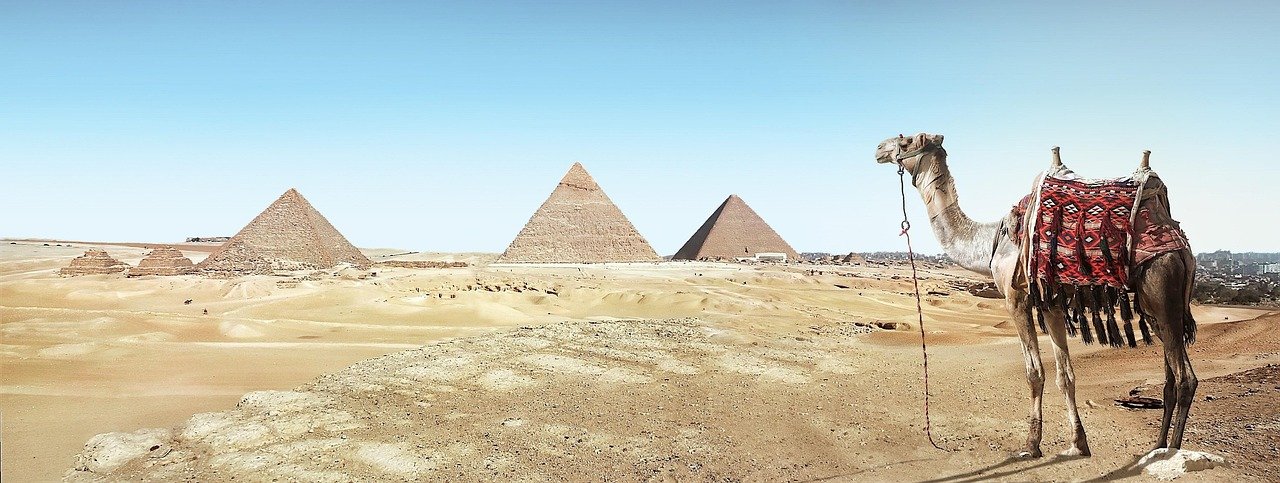
The largest of the three and the only surviving member of the original Seven Wonders of the Ancient World, the Great Pyramid of Khufu stands at approximately 138.5 metres today ? originally 146.5 metres before centuries of stone quarrying stripped its polished limestone casing. It covers an area of 5.3 hectares at its base, and the sheer scale becomes real only when you stand close enough to see that each limestone block reaches your waist. The base perimeter stretches nearly 920 metres, and the four sides are aligned with the cardinal directions to within a fraction of a degree ? remarkable precision achieved without modern instruments. For an additional ticket (900 EGP), you can descend into its interior through a narrow ascending passage, walk the soaring Grand Gallery ? a corbelled corridor 46 metres long and nearly 9 metres tall ? and reach the granite King’s Chamber at the heart of the pyramid, where Khufu’s empty sarcophagus still rests. The experience is claustrophobic, humid, and utterly extraordinary.
The Pyramid of Khafre and the Great Sphinx
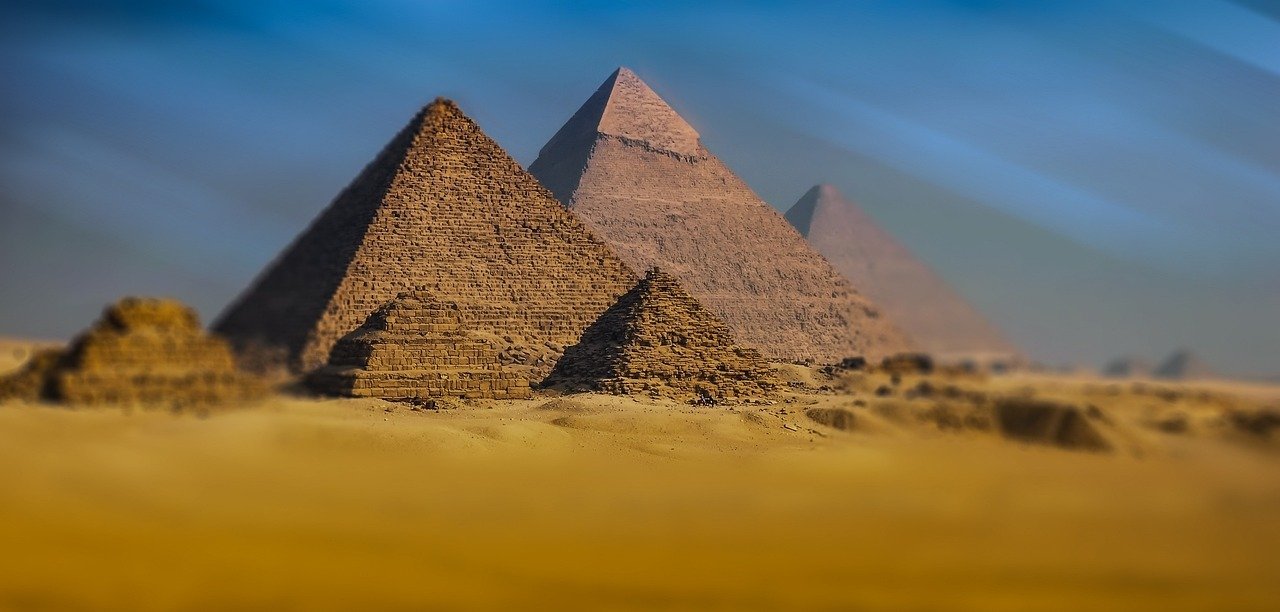
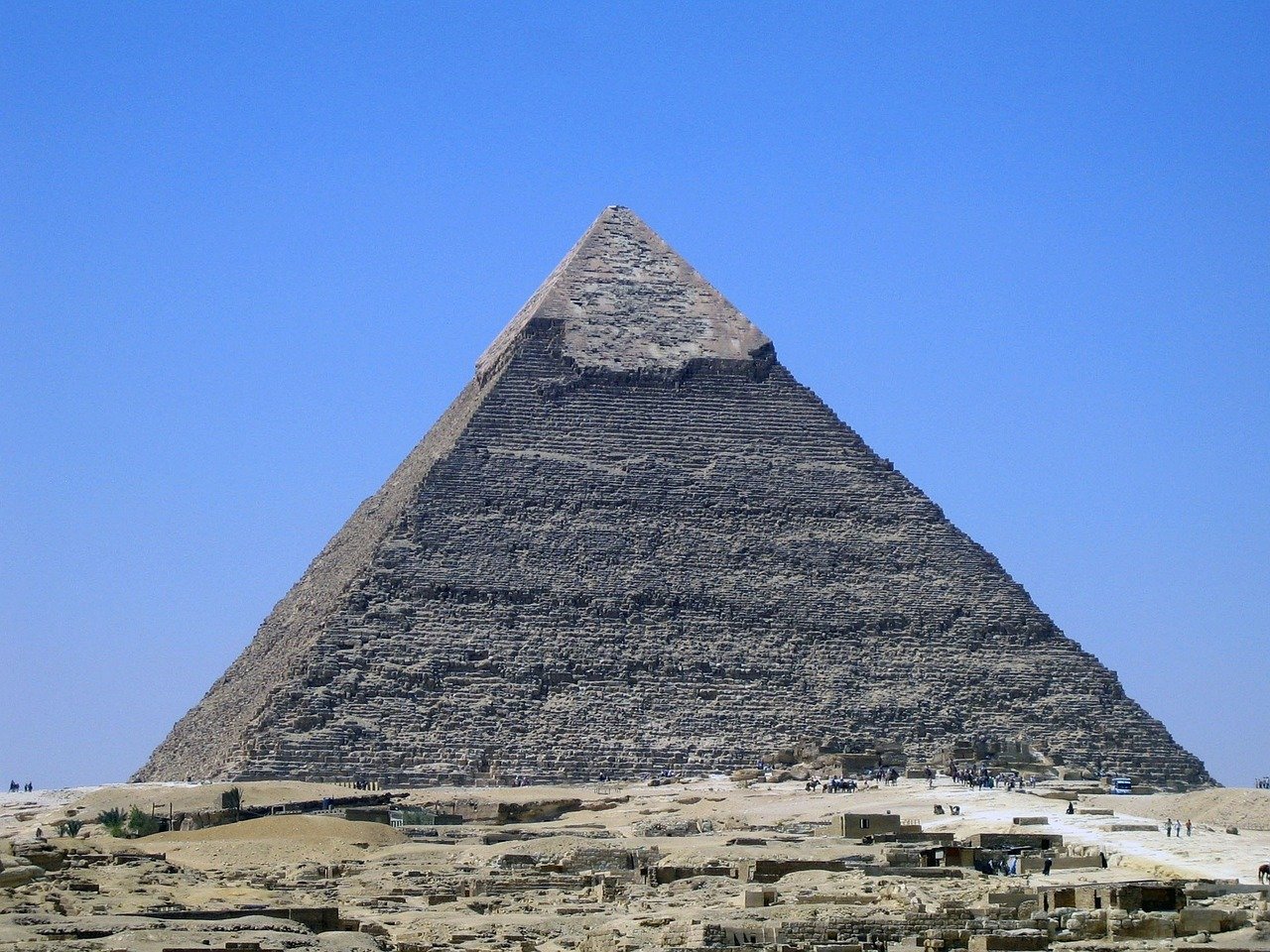
The middle pyramid, built by Pharaoh Khafre around 2530 BCE, reaches approximately 136.4 metres in height today and still retains a cap of its original white Tura limestone casing near the apex ? a ghostly and striking glimpse of how blindingly bright all three pyramids once appeared in the desert sun, visible for hundreds of kilometres across the flat Nile Delta. Khafre’s complex also produced the most dramatic accessory on the plateau: the Great Sphinx, carved from a natural limestone spur to the east of the pyramid. At 73 metres long and 20 metres tall, the Sphinx combines a lion’s body with the head of a pharaoh (most likely Khafre himself), and gazes perpetually eastward toward the rising sun. Between its paws rests the Dream Stela of Thutmose IV, commemorating a royal vision and the clearing of encroaching sands. Interior access to Khafre’s pyramid costs an additional 280 EGP, giving you a view of a second descending corridor and burial chamber.
The Pyramid of Menkaure and Queens’ Pyramids
The southernmost and smallest of the three royal pyramids belongs to Menkaure, Khafre’s son, and stands at approximately 65 metres ? diminutive by Giza standards yet still a formidable monument. Its lower courses were originally clad in red Aswan granite rather than white limestone, giving it a distinctly different character from its neighbors. Three smaller subsidiary pyramids to Menkaure’s south were built for his queens, while the area east of the main complex contains dozens of mastaba tombs ? flat-roofed rectangular structures ? belonging to nobles, priests, and court officials who wanted to spend eternity in their pharaoh’s shadow. Walking among these mastabas offers a quieter, less crowded counterpoint to the main pyramid circuit, and many are decorated with remarkable relief carvings of daily Old Kingdom life.
The Giza Plateau also contains several other significant structures that most visitors overlook in their rush toward the three main pyramids. The Solar Boat Museum, on the south side of the Great Pyramid, houses one of the world’s oldest surviving wooden vessels: a 43-metre cedarwood boat dismantled and buried in a pit around 2500 BCE, reassembled from over a thousand pieces and now displayed in its original pit location. The boat may have been used to transport Khufu’s mummified body from the valley temple during his funeral, or it may represent a symbolic solar barque intended for his journey through the afterlife ? Egyptologists continue to debate its precise purpose. Near the museum, a second boat pit was discovered in 1987; robotic exploration and eventual excavation in the 2010s confirmed a second partially preserved vessel within. Together, these boats represent some of the most extraordinary ancient carpentry ever found, with wooden joints so well engineered that the assembled vessel could theoretically still float.
Local Insights
The Giza Plateau rewards visitors who arrive prepared and with a clear plan. Here is what experienced travelers and local guides consistently recommend:
- Arrive at opening time (7 or 8 am). The plateau gets intensely hot and crowded by mid-morning. Early risers get soft golden light ideal for photography, cooler temperatures, and significantly fewer tour groups competing for the same angles. By 10 am the site can feel overwhelming; by noon in summer it is brutal.
- Book Khufu interior tickets in advance online. Daily numbers are strictly limited ? if you want to walk the Grand Gallery and stand in the King’s Chamber, check egymonuments.gov.eg before your trip. Tickets often sell out during peak season (October through April). On-site ticket booths open at 7 am but supplies are finite.
- Negotiate transport from Cairo before you go. Uber is the most transparent option (around 120?180 EGP from central Cairo). Unmetered taxis require firm upfront negotiation ? agree on a price before getting in. Many drivers will push you toward specific camel or horse vendors once you arrive; you are never obligated.
- The classic three-pyramid panorama requires the south viewpoint. The postcard view with all three pyramids lined up in a row is taken from a paved viewpoint south of the complex ? accessible with your plateau ticket or by car just outside the boundary. This is also the best location for sunrise photography when light catches the pyramid faces.
- Vendors and touts are persistent but not dangerous. You will be offered camel rides, horse rides, souvenir scarves, and guide services from the moment you arrive. A firm but polite “la shukran” (no thank you) is universally understood. Simply keep walking if you are not interested ? once you engage in conversation, it is difficult to exit.
Planning Your Visit
- Tickets: Plateau entrance: 700 EGP (~$14 USD) for adults, 350 EGP for students with valid ID. Great Pyramid interior: 900 EGP extra (~$18 USD). Khafre or Menkaure interior: 280 EGP each (~$5.50 USD). Solar Boat Museum: additional fee on-site. Sound and Light Show from $20 USD.
- Opening hours: Daily 7:00 am ? 5:00 pm (last entry around 4:00 pm). Closed for occasional special events; check egymonuments.gov.eg. Ramadan hours may vary.
- Best time: October through March for comfortable temperatures (15?25?C). Arrive at 7?8 am to avoid crowds and midday heat. July and August regularly exceed 40?C on the open plateau with minimal shade.
- Duration: Allow 3?4 hours for a solid visit covering all three pyramids and the Sphinx. Plan a half-day (5?6 hours) if adding the Solar Boat Museum and mastaba fields. A full day allows combination with the nearby Grand Egyptian Museum.
- Booking: Plateau admission available at the gate, but Khufu interior tickets are strictly limited daily. Reserve online at egymonuments.gov.eg in advance, especially during peak season (October?April).
Getting There
- Metro: Take Cairo Metro Line 2 to Giza station (El-Giza), then a taxi or microbus to the plateau (approximately 20 minutes, 30?50 EGP extra). The Metro ride from central Cairo takes roughly 15 minutes and costs around 12 EGP.
- By car: Follow Pyramids Road (Sharia Al-Haram) west from Giza. Since April 2025, the main entrance is via the Fayoum Desert Road gate. Parking is available at the gate area near the ticket booths.
- On foot: Not feasible from central Cairo (roughly 20 km). From Giza Metro station it is about 9 km ? too far and too hot to walk in most conditions.
- Taxi/ride-share: Uber and Careem operate throughout Cairo and are the easiest, most transparent options. Expect 120?200 EGP from central Cairo or Zamalek. Ask the driver to drop at the Fayoum Road gate. Haggle with unmetered black-and-white taxis ? always agree on a price before entering.
Frequently asked questions
Can you go inside the pyramids at Giza?
Yes ? three of the pyramids are open for interior access, each requiring a separate ticket beyond the plateau entrance fee. The Great Pyramid of Khufu offers the most dramatic experience: a narrow ascending passage leads to the soaring Grand Gallery and then to the granite King’s Chamber where Khufu’s sarcophagus sits. Entry costs 900 EGP and daily numbers are strictly limited, so booking ahead is strongly recommended. Khafre and Menkaure’s interiors (280 EGP each) are shorter descending-corridor experiences. Photography inside is generally permitted; tripods are not allowed.
Is it safe to visit the Giza Pyramids?
The Giza Plateau is a heavily tourist-oriented site with consistent security presence, and serious crime against visitors is rare. The main nuisance is persistent vendors, unofficial “guides,” and people offering camel or horse rides who may follow you briefly. Egyptian tourist police patrol the site. As with any major tourist attraction in a large city, practice normal awareness ? keep valuables secure, agree on prices before accepting any service, and avoid sharing your accommodation details with strangers you meet on-site. Most visitors leave with nothing but great photographs and a slightly lighter wallet from souvenir stalls.
What is the best time of year to visit the Giza Pyramids?
The shoulder seasons ? October through November and March through April ? offer the best combination of pleasant temperatures (18?28?C), manageable crowds, and clear desert light. December and January are peak tourist season with higher tour-group volumes but still comfortable weather. June through August brings plateau temperatures exceeding 38?40?C with almost no shade; visits during this period require serious hydration and should be kept to the early morning hours. Regardless of season, arriving when the gates open is always the best strategy ? the pyramids glow at sunrise and the site is dramatically quieter before 9 am.
Do you need a guide at the Giza Pyramids?
A licensed guide enriches the experience considerably ? they provide historical context, navigate the site efficiently, and help deflect the persistent vendors who approach independent visitors. Official guides can be arranged through your hotel, a licensed tour operator, or the Egyptian Tourism Authority office at the site. Avoid accepting unofficial guide offers from people who approach you at the gate; these are unlicensed and often involve pressure to visit specific shops or ride vendors. That said, the site is entirely manageable independently with a good map or GPS ? the pyramids are, after all, genuinely hard to miss.