
Tierra del Fuego National Park
Stand at the end of the world and feel it. Tierra del Fuego National Park is the southernmost national park in Argentina — and one of the most dramatic on the planet — where the Andes plunge into the sea and lenga beech forests glow copper and gold in autumn light. The air here is clean in a way that is almost disorienting, sharp with salt and pine resin, carrying the calls of birds most visitors have never heard before. This is the bottom of the Americas, just a few hundred kilometres from Antarctica, and the landscape makes that proximity felt in every gust of southern wind and every mirror-still glacial lake that reflects an impossible sky.
History of Tierra del Fuego National Park
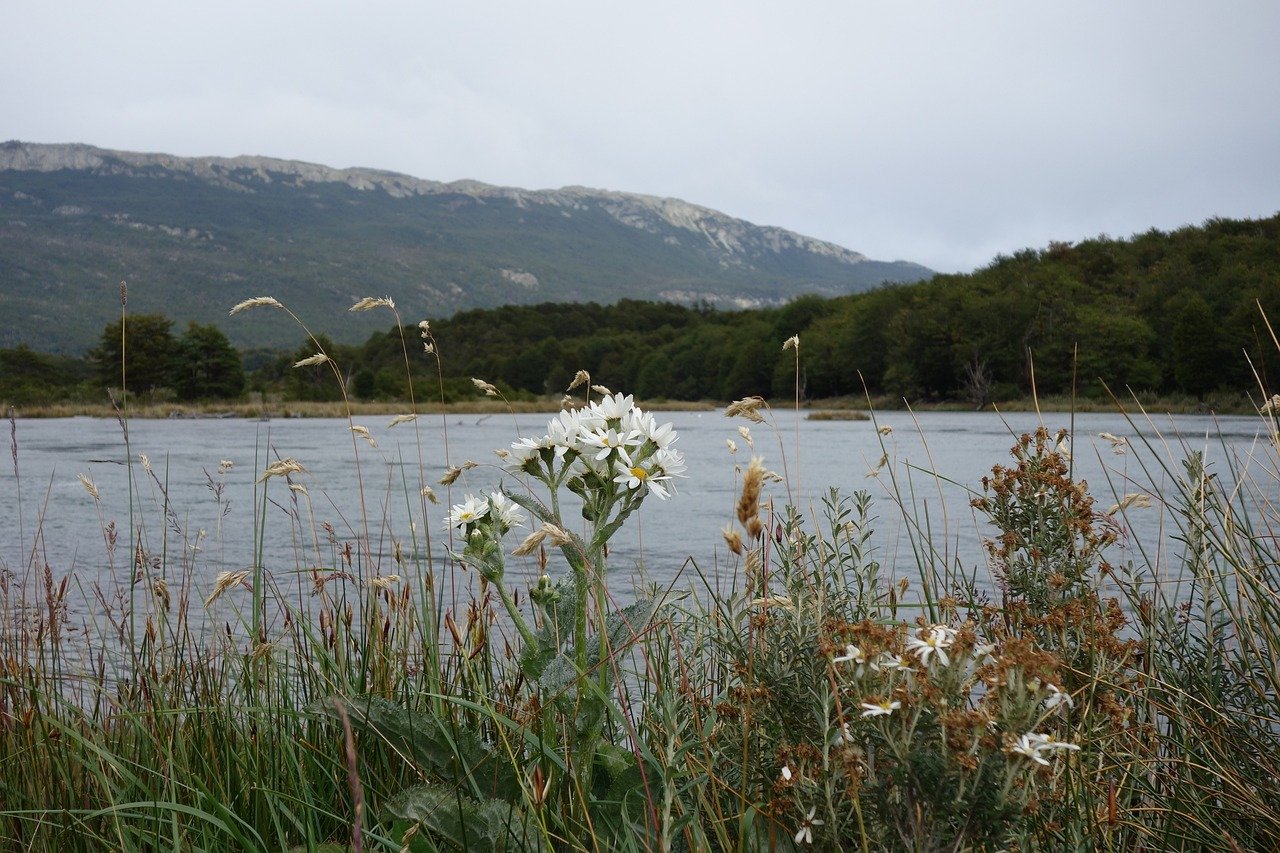
Humans have lived at the edge of the world for an astonishing ten thousand years. The Yamana people — also called the Yaghan — were the original inhabitants of the archipelago, a seafaring culture of extraordinary resilience who navigated these frigid channels in bark canoes, hunted sea lions and gathered shellfish along shores that saw snow in every month of the year. They rarely wore more than animal grease on their skin, their bodies having adapted through generations to the sub-Antarctic cold. By the time European explorers arrived in the sixteenth century, the Yamana had built a complex oral culture, intimate knowledge of tides and currents, and a relationship with fire so central to their survival that the explorer Ferdinand Magellan, seeing their bonfires burning on the shore in 1520, named the entire archipelago Tierra del Fuego — Land of Fire.
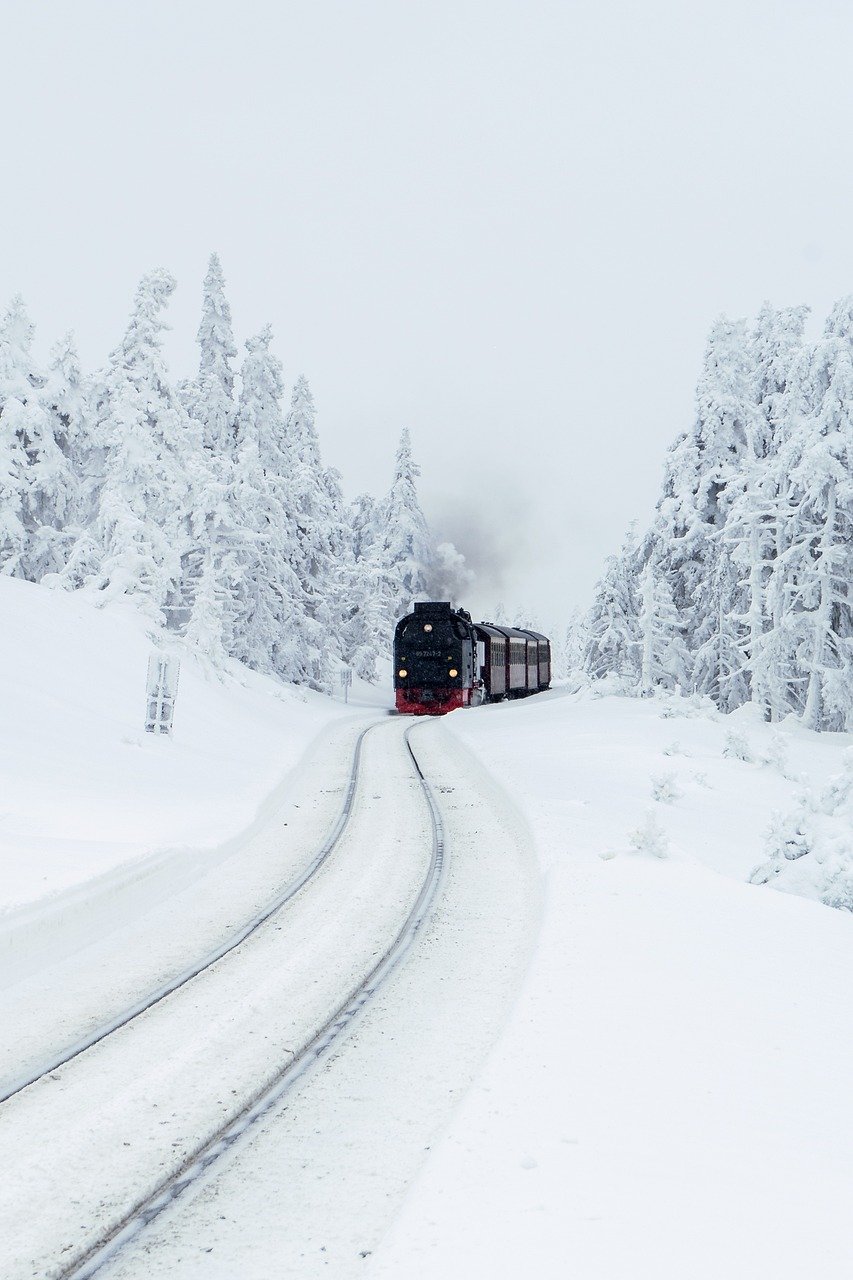
The national park itself was established in 1960, encompassing 63,000 hectares of sub-Antarctic forest, glacial lakes, and coastline. An expansion in 1966 pushed the boundaries to include the shores of Lago Acigami, which straddles the Argentine-Chilean border. Before the park’s creation, the land bore the marks of earlier exploitation: the Tren del Fin del Mundo — the End of the World Train — traces a route originally built by prisoners in the early twentieth century, who were forced to log the forests and haul timber to the penal colony at Ushuaia. Today that same railway operates as a heritage attraction, its steam engines puffing through landscapes that have largely recovered their original character. The park is now part of a UNESCO Biosphere Reserve, protecting one of the last intact temperate rainforest ecosystems in South America.
What to See at Tierra del Fuego National Park
Lapataia Bay and the End of the World Sign
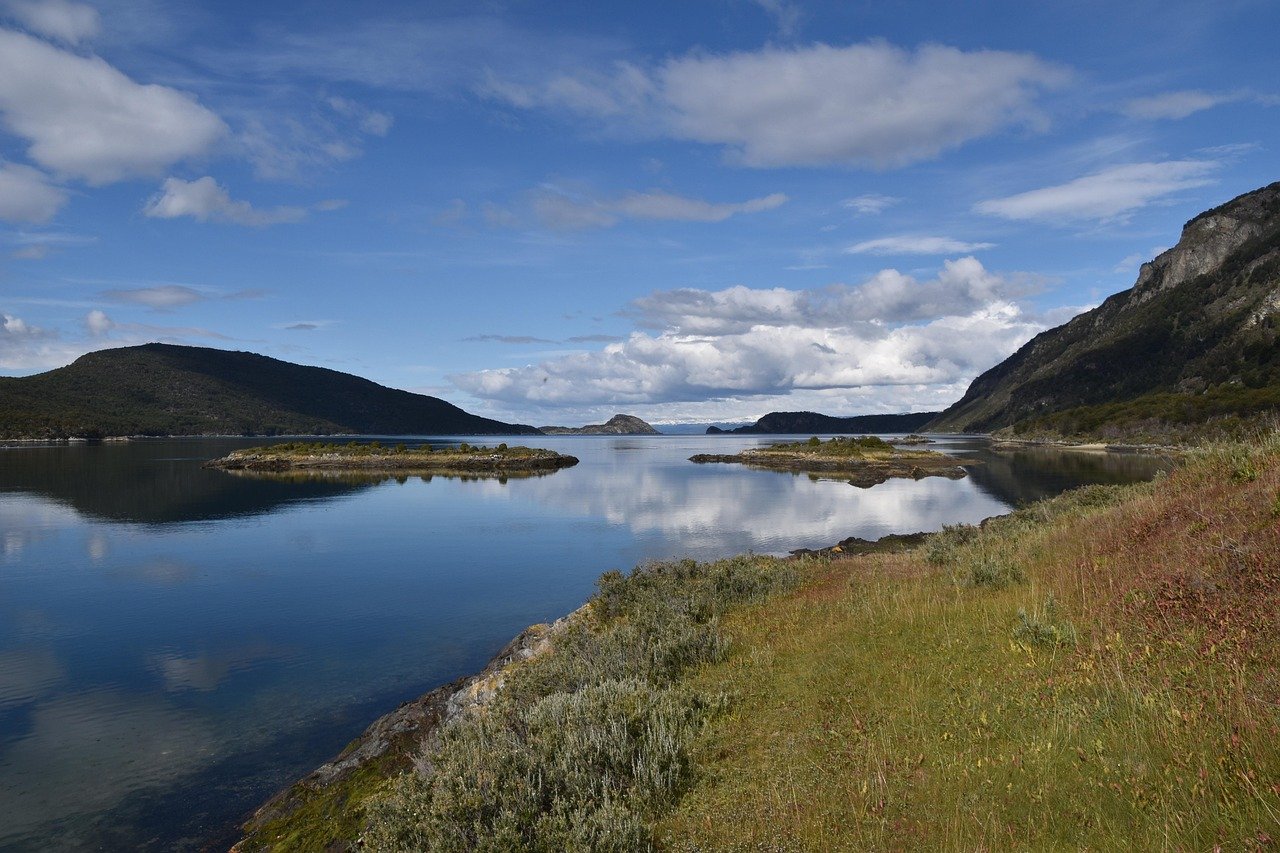
No visit to Tierra del Fuego National Park is complete without standing at Lapataia Bay, where National Route 3 — the highway that begins 3,000 kilometres north in Buenos Aires — simply ends. A weathered sign marks the terminus of the Pan-American highway system, and beyond it there is nothing but glacial water, low forest, and the distant profile of the Chilean coast. The bay is beautiful in a quietly overwhelming way: cormorants work the shallows, black-necked swans drift past reed beds, and the surrounding hills are dusted in lenga beech whose leaves turn flame-red and amber from March through May. The accessible boardwalk loop around the bay takes about an hour and stays flat, making it suitable for all fitness levels. At low tide you can see ancient Yamana shell middens — accumulated over centuries of occupation — preserved in the banks above the waterline. A small lookout at the end of the path delivers a sweeping view across the bay toward the Argentine-Chilean border.
Lago Acigami and the Hito XXIV Trail
Lago Acigami is a glacial lake of such clarity that on calm days the snow-capped peaks on both sides of the border appear perfectly doubled in its surface. The Hito XXIV trail follows the Argentine-Chilean border along the lake’s northern shore, winding through dense lenga beech and ñire woodland for roughly 8 kilometres round trip. Boundary marker number XXIV — Hito XXIV — stands at the water’s edge near the Chilean shore, a small iron post that marks one of the world’s more remote international frontiers. The forest here feels primeval: moss covers every stone, ferns drape over exposed roots, and the birdlife includes the Magellanic woodpecker, whose hammering you will hear long before you spot its brilliant red head against the grey bark. The trail involves some muddy sections and a few stream crossings; waterproof boots are strongly recommended regardless of the season.
Cerro Guanaco Summit Hike
For those who want to earn their panorama, the Cerro Guanaco trail climbs 970 metres to one of the park’s highest accessible points. The ascent takes roughly three to four hours, gaining significant elevation through dense forest before emerging onto open alpine terrain with sweeping views across the Beagle Channel toward Chilean Patagonia and the southern edge of the Andes. On clear days — which are rarer than most guidebooks admit — you can see the white stripe of the Darwin Range against the southern horizon. The trail is classified as demanding and involves steep sections with exposed roots and loose rock near the summit. Guanacos, the wild camelids for which the peak is named, are occasionally spotted on the upper slopes, along with Andean condors riding the thermals. Start before 9 a.m. to give yourself enough time and daylight, and always check weather conditions at the Alakush Visitor Centre before setting out.
Beaver Ponds and Sub-Antarctic Wildlife

Canadian beavers were introduced to Tierra del Fuego in 1946 as a fur-farming experiment; they escaped, reproduced prolifically, and have since transformed large sections of the forest. A short 400-metre boardwalk near the Castorera sector leads through flooded woodland to active beaver dams and lodges — an oddly fascinating sight that speaks to both ecological complexity and the unintended consequences of human intervention. The beavers are not the only wildlife to watch for. Andean condors wheel overhead in search of carrion, red foxes trot along the roadsides in the early morning with complete indifference to human observers, and river otters fish the clear streams near Lago Roca. At dawn and dusk, guanacos graze on the open slopes above the treeline. The dark, tea-coloured water of Laguna Negra is stained by peat bog tannins and makes for a hauntingly atmospheric detour on a cloudy afternoon — a perfect mirror in dead calm, a deep chocolate turbulence when the wind picks up.
Local Insights
Visitors who get the most from Tierra del Fuego tend to have a few key pieces of knowledge the brochures leave out:
- Go early in the morning for solitude. Tour buses from Ushuaia typically arrive between 10 a.m. and noon, flooding the main trails with large groups. Catch the first public bus from the city (departures begin around 8 a.m. from the bus stop on Avenida Maipú) and you will have Lapataia Bay almost entirely to yourself for the first hour — the light is better for photography anyway.
- Pack layers and waterproofs no matter the forecast. Sub-Antarctic weather at Tierra del Fuego changes within the hour. Locals joke that you can experience all four seasons before lunch. A waterproof jacket, gloves, and a thermal mid-layer are essential even in January (the height of summer), when temperatures hover around 12–16°C and wind-chill dramatically reduces the felt temperature.
- The End of the World Train is worth the price if you time it right. The Tren del Fin del Mundo station sits outside the park boundary; a combined train-plus-park-entry ticket runs around ARS 145,000 for foreign visitors in tourist class (roughly USD 130 at 2026 rates). The train ride itself is 75 minutes one-way through scenic valleys. Skip the return train and hike or take the bus back — the trails from Estación del Parque into the park are lovely and not crowded.
- Entry is free between May and September. The park charges the full international visitor fee — ARS 8,400 — only from October through April. In the off-season, entry is free for all categories. Ushuaia in winter is genuinely beautiful, with snow-covered forests and far fewer tourists, though some park services are reduced.
- Bring enough Argentine pesos for park entry. The park entrance booth on National Route 3 accepts cash only, and the nearest ATM is in Ushuaia. Card payment is not reliably available at the gate. Withdraw pesos before leaving the city.
Planning Your Visit
- Tickets: International visitors pay ARS 8,400 (approximately USD 7.50 at the 2026 blue-chip rate) per entry, valid for three days and two nights. Argentine nationals and Mercosur residents pay reduced rates. Entry is free for all from May through September. The End of the World Train is a separate ticket: ARS 62,000 (tourist class) or ARS 140,000 (first class) for foreign visitors.
- Opening hours: The park is open year-round. The Alakush Visitor Centre is open daily 10 a.m. to 5:30 p.m. in summer (October–April); hours are reduced in winter. Trails can be accessed from dawn to dusk.
- Best time: November to March for the best hiking conditions and longest daylight. March through May for spectacular autumn foliage — the lenga beech colours rival any temperate forest in the world. June and July for snow landscapes and near-total solitude (and free entry).
- Duration: Allow a full day for a satisfying visit covering Lapataia Bay, the beaver ponds, and one medium-length trail. Add a second day if you plan to hike Cerro Guanaco or Hito XXIV.
- Booking: No advance booking is required for park entry — pay at the gate on National Route 3. The End of the World Train should be booked 24–48 hours in advance online or through tour agencies in Ushuaia, especially in peak season (December–February). Walk-up tickets are sometimes available but not guaranteed.
Getting There
- By car: The park is 12 km west of Ushuaia along National Route 3 — a 20-minute drive. Rental cars are available in Ushuaia from around USD 70 per day and give maximum flexibility for accessing remote trailheads. Park at the main Lapataia lot or at individual trailhead pullouts along the route.
- Public transport: Public buses depart hourly from Ushuaia’s Avenida Maipú between approximately 8 a.m. and 7 p.m. in summer. The round-trip fare is approximately ARS 2,500–3,500. Buses drop passengers at various points inside the park and can be hailed at designated stops for the return.
- On foot: Walking from Ushuaia to the park entrance is possible (about 12 km along Route 3) but not recommended given the volume of traffic and the distance. Cycling is a popular alternative for fit visitors.
- Taxi/ride-share: Taxis from central Ushuaia to the park entrance cost approximately ARS 15,000–20,000 one-way. Arrange your return in advance, as taxis do not queue inside the park — ask your driver to collect you at an agreed time.
Frequently asked questions
Is Tierra del Fuego National Park worth visiting in winter?
Absolutely, though with adjusted expectations. Winter (June–August) brings heavy snowfall, shorter daylight hours (as few as seven hours of usable light), and some trail closures due to ice. But the park transforms into something otherworldly: the lenga beech forests are draped in snow, the lakes are mirror-still in the cold air, and visitor numbers drop dramatically — you may have entire trails to yourself. Entry is free in winter, and the Ushuaia ski scene at Cerro Castor provides a natural companion activity. Carry proper winter hiking gear and check conditions at the visitor centre before heading onto trails.
Can you see penguins in Tierra del Fuego National Park?
Penguins do not live inside the park itself. The nearest Magellanic penguin colony is at Isla Martillo in the Beagle Channel, accessible by boat tour from Ushuaia (a 90-minute round trip). The park does offer excellent wildlife viewing — Andean condors, Magellanic woodpeckers, black-necked swans, steamer ducks, and the ubiquitous Fuegian red foxes are all reliably spotted. For penguins, book a Beagle Channel boat excursion through any of the agencies on Ushuaia’s waterfront; these can often be combined with same-day park visits.
How physically demanding is the park for non-hikers?
The park caters well to visitors of all fitness levels. The Lapataia Bay boardwalk is flat, well-maintained, and entirely accessible without significant exertion — the whole loop is under 2 kilometres. The beaver dam walk is equally gentle. For those who want more challenge, the intermediate Cerro Guanaco trail and the lakeside Hito XXIV route offer genuine mountain hiking. The visitor centre staff can help match trail difficulty to your fitness level and available time. Children and older visitors regularly enjoy the park without any difficulty on the main flat circuits.
What is the End of the World Train experience actually like?
The Tren del Fin del Mundo departs from a station 8 km west of Ushuaia and runs a 7-kilometre route into the park over approximately 75 minutes. The vintage steam engines haul open-sided carriages through lenga beech forest, past the Cañadón del Toro gorge and a small waterfall, with narration available in Spanish, English, Portuguese, and French. It is atmospheric and enjoyable — especially for families with children — though experienced travellers should know the scenery visible from the train is a small subset of what the park offers on foot. First-class seats include wider seats and a slightly better vantage point. The combined train-and-park ticket allows you to exit at Estación del Parque and continue on foot.